Best Paying Online Casinos
Payout is two numbers wearing one coat. The first is the return the games themselves are set to pay, the long-run share of staked money that comes back to players. The second is the speed and completeness with which a withdrawal lands in your account once you ask for it. A site can sit high on one measure and low on the other, and the marketing language of this corner of the market blurs them deliberately. This page separates them, prices each on stated assumptions, and shows what a British licence contributes to both.
Offers of this kind in the British-facing market usually ask forty times the bonus amount in wagering, and payout windows usually run from minutes on e-wallet rails to days on bank transfer. Figures on this page are category-typical assumptions, not quotes from any named promotion, and every range should be checked against the operator’s own terms before a deposit. Nothing here crowns a single site, because the figures that decide a payout record belong to the reader’s own rail choice, game choice and licence choice, not to any one lobby.
Terms change often. Verify the current terms on the operator’s own page before depositing. Scores are editorial.
8.2/10See offer terms
8.0/10See offer terms
7.8/10See offer terms
7.5/10See offer terms
- What “best paying” actually measures
- RTP and the house edge, in working terms
- Payout windows by rail, modelled in hours
- Category comparison: the ranges across the market
- The licence trade-off behind every payout promise
- Verification and the friction nobody advertises
- How to judge a payout record yourself
What “best paying” actually measures
Search the phrase and you will find pages that rank casinos as though payout quality were a single league table with a winner at the top. It is not. A site’s payout behaviour is the product of at least four independent variables, and no ranking survives changing any one of them. The four are the return-to-player settings of the games the site carries, the speed at which the operator releases a withdrawal request, the speed at which the chosen payment rail clears after release, and the likelihood that a compliance step intercepts the request and adds time or reduces the amount.
Take them in order. Game RTP belongs to the studios more than to the site: a handful of suppliers set the return levels, and most British-facing lobbies, licensed or otherwise, draw from the same pool. A site cannot pay more than its games are set to pay, so a “high paying” label usually means the lobby leans on higher-RTP titles or lets players filter for them. The operator controls the release step: how long a request sits pending, whether automated checks clear it instantly, and what the terms say about processing times. The rail controls the clearing step, and its contribution is measured in minutes or days depending on the method. The compliance layer controls the exceptions, and the exceptions are where most payout disappointment lives.
The second complication is that payout quality is measured in completeness as well as speed. A request that arrives in an hour but arrives short, reduced by a bonus cap, a conversion limit or a voided balance, has paid badly no matter how fast it moved. Readers who chase the quickest window without reading the terms around it sometimes accept the worse bargain of the two, because speed is visible in the cashier while completeness is buried in clause twelve of the promotions page.
The third complication is sample size. One player’s fast withdrawal proves one cashier visit, nothing more. A payout record is a distribution, and the distribution only becomes visible when the terms, the rail list and the licence are read together. That is the approach this page takes: no single site is named as the answer, because the answer changes with every input, and a page that pretended otherwise would be selling certainty it does not have.
What the page does instead is cost each variable in turn. The RTP section explains what a return-to-player figure is and what it is not. The payout window section models the hours from request to money in hand by rail. The comparison table lays out category-typical ranges across a mixed field of licensed and offshore brands, and the licence section states plainly what the difference between them is worth when a withdrawal goes wrong. The reader who works through all four can look at any lobby, including lobbies this page never mentions, and form a judgement that survives contact with the cashier.
RTP and the house edge, in working terms
Return to player, written RTP, is the share of total staked money a game pays back over a very long run of play. A slot set to 96% returns ninety-six pounds for every hundred pounds staked, averaged across an enormous number of spins. The remaining four percent is the house edge, and it is not a flaw or a trick; it is the price of the entertainment and the reason the supplier and the operator have a business. What matters for a reader comparing payout quality is not that the edge exists but how large it is, how much it varies between games, and how much of the variation is visible before play begins.
The variation is wider than most lobbies suggest. Popular video slots commonly sit in the mid-nineties, with settings of 94% at the lower end and 97% or above at the higher end. Table games run far tighter: a European roulette wheel carries an edge of about 2.7%, while a well-set blackjack table can sit below 1% for a player using basic strategy. Live dealer games occupy similar ground. In practical terms this means the game choice moves the expected cost of an hour’s play by a factor of three or four, which is a larger swing than anything the choice of site will produce on its own.
Two caveats belong next to any RTP figure. The first is volatility. Two slots at the same 96% setting can behave completely differently across a session, because RTP is a long-run average and volatility describes the shape of the ride in the short run. A high-volatility title pays rarely and heavily; a low-volatility title pays often and small. Neither returns more in expectation, and a session ending in profit is a draw from the distribution, not evidence that the game or the site pays better than its setting.
The second caveat is that some suppliers ship the same title at multiple RTP settings and let the operator choose. A game listed at 96% in one lobby can run at 94% in another, and the active setting usually appears in the game’s own information panel rather than on the promotions page. Readers who care about return levels can check the panel before staking; readers who skip the check are comparing labels rather than settings. This is the single most practical thing a payout-focused reader can do, and it costs nothing.
Bonus terms interact with RTP in a way worth spelling out. When wagering requirements are in play, the house edge of the games used to clear them becomes a direct cost. A requirement of forty times a bonus, cleared on games with a 4% edge, costs one hundred and sixty pounds in expected losses on a £100 bonus. The same requirement cleared on lower-edge titles costs less, which is why game weighting clauses exist: operators restrict which games count and at what rate precisely because the edge difference is real money. A reader comparing “paying” sites should therefore compare the terms alongside the settings, because a generous-looking promotion on a high-RTP lobby can still be the expensive product once the clearing arithmetic runs.
Payout windows by rail, modelled in hours
Release and clearing are different events, and the hour count between request and money in hand is the sum of both. The model used across this site assumes typical release queues at this end of the market and then adds the rail’s own clearing time. The chart below states the result for the three rails most British players use.
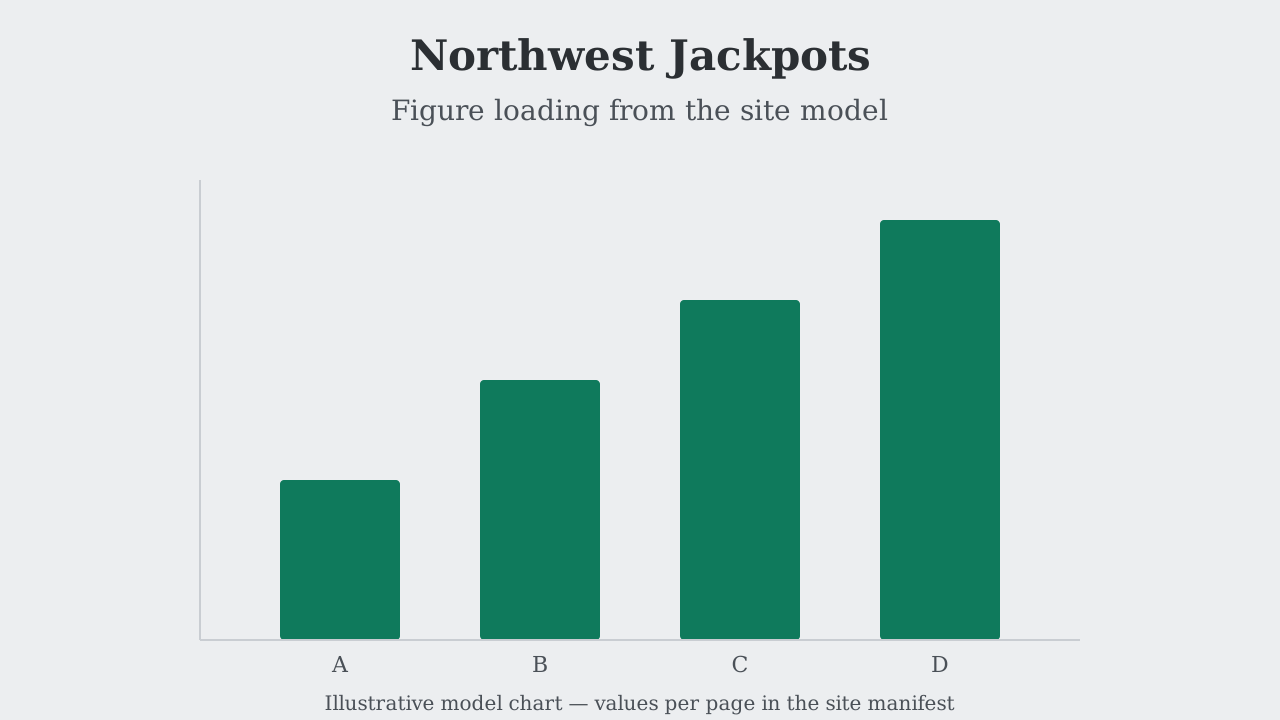
Read the bars as planning numbers. E-wallet withdrawals clear in roughly two hours on the model, which reflects a short automated release queue followed by an instant rail transfer. Debit card withdrawals sit near two days, because card scheme clearing stacks its own delay on top of the operator’s processing. Bank transfer runs at about three days, with the extra time coming from the interbank clearing cycle rather than from any particular operator. The spread between the fastest and slowest rail is therefore around seventy hours, which is larger than the difference between almost any two operators on the same rail.
That last point deserves emphasis because it inverts the way most readers shop. The rail decides more of the payout window than the site does. Withdrawals generally return by the rail used to deposit, so the speed decision is made at the cashier on day one, whether or not the player intended to make it. A player funding by card who later expects e-wallet speed has already chosen the two-day window. Choosing the rail with the withdrawal in mind is the cheapest speed upgrade available anywhere in this market.
The model also omits the exception layer, deliberately, because exceptions cannot be averaged. First withdrawals are the slowest across the market because identity verification usually triggers at the payout stage rather than the deposit stage. Manual reviews, source-of-funds requests and mismatched account names each add time that no chart captures. The verification section below costs those exceptions as far as they can be costed, and the practical preparation is simple: upload documents before the first request, keep the withdrawal account in your own name, and the first payout behaves like the second.
One licence-shaped note closes the section. Under a Gambling Commission licence, operators must handle withdrawals without unreasonable delay, and the regulator’s disputes route exists when they do not. Offshore, the same window is whatever the operator’s policy says and nothing more. The rails clear at the same speed in both halves of the market; the difference is who is accountable when the release step stalls.
Category comparison: the ranges across the market
The table below compiles category-typical ranges across a mixed field of brands serving British players, drawn from the pool this site tracks. Every cell is a range observed across operator-published terms at the time of writing, not a quote of any single promotion, and no row should be read as the live offer of the named brand today. The UKGC rows are the British baseline shown for comparison; none of them claimable at the offshore offers. Check each operator’s own terms before depositing.
| Brand | Licence label | Welcome offer range | Wagering | Minimum deposit | Payout window | Payment rails |
|---|---|---|---|---|---|---|
| Virgin Games | UKGC | Low-value spin bundle or bonus credit | Often under 20x | £10 | 1–3 days | Debit card, PayPal, bank transfer |
| PlayOJO | UKGC | Spin bundle, wagering-free style | Often none on spins | £10 | 1–2 days | Debit card, PayPal, e-wallets |
| Mr Vegas | UKGC | Matched deposit to £100 range | Commonly 20–35x | £10 | 1–3 days | Debit card, e-wallets, bank transfer |
| 32Red | UKGC | Matched credit to £150 range | Commonly 30–40x | £10 | 1–3 days | Debit card, PayPal, bank transfer |
| Unibet | UKGC | Matched credit to £100 range | Commonly 25–40x | £10 | 1–3 days | Debit card, e-wallets, bank transfer |
| Pub Casino | UKGC | Matched credit to £100 range | Commonly 20–40x | £10 | 1–3 days | Debit card, e-wallets, bank transfer |
| Rolletto | Offshore | Multi-tier match to £1,000+ range | Commonly 35–45x | £20 | 0–2 days | Debit card, e-wallets, crypto |
| Kinghills | Offshore | Match package with spins | Commonly 40–50x | £20 | 0–2 days | Debit card, e-wallets, crypto |
| NineWin | Offshore | Multi-tier match to £1,000 range | Commonly 35–45x | £20 | 0–2 days | Debit card, e-wallets, crypto |
| JackpotCity | Offshore | Multi-tier match to £1,000+ range | Commonly 35–50x | £20 | 0–2 days | Debit card, e-wallets, crypto |
| Gamdom | Offshore | Rakeback and match style credit | Varies by product | £20 equivalent | 0–1 days | Crypto, e-wallets, debit card |
Two stories sit in the table at once. The licensed rows describe a market of modest headline offers, lighter-to-moderate wagering, £10 entry floors and payout windows bounded by published processing commitments and the regulator’s promptness expectations. The offshore rows describe larger headline matches, heavier wagering, £20 entry floors and faster windows on the rails themselves, paired with thinner recourse if a release stalls. Neither column is uniformly better; each buys what the other gives away.
On the payout question specifically, note where the difference actually lives. The offshore rows show shorter windows because the crypto and e-wallet rails those sites lean on clear quickly, not because the release step is more accountable. A licensed site on an e-wallet rail can match an offshore window; an offshore site on a card rail cannot beat a licensed one on the same rail. The rail is the speed. The licence is the recourse. Readers who conflate the two tend to overpay for one while believing they bought the other.
On the wagering question, the middle of both distributions sits closer than the headline sizes suggest. A £1,000 offshore package at forty-five times costs more staking than a £100 licensed match at thirty times, and the expected loss during that staking scales with it. The calculator below prices the standard case so the ranges in the table can be turned into pounds.
Bonus calculator
Bonus £100, staking requirement £4,000.
Model assumptions: the multiplier applies to the bonus amount, a house edge in line with popular titles is charged against the staking, and the cap truncates convertible winnings. Adjust the inputs to price your own case.
Run at the defaults, the model shows a £100 bonus, £4,000 of staking and £160 of expected clearing cost at a 4% edge assumption, with a £500 ceiling on the convertible balance. Change the inputs to match any row of the table and the comparison becomes arithmetic rather than impression. The assumptions are stated so they can be challenged; the point is the method, not the specific result.
The licence trade-off behind every payout promise
With the aside stated, the payout consequence can be put in one paragraph. Speed is a rail property and exists on both halves of the market. Recourse is a licence property and exists on one half only. A reader whose priority is fast money has e-wallets and crypto available at licensed sites and needs no offshore account to get it. A reader whose priority is certainty that a payout will be completed, in full, without argument, is buying the licence, and the aside above lists exactly what that purchase includes. Both priorities are legitimate. The error this page exists to prevent is thinking one purchase bought the other.
Verification and the friction nobody advertises
The exceptions to every payout window on this page come from one layer: compliance. Licensed operators must verify age and identity, and the checks most often bite at the first withdrawal, when the player has money in the balance and the operator has a regulatory duty to confirm who is being paid. A document request at that moment adds hours or days to the fastest rail, which is why some players conclude a site “went slow on them” when the site was simply running its checks late in the sequence rather than early.
The preparation is short. Upload proof of identity and proof of address when the account opens, before any deposit, and the first request passes through automated checks like any other. Use a withdrawal account in your own name, because a payout to a third-party account is the classic trigger for a manual review and an easy one to avoid. Keep the depositing rail and the withdrawing rail the same unless the operator’s terms say otherwise, because rail-switching requests invite scrutiny. None of this changes the expected value of anything; all of it changes the shape of the first cashout.
Source-of-funds checks deserve their own sentence because they surprise players at higher amounts. Licensed operators may ask how funds were obtained before releasing large withdrawals, and the request is a licence condition rather than an insult. The checks vary in timing by operator. Readers who find them intrusive should weigh that against the offshore alternative described in the aside, where the absence of such checks is one of the trade-offs in both directions.
Bonus balances add a final layer of friction that belongs in any payout costing. Withdrawing before wagering completes usually forfeits the bonus and its winnings; conversion caps truncate what a completed wagering journey can pay; maximum-bet rules during wagering can void winnings retroactively when breached. Each rule is published, and each one changes the completeness half of the payout record without touching the speed half. The reader who prices speed but not completeness has read half the terms, and the half read is usually the half that flatters the offer.
How to judge a payout record yourself
The closing section turns the page’s method into a sequence any reader can run against any lobby, including ones this site never covers. Five steps, in order, none of them requiring a ranking from anyone.
Step one: check the licence. A Gambling Commission licence puts GamStop, ADR disputes, fund protection and the promptness expectation on your side; an offshore licence puts the operator’s policy there instead. This is the largest single variable on the page and it takes thirty seconds to check against the public register. Step two: pick the rail before the site. Decide how quickly you need money back, match the rail to the window from the chart above, and confirm the operator accepts that rail in both directions. The rail choice constrains the site choice far more than the reverse.
Step three: check the game settings you will actually play. Open the information panel on your usual titles, find the RTP, and compare it with the same title elsewhere if the setting matters to you. Remember that the same game can ship at several settings and that the panel beats the lobby label. Step four: read the four term clauses that move money. The wagering base, the game weighting, the maximum bet and the conversion cap. Five minutes per offer. An offer whose terms answer all four plainly is a better product than an identical offer whose terms obscure them, and the difference is visible before any money moves.
Step five: size the first deposit as a test. A small deposit through a small-amount withdrawal tests the whole pipeline, verification included, at bounded cost. The result tells you more about a site’s payout behaviour than any review, including this one, because it tests your account, your rail, your documents and your games rather than an average. Readers who run the five steps in order will find that the phrase “best paying” resolves into a set of choices they can make deliberately, which is the only form of the question worth answering.
Frequently asked questions
Does a higher RTP mean the casino pays out more often?
RTP describes the long-run share of staked money returned by a game, not the frequency of withdrawals. A 97% setting loses slightly less per pound staked than a 94% one, but volatility, session length and variance dominate any single session. The setting is a cost input, not a promise about your balance.
Can the same slot have different RTP at different casinos?
Yes, some suppliers ship titles at several settings and let the operator choose. The active figure is usually shown in the game’s own information panel. Checking the panel before staking is the most reliable way to compare return levels between sites, since lobby labels do not always state the setting in use.
Why does my card withdrawal take days when e-wallets are minutes?
The operator’s release step is similar for both, but card scheme clearing adds its own cycle, typically putting card payouts near two days on the model used here. E-wallet transfers execute almost immediately once released. Because withdrawals usually return by the depositing rail, the speed choice is effectively made at the deposit stage.
Are offshore casinos faster at paying out than UKGC sites?
The rails those sites lean on, crypto and e-wallets in particular, clear quickly, so their typical windows look short. A licensed site on the same rail can match the window. The licence does not slow the rail; it governs what happens when a release stalls, and that accountability exists only on the licensed side.
What triggers identity checks before a withdrawal?
Licensed operators verify age and identity, and the checks most often trigger at the first payout, on large withdrawals, or when the withdrawal account name does not match the account holder. Uploading documents at registration and withdrawing to your own account prevents most delays of this kind before they occur.
Do wagering requirements change how much a site pays?
They change what reaches your hands. A requirement cleared on games with a 4% house edge costs one hundred and sixty pounds in expected losses per four thousand staked, and conversion caps limit what a completed journey can pay. Two sites with identical game settings can therefore deliver very different real-money outcomes once terms are counted.
Is there a single best paying casino?
No, because the answer depends on the rail you use, the games you play, the terms you accept and the licence you choose, and no single site maximises all four for every reader. This page prices each variable on stated assumptions so you can weigh them for your own circumstances rather than inherit a verdict.
Does GamStop cover offshore casinos?
No. GamStop covers operators licensed by the Gambling Commission only, so a registered exclusion is not enforced at offshore sites. Anyone relying on self-exclusion should understand that boundary before considering any operator outside the scheme.
How can I test a casino’s payout before committing?
Make a small deposit, play briefly, then request a small withdrawal. This tests the release queue, your verification status and your rail end to end at bounded cost. The result reflects your own account and documents, which makes it more informative than any published average or ranking.