Online Blackjack
Blackjack holds the lowest house edge of any game you will find in a casino lobby, and the exact size of that edge is decided before a single card is dealt, by the rule set the operator has chosen. Pay blackjack at 3:2 and the edge sits near half a percent against a player following basic strategy. Pay it at 6:5 and the same game quietly costs nearly four times as much. This page reads the rules so you do not have to, models a session on stated assumptions and sets the licensed market beside the offshore one in the same table.
Blackjack rules vary more between tables than any other casino game, and the variations move the house edge by amounts that dwarf anything a bonus or a betting pattern can achieve. Every figure on this page is a stated assumption about category-typical rules; verify the pays and the deck count printed on the table you join before staking, because the arithmetic only holds if the rules do.
Terms change often. Verify the current terms on the operator’s own page before depositing. Scores are editorial.
8.2/10See offer terms
8.0/10See offer terms
7.8/10See offer terms
7.5/10See offer terms
The rule set decides the edge
Most pages about blackjack start with strategy cards. That ordering puts the cart before the horse, because no amount of correct play rescues a table whose rules are against you. The house edge in blackjack is not one number. It is the sum of several small contributions, each attached to a rule printed somewhere on the table’s information panel, and reading that panel is the single most profitable five minutes available to a blackjack player anywhere in the market.
The contributions are worth listing because they explain why two tables that look identical play very differently. Natural blackjack paying 3:2 rather than 6:5 is worth roughly 1.4 percent to the player, which is why the 6:5 rule alone is close to disqualifying. The number of decks matters less than folklore suggests, worth a fraction of a percent between four and eight decks, though a genuinely single-deck game at 3:2 is materially better than anything else in the lobby. Dealer standing on soft 17 rather than hitting costs the player about 0.2 percent when the dealer hits. Doubling restricted to certain two-card totals, doubling forbidden after a split, surrender unavailable and splitting limited to three hands all shave further fractions. None of these sounds like much. Added together on a generous rule set they hold the edge near 0.5 percent; stacked on a mean one they push it close to 2 percent, and the difference compounds with every hand you play.
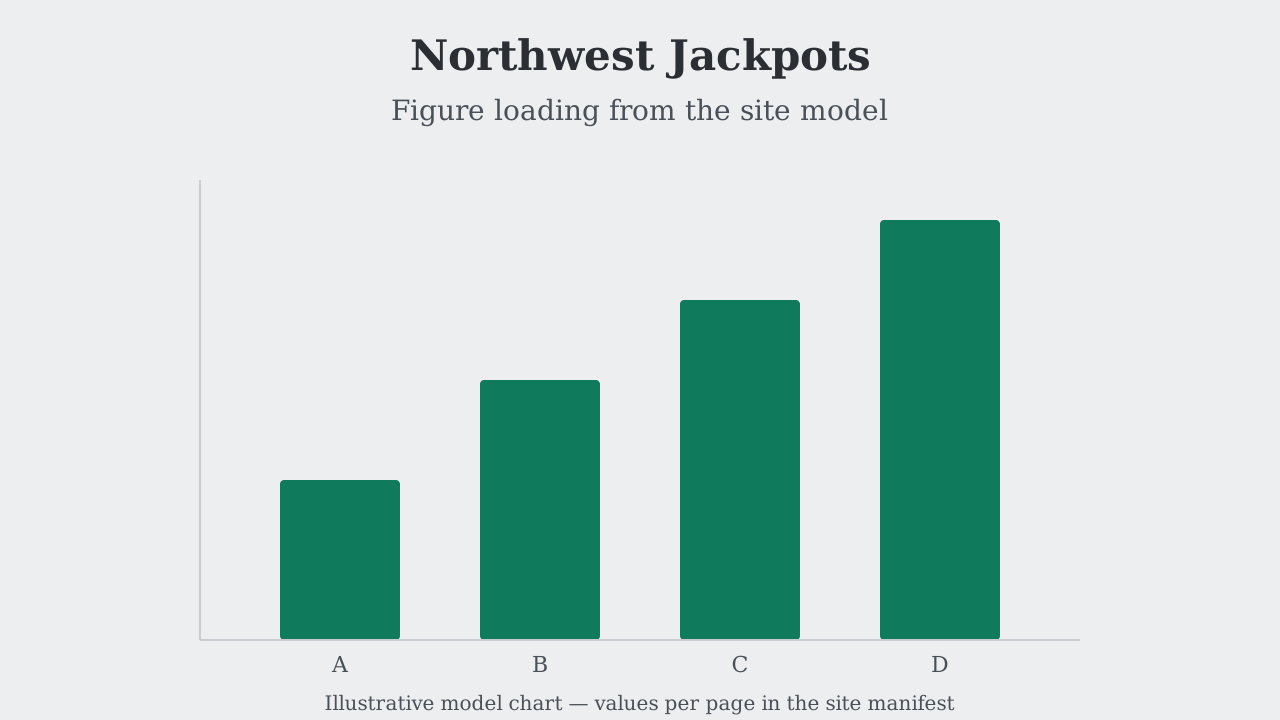
The modelled figure behind this page’s chart assumes three common configurations. A six-deck game paying 3:2 on naturals, dealer standing on soft 17, doubling after split allowed and late surrender available sits near 0.5 percent, which is the benchmark for the whole category. The same deck count paying 6:5 rises near 1.9 percent. A single-deck game paying 3:2 with otherwise ordinary rules drops toward 0.2 percent, which is why such tables, where they exist, usually carry lower limits or stricter rules elsewhere to compensate. These are assumptions about typical configurations, not quotes of any named table, and the pays are always printed on the felt or the table information screen.
One point deserves emphasis because it catches newcomers constantly. The 6:5 payout is frequently attached to single-deck or low-limit tables, presented as a feature. It is the opposite. A single-deck game paying 6:5 is worse than an eight-deck shoe paying 3:2 by a wide margin, because the deck advantage is worth roughly a tenth of what the payout change costs. Any table advertising an attractive deck count should be checked against its payout first and its limit second. The cheapest seat in a casino is rarely the one with the smallest minimum stake.
Basic strategy: what the chart actually buys
Basic strategy is the complete set of correct decisions for every player total against every dealer upcard, given a stated rule set. It was computed decades ago, it has not changed since, and it is not a matter of opinion or style. Following it does not overcome the house edge; it simply refuses to donate more than the rules require. A player guessing at decisions in a typical six-deck game donates somewhere between one and two additional percent to the house compared with a player who follows the chart, and over a session of a few hundred hands that difference is the largest cost most players will ever carry.
The chart compresses into a handful of rules that cover the overwhelming majority of hands. Stand on hard totals of 17 or more, and on 13 through 16 when the dealer shows a low card. Hit those stiff totals when the dealer shows a strong upcard. Always split aces and eights; never split tens or fives. Double on 11 against almost anything, and on 10 against anything but a ten or an ace. Treat soft totals, those containing an ace counted as eleven, as more aggressive than they look, because the ace’s dual value removes the bust risk of one hit. A printed card covering the full matrix fits on a wallet-sized sheet, and using one at the table is permitted in most contexts, though a few live studios discourage physical aids, so check the house policy.
What strategy does not do deserves equal space. It does not track cards, it does not adapt to previous outcomes and it does not change with streaks, because in a shuffled shoe or a continuously shuffled machine every hand is independent. Card counting, whatever fiction suggests, is not a practical proposition online: shoes are cut deeply, reshuffles are frequent, many games use continuous shufflers, and deck composition is not exposed to the player. Any strategy advice that hinges on following previous results, waiting for patterns or adjusting stakes after losses is describing a system, and systems change the shape of the ride without changing its expected cost. The edge against a basic strategy player is small; against a system player it is the same small edge plus the volatility of whatever the system does to bet sizing.
There is one honest refinement worth noting. Basic strategy charts differ slightly by rule set, most visibly on soft 17 tables where a few borderline doubling and hitting decisions flip. The differences are worth hundredths of a percent. A player using a standard six-deck chart at any ordinary table is within rounding distance of optimal. Chasing the last hundredth by memorising three variant charts is a hobby, not a cost-saving measure, and this page will not pretend otherwise.
A session modelled on stated assumptions
The calculator below runs the site’s standard session model: a £200 bankroll, £2 stakes, ten sessions and the house edge input that the manifest carries for this page. The model treats the edge as a fixed cost per pound staked and shows how the bankroll grinds under it, which is the honest way to see a negative-expectation game. Treat the outputs as planning figures rather than forecasts; variance around the expectation is wide in blackjack, because the game’s payout structure is lumpy.
Bonus calculator
Expected cost across 10 sessions: £32.
Model assumptions: the multiplier applies to the bonus amount, a house edge in line with popular titles is charged against the staking, and the cap truncates convertible winnings. Adjust the inputs to price your own case.
Worked at the defaults, ten sessions of steady staking grind the bankroll downward at a rate set by the edge input and the total amount staked. The interesting reading is not the final number, which no model can promise for any particular evening, but the relationship between stake, session length and cost. Halving the stake halves the hourly cost. Shortening the sessions reduces the total staked and therefore the total expected loss, which is why time at the table is itself a spending decision, independent of how carefully the cards are played.
The model carries a stated house edge input, and readers should adjust it to the table they actually play. At 0.5 percent, the benchmark for a well-set 3:2 six-deck game played with basic strategy, the expected cost of the same staking volume is a fraction of the cost at 4 percent, which is the region the input occupies when it models a poor rule set or a heavy diet of side bets. That spread, half a percent against four, is the widest cost lever on this page and it is entirely under the player’s control before the first card is dealt. No betting pattern, no bonus and no table choice after sitting down moves the needle anything like as far.
| Input | Value | Effect on the model |
|---|---|---|
| Bankroll | £200 | Upper bound on what any session can lose in full |
| Stake | £2 | Sets the number of hands per session at a given pace |
| Sessions | 10 | Multiplies the total staking volume |
| House edge input | 4% | Modelling figure at the upper end of the category |
| Edge at 0.5% | Benchmark | Typical cost of a 3:2 six-deck game with basic strategy |
| Edge at 2% | Mid-range | Cost of a 6:5 payout or poor doubling rules |
| Stake halved | £1 | Halves the expected cost per session at any edge |
| Sessions halved | 5 | Halves total staking and therefore total expected loss |
The sensitivity rows make the point that duration and stake size are spending controls, not just preferences. A player who enjoys the game and wants it to last cheaply chooses a low stake at a good table and stops at a planned time, and the model prices that combination honestly. A player who wants large swings is buying volatility, and the model does not condemn it; it simply records that volatility carries the same expected cost per pound staked and arrives less predictably. Both choices are legitimate. Only one of them is usually made with the price visible.
Live blackjack tables in the British market
Live blackjack divides into two products that suit different readers. Studio tables stream from a purpose-built floor with human dealers, several seats per table and bet-behind options that let unlimited players stake on a single seat when the table is full. First-person and RNG tables deal from an animated shoe with no dealer and no waiting, usually at lower limits. The edge depends on the rules, not the format, so the choice between them is about pace, atmosphere and minimum stake rather than mathematics.
Studio play carries a few practical notes. Seat availability at popular stakes is genuine, particularly during evening hours, and bet-behind exists precisely because of it, with the trade-off that you do not control the seated player’s decisions, which means you inherit decisions that may not follow basic strategy and your effective edge on those hands is not the benchmark figure. Streaming consumes data, with high-definition video running at roughly 1.8 gigabytes an hour on mobile connections according to the model used on the sibling live dealer page, so readers on capped connections should drop the stream quality rather than ration the session. Table limits at this end of the market commonly run from around £1 or £5 at the low end to four figures on VIP tables, and the rules are usually shown on an information tab before you sit.
Verification deserves its own paragraph because it differs from RNG play. Licensed British operators stream from studios whose equipment, shuffles and procedures are subject to the standards their licence requires, and disputes about a dealt hand follow the documented complaints route with escalation to independent adjudication. On an offshore site the same stream is a policy question rather than a regulated one: whatever fairness commitments the operator publishes are commitments of the operator. The aside below sets out precisely what that difference costs a player, because it applies to every game on this page, not only the tables with a dealer in view.
With that stated, the practical comparison can run on the merits. Licensed British studios keep the table limits, rules and payouts in plain view, apply stake and time controls as licence conditions require, and process withdrawals under a no-unreasonable-delay standard. Offshore tables frequently offer lower minimums, higher maximums, a wider spread of variants and crypto rails for banking, and those are real advantages for the readers who want them. The trade is protection against breadth, and the table in the next section puts both halves of the market in the same frame so the reader rather than the reviewer does the weighing.
Side bets and why the main game pays for them
Almost every modern blackjack table carries side bets: Perfect Pairs, 21+3 and their many relations. They exist because the main game is nearly free for the player and the operator needs revenue somewhere. A side bet’s edge commonly runs from a few percent to well above ten, an order of magnitude worse than the main game, and the spectacular payout tables on their placards are the marketing for that arithmetic. A player mixing side bets into an otherwise well-played session can multiply their expected cost several times over without ever noticing, because the losses arrive in small frequent increments rather than dramatic ones.
The modelled session input on this page sits at 4 percent for a reason, and that reason is largely side bets. A session in which a portion of each stake goes to Perfect Pairs and 21+3 does not run at the main game’s edge at all; it runs at a weighted average of the two, and the weighting depends on how much you stake on the placard games. The practical guidance is simple: if you enjoy side bets, price them as a separate purchase, size them deliberately and stop pretending they are part of the blackjack strategy. If you want the cheapest entertainment per pound, decline them entirely and the table drops back to its benchmark cost.
Insurance deserves a specific mention, because it is the side bet every player is offered by name. Insurance pays 2:1 when the dealer’s hole card is a ten, and its expected value depends on the proportion of tens left in the shoe, which the player cannot see in ordinary online play. Taking insurance in every situation costs money over time; the basic strategy answer is to decline it, with the sole exception of a player who knows the deck composition, which nobody does in a shuffled online shoe. When the dealer shows an ace, taking even money on your own natural is the same insurance decision wearing different clothes, and the same reasoning applies. Declining it is not brave. It is merely correct over the long run.
One further trap hides in the payouts column of side bet placards: progressive jackpots attached to blackjack side wagers. These deduct a contribution from the stake and pay a claimed jackpot that may be shared or scaled, and their effective edge is worst of all at ordinary jackpot sizes. Sibling pages on this site cost progressive slots on the same logic. The reader who understands one understands the other, because the mechanism, a small regular donation dressed as a lottery ticket, is identical.
Category comparison: what the ranges look like
The table below compiles category-typical ranges across a spread of brands serving the British and offshore markets side by side. Every figure is a range compiled from operator-published terms at the time of writing, not a quote of any single promotion, and no row should be read as the stated offer of the named brand on the day you read this. Check live terms before depositing. The UKGC rows are the British baseline shown for comparison; none of them are claimable at the offshore offers listed further down.
| Brand | Licence label | Welcome offer range | Wagering | Minimum deposit | Payout window | Payment rails |
|---|---|---|---|---|---|---|
| Unibet | UKGC | Matched stake credit to £40 range | Commonly 10–20x | £10 | 1–3 days | Debit card, PayPal, bank transfer |
| MrQ | UKGC | Low-wagering spins or credit bundle | Often under 10x | £10 | 1–2 days | Debit card, PayPal, bank transfer |
| 32Red | UKGC | Matched credit to £150 range | Commonly 20–40x | £10 | 1–3 days | Debit card, PayPal, bank transfer |
| BetMGM | UKGC | Match or spins bundle to £100 range | Commonly 20–35x | £10 | 1–3 days | Debit card, PayPal, Apple Pay, bank transfer |
| All British Casino | UKGC | Matched credit to £100 range | Commonly 30–40x | £10–£20 | 1–2 days | Debit card, Trustly, bank transfer |
| Pink Casino | UKGC | Matched credit to £100 range | Commonly 20–40x | £10 | 1–3 days | Debit card, PayPal, bank transfer |
| PartyCasino | UKGC | Match package to £100+ range | Commonly 20–40x | £10 | 1–3 days | Debit card, PayPal, Apple Pay, bank transfer |
| Kinghills | Offshore | Multi-tier match to £1,000+ range | Commonly 35–50x | £20 | 0–2 days | Debit card, e-wallets, crypto |
| NineWin | Offshore | Match package with spins | Commonly 35–45x | £20 | 0–2 days | Debit card, e-wallets, crypto |
| Roobet | Offshore | Credit or match package, crypto-first | Varies by product | Crypto equivalent | 0–1 days | Crypto, e-wallets |
| Gamdom | Offshore | Match or rakeback-style package | Varies by product | Crypto equivalent | 0–1 days | Crypto, e-wallets |
Read the table as two markets described at once. The UKGC rows show modest welcome offers, wagering that is frequently light to moderate, £10 minimum deposits and payout windows bounded by published processing commitments, with blackjack tables whose rules and pays are displayed and whose disputes follow a documented route. The offshore rows show larger headline matches, heavier wagering, higher entry deposits, faster rails and crypto banking, with the protections described in the aside above absent by definition. Neither column is uniformly better; the trade is headline size against regulatory cover, and the reader makes it consciously or not at all.
Note where the ranges overlap, because overlap is where real comparisons live. On payout windows, rail choice matters more than licence, so a crypto-depositing offshore player and an e-wallet-depositing British player may see funds at similar speeds despite entirely different recourse. On wagering, the offshore rows sit heavier across the board, which matters for any reader who intends to claim a bonus and then clear it at the blackjack tables, because table game weighting in bonus terms is commonly a small fraction or zero. That last point is the one blackjack players most often discover late: a welcome bonus cleared at the blackjack table frequently requires many times its printed wagering, and on some licensed sites live dealer play is excluded from bonus clearing altogether. Read the weighting clause before claiming, not after.
How to choose a table
Four checks settle any table choice, and they take less time than the signup process of the site hosting it. First, the pays: 3:2 on naturals is the line to hold, and a 6:5 table is declined whatever else it offers. Second, the deck count and the dealer rule: more decks cost a little, hitting soft 17 costs a little more, and the combination tells you which end of the 0.5 to 2 percent spread you are buying. Third, the minimum stake relative to the bankroll you have actually set aside, because a £2 stake on a £200 bankroll is a different purchase from a £10 stake on the same money, whatever the rules say. Fourth, the side bet placard, which is where the house earns back everything the good rules gave away.
Beyond the table itself, the site hosting it deserves the same scrutiny as any other purchase. A licensed British operator brings GAMSTOP coverage, deposit limits, the documented disputes route and fund protection standards; the aside above prices what choosing otherwise gives up. A site’s withdrawal record is public information in the sense that its published processing commitments are enforceable claims on a licensed site and merely promises on an offshore one, and the difference only costs money when something goes wrong. Readers who have never had a withdrawal held may reasonably price that at zero. Readers who have will price it higher. Both are rational; the point is knowing which kind of reader you are before the deposit rather than after.
Finally, a word on sessions. Blackjack is fast, faster per hand than any other live table game, and the speed itself is a spending variable. A basic strategy player at a good table loses at the rate of the edge multiplied by the staking volume, and the staking volume is a function of hands per hour, which the player controls through pace, breaks and session length. Setting a time and a stop-loss before sitting down does more for the evening’s cost than any decision at the felt. The hub page on live casino UK extends this reasoning across roulette and baccarat, where the same structure of rule, edge and pace applies with different numbers, and the sibling pages take each game in turn.
Frequently asked questions
What is the house edge in online blackjack?
At a typical six-deck table paying 3:2 on naturals, with the dealer standing on soft 17 and doubling after split permitted, the edge against a basic strategy player is around half a percent. Rule changes move it: a 6:5 payout alone pushes the figure toward 2 percent, and poor doubling or surrender rules add further fractions. The pays are printed on the table, so the number is knowable before you stake.
Does basic strategy work online?
Yes. Online blackjack deals from the same probability structure as a physical shoe, so the same chart applies. It does not overcome the house edge; it stops you paying more than the rules require. A player guessing loses one to two percent more over a session than a player following the chart, which is the single largest avoidable cost in the game.
Can you count cards at an online casino?
Not in any practical sense. Online shoes are cut deeply, reshuffled often, and many games use continuous shufflers that reset the count every hand. Deck composition is not exposed to the player. Treat any strategy claiming otherwise as a betting system, which changes variance without changing expected cost.
Why is a 6:5 blackjack payout a problem?
Because naturals are a major part of the player’s return, and cutting the payout from 1.5 times to 1.2 times costs roughly 1.4 percent of expected value. That is several times larger than every other rule difference combined, which is why a 6:5 table is worse than a well-set 8-deck 3:2 game even when the 6:5 table uses fewer decks or a lower minimum stake.
Should I take insurance when the dealer shows an ace?
Ordinarily no. Insurance is a side bet on the dealer’s hole card being a ten, and in ordinary online play you cannot know the deck composition well enough to make it profitable. Taking even money on your own natural is the same bet in different clothes. Basic strategy declines both, and over time the arithmetic holds.
Are side bets ever worth taking?
As entertainment, priced separately, yes. As strategy, no. Side bets commonly carry edges of several percent to above ten, against the main game’s half a percent, so a session mixing them in runs far more expensive than its rules suggest. If you want them, size them deliberately and count them as a separate purchase from the blackjack itself.
Do welcome bonuses clear at blackjack tables?
Rarely on favourable terms. Bonus terms commonly weight table games at 10% or zero toward wagering, and some operators exclude live dealer play from bonus clearing entirely. A bonus cleared at the blackjack table can therefore require many times its printed wagering. Read the weighting clause before claiming, and assume the bonus is priced for slot play unless stated otherwise.
How many decks are best?
Fewer is better, but the difference is small compared with the payout rule. Moving from eight decks to one is worth a fraction of a percent; moving from 3:2 to 6:5 costs over a full percent. A single-deck game paying 6:5 is a worse product than an eight-deck shoe paying 3:2, so check the pays before celebrating the deck count.
What is bet-behind and does it change the odds?
Bet-behind lets you stake on a seat another player occupies when the table is full. The rules are the same, but you do not control the decisions, so if the seated player departs from basic strategy your effective cost rises. It is a reasonable way to join a full table at low stakes if you accept that your results ride on a stranger’s play.
Are offshore blackjack sites fair?
Fairness there is a policy question rather than a regulated one. Offshore operators hold licences from other jurisdictions, and whatever those provide, they do not include GAMSTOP coverage, the Commission’s disputes route with independent adjudication, or British fund segregation standards. Some offshore sites are well run; the difference is that on a licensed site, fair dealing is enforceable, not promised. This page states the trade and leaves the weighing to the reader.
How fast are withdrawals from live casino sites?
On the model used across this site, e-wallets clear in around an hour once released, debit cards in around two days and bank transfer in around a day. Licensed British operators must process withdrawals without unreasonable delay under their licence conditions, and identity checks most often trigger at the first withdrawal, so uploading documents early makes the first payout behave like the second.
What bankroll do I need for blackjack?
The honest answer is whatever you have decided you can spend on the session, because the game has a negative expectation at any stake. The model on this page uses £200 at £2 stakes, which buys a long session at a good table. Stake size should follow the bankroll, not the other way round, and a stop-loss set before sitting does more for the evening’s cost than any decision at the felt.