No Deposit Bonus 2026
A ten pound credit with nothing paid in sounds like the cheapest ticket in gambling, and in one sense it is: your own money never leaves your pocket. What has changed in 2026 is the shape of the terms around that credit. Win caps have drifted downward, wagering multipliers have crept up, and verification has moved earlier in the journey. This page prices the modern no deposit offer on stated assumptions, so the gap between the headline and the cashout can be seen before the account is opened.
No deposit offers in the British-facing market are typically small credits or spin bundles granted on registration, and they usually carry heavier terms relative to their size than matched deposit promotions: wagering commonly sits around forty times, win caps frequently land in the low tens of pounds, and identity checks increasingly arrive before the first withdrawal rather than after it. Every figure on this page is an assumption about category-typical terms. Verify the live terms on the operator’s own promotions page before claiming anything, because these offers change more often than any other kind.
Terms change often. Verify the current terms on the operator’s own page before depositing. Scores are editorial.
8.2/10See offer terms
8.0/10See offer terms
7.8/10See offer terms
7.5/10See offer terms
What changed by 2026
The no deposit offer of a few years ago was a simpler animal. A site handed over a ten pound credit, attached a wagering multiplier, and let the outcome fall where it fell. The modern version is more engineered. Operators learned that uncapped no deposit credits attract bonus hunters who convert small grants into steady withdrawals, and the terms have tightened in response. Three shifts define the 2026 landscape, and each one changes what a claim is worth.
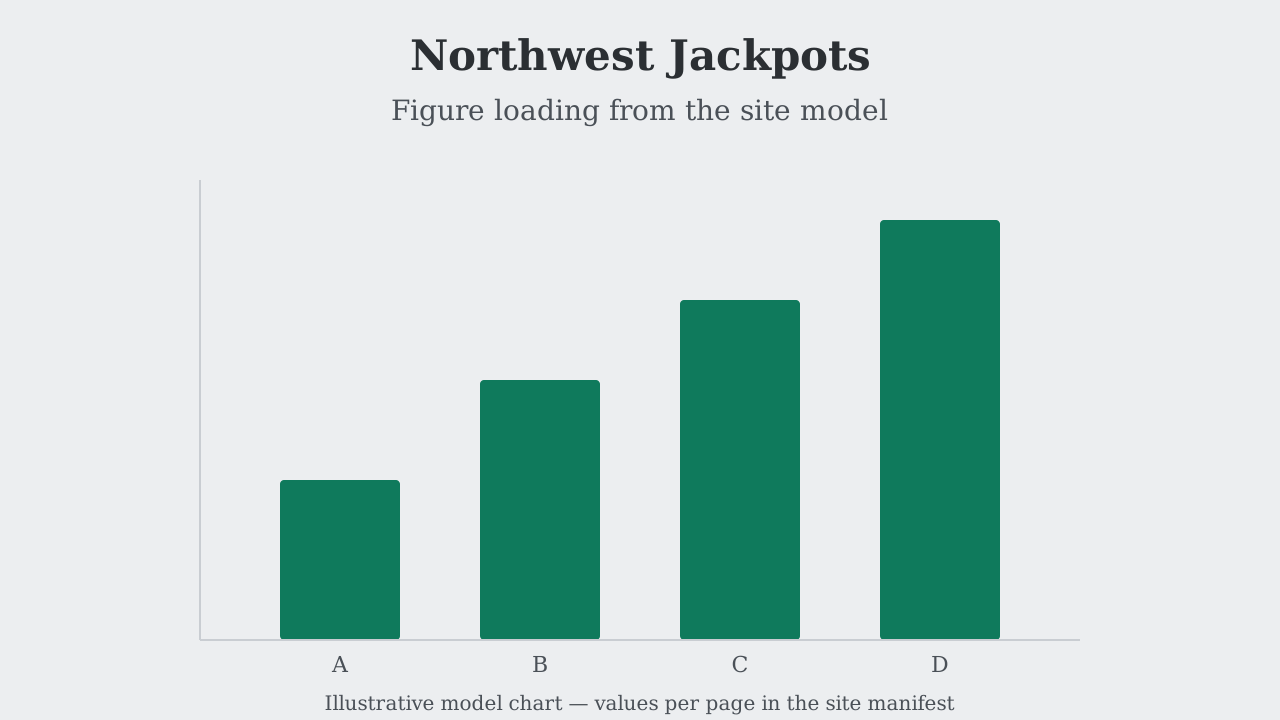
The first shift is the cap. Where a twenty pound ceiling on no deposit winnings was once unremarkable, the typical figure has moved down through the mid-teens and now sits near ten pounds on many offers. The chart below shows the drift as this site models it, and the direction matters more than any single point: a player comparing a 2026 offer against remembered terms from earlier years is comparing different products, even when the headline credit is identical.
The second shift is verification. Registrations that once required only an email now commonly trigger age and identity checks at or near sign-up, because regulators expect operators to know who their customers are before play begins in earnest. The practical consequence is that the “no deposit” journey takes longer than it used to: documents may be requested before a single spin is made, and the first withdrawal can carry a further round of checks. Readers who budget an hour for the whole process are closer to the mark than readers who budget five minutes.
The third shift is the advertising environment. Tighter rules around how promotions may be presented mean the largest operators, the licensed British ones, have pulled back from no deposit offers almost entirely, which pushes this kind of promotion toward the offshore end of the market and toward smaller white-label brands. That migration matters, because it changes the licence question that every page on this site treats as central. A no deposit offer in 2026 is more likely than its predecessors to come from an operator holding no Gambling Commission licence, and the aside below sets out what that costs.
None of these shifts make the category worthless. A small credit with no money at risk remains the cheapest way to sample a site’s lobby, its payout process and its terms page before committing funds. What the shifts do change is the expected value of the exercise, and the honest way to approach it is to price the offer before claiming it, using the same assumptions every time so one offer can be compared with the next.
The credit maths, worked in full
The calculator below is set to the standard case this site uses across its bonus pages: a £100 deposit, a 100% match, a forty-times multiplier and a £500 cap. No deposit offers do not involve a deposit, so treat the model as the matched-offer baseline against which the no deposit figures in this section are compared. Change the inputs to match any offer you are considering and the arithmetic follows.
Bonus calculator
Bonus £100, staking requirement £4,000.
Model assumptions: the multiplier applies to the bonus amount, a house edge in line with popular titles is charged against the staking, and the cap truncates convertible winnings. Adjust the inputs to price your own case.
For the no deposit case itself, the arithmetic runs on different starting numbers. Take the typical 2026 offer: a £10 credit with a forty-times wagering requirement and a £10 cap. The wagering requirement is £400 of staking on qualifying games, almost always slots contributing at full weight. At a 4% house edge assumption, clearing £400 of staking costs £16 in expected losses, which exceeds the £10 credit before any cap is applied. On those assumptions the expected value of the offer is negative, and the cap at £10 truncates whatever upside survives.
That negative expectation is not a scandal; it is the design. The operator is buying something with the credit: a verified account, a sampled lobby, a data point on the player’s game preferences and a route to a deposit prompt once the credit runs out. The player is buying something too: risk-free in the sense that no own money is staked, though the phrase needs care, because the expected outcome is a zero balance rather than a withdrawal. The rational framing is to treat the credit as a paid trial where the payment is your time and the operator funds the ticket.
Two variables can move the outcome above expectation. The first is game selection during wagering. A credit cleared on a 96% RTP slot behaves differently from one cleared on a 94% title, and the difference compounds across the full £400 of staking. The second is volatility. High-variance slots produce wide swings that occasionally carry a £10 credit past the cap boundary before the grind of the requirement pulls it back down; low-variance titles track the expected decay closely. Neither choice changes the expectation, but both change the probability of any withdrawal at all, and on a capped small credit the probability of crossing the cap is the only outcome that matters.
The comparison with a matched offer is instructive. A £100 deposit matched at 100% with identical wagering carries a £4,000 requirement and a £500 cap, and its expected value is also negative on standard assumptions, but the absolute scale is different: more money at risk, more potential upside, a longer journey. The no deposit offer compresses the whole structure into miniature. Small requirement, small cap, short window, negligible upside. Readers whose goal is entertainment get a fine deal from that compression. Readers whose goal is a withdrawal are better served by understanding that the cap is doing most of the work in the terms, which is the subject of the next section.
Why win caps keep shrinking
A win cap on no deposit credit exists for a plain commercial reason: without it, every account that clears the wagering converts the full balance, and the operator funds withdrawals out of its own pocket with no deposit ever received. The cap converts an open-ended liability into a bounded marketing cost. The question worth asking is why the bound has tightened, and the answer is competition arithmetic rather than regulation alone.
When a category of offer becomes popular, the operators running it aggregate the outcomes and adjust. If the average cost per claimed account exceeds the average value of a converting depositor, the terms tighten: the cap drops, the multiplier rises, eligible games narrow. The drift modelled in the chart above, from around £20 toward around £10, is consistent with that adjustment cycle running for several years. Nothing in the process requires bad faith. It is pricing responding to usage, the same way any promotional budget gets cut when the return disappoints.
For the reader, the practical consequence is that the cap, not the credit size, is the number to find first. A £20 credit with a £10 cap is a smaller offer than a £10 credit with a £20 cap, despite the headline suggesting the reverse. The cap defines the maximum the exercise can pay; the credit defines only the starting balance on the road to it. Because wagering decays the balance at the house edge rate, a credit barely larger than its cap has almost no room to reach the boundary, which is why offers where the cap equals or exceeds the credit deserve particular attention, in the good direction, when they appear.
Time limits interact with caps in a way worth naming. Wagering windows on no deposit offers commonly run from twenty-four hours to seven days, shorter than the fourteen to thirty days typical of matched offers, because the operator wants the trial concluded quickly. A short window on a high-variance game is a different product from the same window on a low-variance one. Readers should match their game choice to the window they are given: a three-day window suits a plan of regular moderate stakes, while an overnight window forces a decision between grinding safely and swinging for the cap.
One further term deserves a sentence: maximum conversion. Some offers limit how much of the bonus balance converts to withdrawable cash regardless of the final balance, functioning like a cap with a different name. Where both a cap and a conversion limit appear, the lower figure governs. Reading the terms for both takes under a minute, and it is the most valuable minute in the whole claiming process.
Verification: earlier than it used to be
The phrase “no deposit” once implied a frictionless sign-up, and some readers still arrive expecting that. The 2026 reality is different on the licensed side of the market and increasingly different offshore. Age verification at registration is a baseline expectation under British licence conditions, and operators have responded with database checks that approve most applicants in seconds. Where the database check fails or the details do not match, document requests follow before play proceeds, and the no deposit journey pauses until they are satisfied.
The withdrawal stage adds a second round. Source-of-funds questions are rare on a £10 cashout, but identity confirmation is not, and operators commonly hold a first withdrawal until documents are verified even when registration went smoothly. The practical mitigation is to complete verification before it is demanded: upload the standard documents early, so the first cashout behaves like the second. This site’s guides on fast verification casinos and no ID verification casinos cover the mechanics in detail, and the sibling pages of the no deposit hub extend them to specific offer types.
Offshore operators sit outside the British framework, and their verification practice varies more widely. Some verify lightly at registration and heavily at withdrawal; others do the reverse; a few operate a policy the reader can only discover by testing it. That variability is itself a fact worth weighing: the same credit claimed at two offshore sites can involve very different document demands, and neither site’s practice is bounded by the licence conditions a British operator works under. The aside below returns to that theme.
Payment rails shape the verification picture too. A withdrawal to an e-wallet or by crypto clears quickly once approved, but the approval step is where the time goes, and rail choice does not shorten it. Depositing by a rail that cannot receive withdrawals, some voucher methods among them, forces a rail switch at cashout, which itself triggers checks. Readers planning to claim a no deposit offer and withdraw should choose the withdrawal rail first and register with it in mind.
Category comparison: what the ranges look like
The table below compiles category-typical ranges across a spread of sites serving the British market and the offshore market alongside it. Every figure is a range compiled from operator-published terms at the time of writing, not a quote of any single promotion, and no row should be read as the stated offer of the named site on the day you read this. The UKGC rows are the British baseline shown for comparison. Check live terms before claiming anything.
| Brand | Licence label | Welcome offer range | Wagering | Minimum deposit | Payout window | Payment rails |
|---|---|---|---|---|---|---|
| MrQ | UKGC | Low-value spins or credit on registration | Often under 10x | £10 | 1–2 days | Debit card, PayPal, bank transfer |
| PlayOJO | UKGC | Spin bundle, wagering-free structure | None on spin wins | £10 | 1–2 days | Debit card, PayPal, Trustly, bank transfer |
| Casumo | UKGC | Matched deposit with light wagering | Commonly 20–30x | £10 | 1–3 days | Debit card, PayPal, bank transfer |
| Virgin Games | UKGC | Low-value games credit on sign-up | Often under 10x | £10 | 1–3 days | Debit card, PayPal, bank transfer |
| All British Casino | UKGC | Modest match on first deposit | Commonly 20–35x | £10 | 1–3 days | Debit card, bank transfer |
| Sun Bingo | UKGC | Bingo tickets and spins bundle | Varies by product | £10 | 1–3 days | Debit card, PayPal, Apple Pay, bank transfer |
| Mystake | Offshore | Multi-tier match to £1,000 range | Commonly 30–40x | £20 | 0–2 days | Debit card, e-wallets, crypto, bank transfer |
| Goldenbet | Offshore | Match package with recurring reloads | Commonly 35–45x | £20 | 0–2 days | Debit card, e-wallets, crypto |
| Donbet | Offshore | Match package with free spins | Commonly 35–45x | £20 | 0–2 days | Debit card, e-wallets, crypto |
| Kinghills | Offshore | Match package with spin bundles | Commonly 35–50x | £20 | 0–2 days | Debit card, e-wallets, crypto |
| NineWin | Offshore | Multi-tier match to £1,000+ range | Commonly 35–45x | £20 | 0–2 days | Debit card, e-wallets, crypto, bank transfer |
| Rolletto | Offshore | Match package to £2,000 range | Commonly 40–45x | £20 | 0–2 days | Debit card, e-wallets, crypto, bank transfer |
Two patterns stand out when the table is read as a whole. The first is that genuinely no deposit offers have become rare among the licensed British rows: the UKGC operators more commonly attach their small sign-up incentives to a first deposit or run wagering-free spin bundles instead. The second is that the offshore rows pair larger headline offers with heavier wagering and a £20 minimum deposit, which matters less for a no deposit claim itself but matters a great deal if the credit is a gateway to a funded account, as the operator intends it to be.
Readers comparing the two halves should also notice the payment rail column. The offshore operators lean on e-wallets and crypto, partly because some British payment providers decline transactions with unlicensed operators. The rail list is therefore a regulatory signal as much as a convenience feature, and it is worth reading before the sign-up form rather than after.
The licence trade-off, stated plainly
Applied to no deposit offers specifically, the trade-off has a sharper edge than usual, because the amounts are small and the temptation is to treat the licence question as proportionally small too. That reasoning holds for the credit itself and fails at the next step. A no deposit claim that converts into a first deposit moves the reader from a bounded trial onto an operator’s books, and the protections that were irrelevant at £10 are relevant at £100. The rational approach is to decide the licence question before the credit is claimed, not after the deposit prompt arrives, because the prompt is engineered to arrive at the moment of maximum engagement.
Dispute experience deserves its own paragraph even in a small-stakes context. A £10 withdrawal declined on a technicality costs little money and a great deal of time, and the cost of pursuing it exceeds the sum at issue almost immediately. Under a British licence the escalation route exists and is free. Offshore, the same dispute may simply end where the operator’s patience ends. Readers who would not contest a small loss should still register where the recourse sits, because the same terms govern any later, larger balance.
Safer gambling tools form the third leg of the comparison. Licensed operators must offer deposit limits, reality checks and self-exclusion, and participation in GAMSTOP is a licence condition. Offshore operators may offer some equivalent tools at their own discretion, but the coverage and enforcement differ. A reader using no deposit offers to sample sites should sample within whatever boundaries they have set themselves, and should understand that a registered GAMSTOP exclusion is not enforced beyond the licensed market before considering any operator outside the scheme.
A checklist before claiming
The claiming process for a no deposit offer is short, which is precisely why a checklist earns its keep: five minutes of reading against a process that takes ten. Run the following six checks against any offer before registration, and the terms stop being a surprise.
First, find the cap. Search the terms page for “maximum win”, “max cashout” or “conversion”, and write the figure down. If no cap is stated, treat the offer as materially better than average, but confirm the absence in writing through support if the credit is worth the effort. Second, find the wagering base and multiplier. “40x bonus” on a £10 credit is £400 of staking; “40x winnings” is a different structure entirely and usually cheaper. Third, check the eligible games. No deposit credits are usually restricted to named slots, and the restriction list can exclude the titles you would actually choose.
Fourth, check the time limit. Windows under seventy-two hours change the game-selection strategy, as the section above describes. Fifth, check the verification demands at both registration and withdrawal, because a credit that requires a passport scan to register is a different proposition from one that does not. Sixth, check the withdrawal trigger: some offers require a deposit before any withdrawal from bonus winnings is permitted, which converts the “no deposit” label into something closer to a delayed deposit requirement, and it is the single most common trap in the category.
That last point deserves expansion because it trips the most readers. Offers requiring a funded account before cashout are still marketed under no deposit headlines, and the reader discovers the requirement only at the point of withdrawal. Where the trigger exists it is usually stated in the terms under “withdrawal” or “redemption”. A reader who finds it there can decide with open eyes whether the offer is worth a deposit they had not planned to make, which is a very different decision from discovering it at the cashier with a balance already sitting in the account.
The checklist takes its six items from the same costing method this site applies to matched offers, scaled down to the small-credit case. Sibling pages in the no deposit hub apply the full version: the guide to no deposit casino bonus UK terms covers the wagering structures in more depth, the codes page covers redemption mechanics, and the keep-winnings page examines which offers genuinely pay out. The hub page holds the family together, and each page uses the same assumptions so figures mean the same thing across all of them.
Common mistakes with small credits
Small stakes produce small errors, and the temptation is to dismiss them. The errors below recur often enough to be worth naming, not because any single one is costly in pounds, but because each one teaches a habit that becomes expensive when the same account later carries real money.
The first mistake is chasing the cap past its own arithmetic. A reader with a £5 remaining balance and a £10 cap, deep into a wagering window, sometimes increases stakes to reach the boundary faster. Larger stakes accelerate variance in both directions, and on a negative-expectation product the acceleration works against the reader more often than not. The cap boundary is crossed by variance, not by effort, and the stake plan should reflect the window and the game edge rather than the distance to the boundary.
The second mistake is ignoring game weighting. A credit cleared partly on table games or live dealer titles, where contributions are commonly a tenth of the printed rate or zero, silently extends the requirement tenfold. The eligible-games list in the terms resolves this in a glance. The third mistake is breaching the maximum bet. Offers commonly cap the stake per round during wagering, often around £5, and exceeding it can void winnings retroactively. Set a stake level on day one that cannot breach the cap, and the clause becomes inert.
The fourth mistake is opening accounts purely to farm offers. Multiple registrations from one household or one payment identity breach most operators’ terms and can void every associated withdrawal. The value of a single honest claim, priced correctly, exceeds the aggregate value of several claims carrying void risk. The fifth mistake is skipping the exit. A credit that runs to zero with nothing learned about the site’s payout process has delivered entertainment and nothing else; a claim made with the withdrawal path in mind from the start delivers information that survives the credit.
The sixth mistake belongs to the reader rather than the process: treating the expected value of a no deposit offer as a reason to claim it or not. On standard assumptions the expectation is negative and small. The real value is the trial: a verified look at how an operator verifies, pays and behaves before any own money moves. Priced as a trial, the offer is often worth it. Priced as income, it never is. Holding both framings at once is the whole skill, and this page exists to make the second framing visible before the first one carries the reader into a deposit.
Frequently asked questions
Can you really win money from a no deposit bonus in 2026?
Withdrawals happen, but they are bounded by the win cap and the wagering requirement. On the modelled typical offer, a £10 credit at forty times wagering with a £10 cap, the expected value is negative before variance is considered. Individual accounts do clear the requirement and cross the cap, but the rational framing is a paid trial of the site rather than an income source.
Why are win caps on no deposit offers lower than they used to be?
Caps are the operator’s control on a promotion that costs money with no deposit received, and they have tightened as the category matured. This site’s model has typical caps moving from around £20 toward around £10 over recent years. The drift reflects commercial adjustment rather than any single rule change, and each operator sets its own figure.
Do I need to verify my identity before claiming?
Often yes. Licensed British operators run age and identity checks at or near registration, usually via database checks that approve in seconds, with document requests where the check fails. Offshore practice varies more widely. A second round of checks commonly attaches to the first withdrawal, so uploading documents early keeps the cashout moving.
What does 40x wagering on a £10 credit mean in practice?
It means £400 of staking on qualifying games, almost always slots at full contribution, before a withdrawal unlocks. At a 4% house edge assumption, clearing that staking costs about £16 in expected losses, which exceeds the credit itself. Table games usually contribute a fraction or nothing, so clearing on them stretches the requirement dramatically.
Are no deposit offers available at UK licensed casinos?
They have become rare. Licensed operators more commonly attach small sign-up incentives to a first deposit or run wagering-free spin bundles, partly because tighter advertising rules constrain how credit-style promotions are presented. The no deposit format is now more often found at offshore-facing operators, which raises the licence question every reader should settle before claiming.
What happens if a no deposit offer requires a deposit before withdrawal?
Some offers permit the credit and the play but require a funded account before any cashout, which converts the headline into a delayed deposit requirement. The condition is usually printed under the withdrawal or redemption section of the terms. Finding it before registration lets you decide with open eyes; finding it at the cashier leaves you choosing with a balance already in the account.
How long does the whole process take, from claim to cashout?
Registration and verification can take minutes with a database check or days with document review. The wagering window commonly runs from twenty-four hours to seven days. After a withdrawal request, e-wallet payouts typically clear within hours once approved, card payouts within a couple of days, and the approval step is where most delay sits on a first cashout.
Does GamStop cover sites offering no deposit bonuses?
GamStop covers operators licensed by the Gambling Commission only. An offshore operator offering a no deposit credit sits outside the scheme, so a registered exclusion is not enforced there. Anyone relying on self-exclusion should understand that boundary before considering any operator outside the licensed market.
Is the expected value of a no deposit offer ever positive?
Occasionally, on offers combining light wagering, no cap or a cap above the credit, and high-RTP eligible games. Such offers exist but are uncommon and usually short-lived. The honest approach is to price each offer on its own terms using the same assumptions every time, rather than assuming the category as a whole carries positive value.