Fast Withdrawal Casinos
A welcome offer is only worth what the payout process lets you keep, and the payout process is where most of the market quietly slows down. This page measures the gap between the button that says withdraw and the moment money sits in your account: the pending queue, the review step, the rail you funded with and the identity checks that arrive at the worst possible time. We model the hours, name the assumptions behind every figure, and show which choices at the deposit stage decide your cashout speed before you ever press the button.
Fast withdrawal casinos promise money in hours rather than days, and offers of this kind usually deliver that promise on one rail out of three while the others run at ordinary speed. Verify the published processing windows on the operator’s own banking page before depositing, because the promise on the homepage and the queue in the cashier are frequently different products.
Terms change often. Verify the current terms on the operator’s own page before depositing. Scores are editorial.
8.2/10See offer terms
8.0/10See offer terms
7.8/10See offer terms
7.5/10See offer terms
- Speed is the product nobody advertises honestly
- Anatomy of a withdrawal: the four stages of waiting
- Hours to money in hand, modelled
- Payout speed by payment rail
- Verification and the first withdrawal trap
- Category comparison: what the ranges look like
- The licence question and the offshore trade-off
- Fees, limits and the small costs of cashing out
- How to choose a fast-payout site
Speed is the product nobody advertises honestly
Ask a room of players what makes a casino good and you will hear about game libraries, about welcome offers, about apps and design and customer service. Ask the same room what makes a casino bad and the answer changes completely. Slow payouts. Money held for days. Requests that sit in a pending state while the balance sits within reach of another spin. The thing players punish hardest is not the thing operators compete on loudest, and that mismatch is the reason this page exists.
The pattern is easy to explain without conspiracies. A game library is cheap to advertise and expensive to build, so it gets advertised. A payout queue is invisible until the moment it matters, and by that moment you have already deposited, already played and, in many cases, already lost the stake that would have been withdrawn. Slow processing is not a bug in the business model; for a minority of operators it is a feature, because every hour a withdrawal sits pending is an hour the money remains technically stakable, and a meaningful share of players cancel their own requests during that window. Operators know the cancellation rate. The honest ones shorten the queue anyway. The rest call two-day processing “lightning fast” on the homepage and hope nobody reads the cashier page.
So the first job of a page about fast withdrawal casinos is definitional. Fast is not a marketing adjective here. Fast is a number of hours between three events: you request the withdrawal, the operator approves it, and the money clears to the destination you named. Each of those three events has its own duration, its own causes and its own remedies, and the total is the only figure that matters. A site that approves in ten minutes and then sends your money by a rail that takes three days is not a fast casino; it is an ordinary casino with a quick rubber stamp. A site with a six-hour review queue on a crypto rail may beat it end to end. Measuring the middle stage and ignoring the other two is how the advertising gets away with it.
There is a second definitional point, and it is the one that catches new players most often. Withdrawal speed is largely decided at the deposit stage, not the withdrawal stage. The rail you fund with constrains the rail that can pay you, the account name that must match, and the verification path your money will travel. A player who deposits by debit card on a Tuesday and then expects e-wallet speed on Wednesday has made the slow choice already, without knowing it, because the fast choice was visible only at the moment of funding. Everything that follows in this section is written to move that knowledge to the front of the process where it can do some good.
None of this means speed is unattainable. The market genuinely has split into two speed tiers. One tier processes payouts within a working day as a matter of policy, staffs the review function accordingly and publishes cut-off times. The other treats the pending queue as a free float and lets requests age. The difference between the tiers is visible in the terms, in the cashier page and in the rail list, and a reader who knows what to look for can sort a site into its tier in about five minutes of reading before any money moves. The rest of this page is that five minutes, written out in full.
Anatomy of a withdrawal: the four stages of waiting
Every withdrawal, at every site, passes through the same four stages, and the total time is the sum of the four. Understanding the stages separately is what turns a vague complaint about slowness into a specific, fixable problem.
Stage one is your own request. This sounds trivial and it is not. Requests submitted late in the evening, at weekends or immediately after a large win are the requests most likely to sit longest, because the review function that approves them is staffed around a working pattern that does not match when players play. Some operators run automated approval around the clock; others batch-process at set intervals; a few release requests only during business hours. The published cut-off time tells you which. A request placed five minutes before a daily cut-off behaves completely differently from the same request placed five minutes after it, and the difference is not the site’s fault or yours; it is arithmetic. Learning the cut-off pattern of a site is the single cheapest speed improvement available, and it costs nothing but a read of the banking page.
Stage two is the operator’s internal review, and this is where the word pending lives. During review the site checks that the request is yours, that the wagering on any active bonus has been satisfied or that no bonus condition is being breached by the withdrawal, and that the amount falls within the daily and per-transaction limits attached to your account level. First requests get the fullest version of this review; subsequent requests usually sail through on pattern recognition. The review stage is also where most genuine delays originate, because a single flagged item, an unmatched name, a deposit from a joint account, a stale document, converts a routine approval into a manual case. The remedies are dull and effective: verify your identity before you are asked, withdraw to the account in your own name, and avoid requesting a withdrawal while a bonus is still active unless you have read the forfeiture clause and accepted it.
Stage three is the operator’s release, the moment the request moves from their ledger to the payment rail. Here the difference between tiers becomes physical. Fast-tier operators release in batches throughout the day, sometimes within minutes of approval. Slow-tier operators release on a schedule that can add a day or more, and the schedule is rarely published in a prominent place. This stage is also where the licence question first bites, in a way the next section takes up properly: on a British-licensed site, the regulator’s licence conditions require withdrawals to be handled without unreasonable delay, which gives the stage-three schedule a floor under it. On an offshore site, the stage-three schedule is whatever the operator says it is, and there is no third party whose business it is to disagree.
Stage four is the rail itself, and its duration depends entirely on which rail you chose at the deposit. E-wallet transfers execute in seconds once released, so the rail adds almost nothing. Card payments clear through scheme processes measured in hours to days. Bank transfers depend on the sending and receiving institutions. Crypto depends on the chain and the fee paid. The operator controls stage three; the rail controls stage four; you control the choice of rail at stage zero, before any of it begins. A player who wants speed should therefore evaluate a site on the combination of its release record and its fastest rail, never on either alone.
Added together, the four stages explain the spread you will see across this page’s figures. One hour end to end is achievable when review is automated, release is same-day and the rail is instant. Three days end to end happens when each stage adds its default allowance and nobody along the chain has any incentive to hurry. The difference between those outcomes is not luck. It is the sum of decisions, most of which were made before the request was ever pressed.
Hours to money in hand, modelled
The calculator below is set to the standard case this site uses across its costing pages: a £100 deposit, a 100% match, a forty-times wagering multiplier and a £500 winnings cap. Those defaults reflect the terms offers of this kind typically carry in the British-facing and offshore markets alike, stated as assumptions rather than quotes. Change the inputs and the model recalculates the staking requirement standing between a deposit and a withdrawable balance, because on most sites the clock that matters starts when the wagering ends, not when the deposit lands.
Bonus calculator
Bonus £100, staking requirement £4,000.
Model assumptions: the multiplier applies to the bonus amount, a house edge in line with popular titles is charged against the staking, and the cap truncates convertible winnings. Adjust the inputs to price your own case.
The connection between the calculator and payout speed is worth spelling out, because it is the point most bonus reviews skip. A wagering requirement is a time requirement in disguise. Clearing £4,000 of staking at £2 a spin is two thousand spins, and at a realistic pace of six to eight spins a minute that is several hours of continuous play across multiple sessions. The bonus that looked like a windfall on the promotions page is, from a payout-speed perspective, a delay of days inserted between your money and your money. A player whose real priority is fast access to winnings should weigh a smaller match with lighter wagering far more heavily than a larger match with heavy wagering, because the light offer converts to a withdrawable balance in an evening while the heavy one occupies a week.
Worked at the defaults: the bonus is £100, the requirement is £4,000 of staking, and at an assumed 4% house edge on the games used to clear it, the expected cost of the journey is £160. The cap sits at £500. The promotion’s paper value is £100; its expected value after the cost of clearing is charged against it is negative on those assumptions, and the journey to a withdrawable balance takes as long as the staking takes. Set the multiplier to zero, the terms some no-wagering offers actually publish, and the model changes character entirely: the deposit is withdrawable from the first moment, the payout clock starts immediately, and the site’s speed tier becomes the only relevant variable. That is why the no-wagering and low-wagering ends of the market and the fast-payout end of the market are the same conversation held in two different vocabularies.
Two practical readings fall out of the model. First, if your priority is speed, run the calculator on the lightest offer available before you run it on the largest. A 100% match at twenty times wagering on a £50 deposit clears roughly four times faster than a 200% match at forty times, and the expected cost difference is smaller than most players assume. Second, if you have already accepted a heavy offer and want out, read the forfeiture clause before requesting a withdrawal. On most terms, abandoning the bonus mid-wagering by withdrawing forfeits the bonus and its winnings; on some, the deposit balance can still be withdrawn after the bonus is surrendered. Knowing which of those two regimes your site runs changes what your fastest exit actually is.
Payout speed by payment rail
The chart below shows the model this site uses for time from request to money in hand across the three rail families that matter to most British players. The figures are category-typical planning numbers stated as assumptions, not measurements of any named operator, and individual sites can and do sit above or below them.
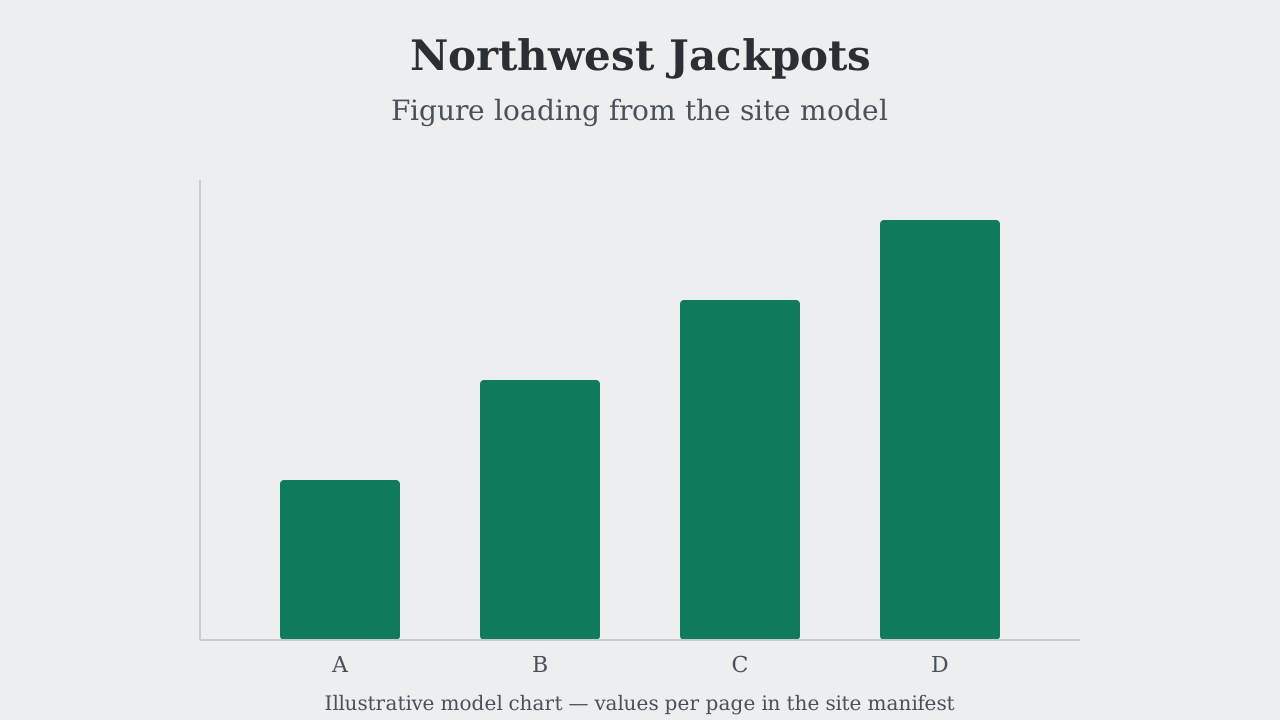
E-wallets sit at the short end, around an hour from request to funds on the model, and the reason is structural. Once the operator releases the payment, an e-wallet transfer executes in seconds; nearly the whole hour is the operator’s review and release stages. That is why e-wallet speed is the best single proxy for an operator’s genuine processing commitment: the rail adds almost nothing, so whatever time the journey takes is time the operator itself spent. A site whose e-wallet withdrawals land within the hour is a site whose review function is staffed and whose release batches run frequently. A site whose e-wallet withdrawals take two days is telling you its release schedule, whatever its homepage says.
Debit cards sit in the middle at around twenty-four hours on the model, and the extra time comes from the card schemes rather than the operator. Once released, a card payment clears through an authorisation and settlement process that most banks present to the customer as one to three working days, with some operators and some cards running faster through push-payment arrangements. The practical consequence is that card payouts are where the operator’s speed and the scheme’s speed blur together, and a player cannot tell from the outside which half of a two-day card payout was the operator’s doing. If you want the operator’s speed to be measurable, measure it on an e-wallet rail.
Bank transfers sit at the slow end at around seventy-two hours, and here the honest advice is to use them only when amounts or account constraints leave no alternative. A bank transfer is the rail of last resort for speed and occasionally the rail of first resort for large withdrawals, because limits per transaction are sometimes higher and some players prefer the money to land directly in the account that pays their bills. That preference is legitimate and the speed cost is real./crypto rails, which the chart omits because they behave differently, sit at the very fastest end once released, often inside fifteen minutes, and carry their own separate considerations around wallets, volatility and verification that the crypto pages on this site cover in depth.
One more rail-level note belongs here because it changes day-one decisions. Withdrawals generally return by the rail used to deposit. Deposit by card and the payout will usually go back to that card. Deposit by e-wallet and the payout lands in the same wallet. This default exists for anti-money-laundering reasons, it is not negotiable at the request stage, and it means the speed choice is made when you fund the account. Some operators allow a switch with additional verification; many do not, or make it slow enough that the switch defeats its own purpose. Plan the exit before the entrance, which is a sentence that applies to far more of this market than payouts alone.
Verification and the first withdrawal trap
Every player’s slowest withdrawal is almost always their first, and the cause is predictable: identity verification arrives at the moment of first payout rather than the moment of first deposit. The pattern is so consistent across the market that it should be treated as a rule of thumb rather than a surprise. A site may let you register, deposit and play for an evening with nothing more than an email address, and then, the moment you request £80 of winnings, ask for a photo identity document, proof of address dated within three months, and sometimes evidence that the payment method is yours.
This is not operator mischief, at least not primarily. Verification at payout is a regulatory requirement on licensed operators and a condition of their banking arrangements everywhere else in the market. The timing is the problem: a document review that takes two hours on a Tuesday afternoon can take two days if triggered late on a Saturday, and the player experiences the whole delay as the casino being slow when in fact the casino is doing something the rules require and the player could have done in advance. That is the trap, and the way out of it is to close it yourself before the first request. Upload documents when the account is fresh. Verify the payment method before there are winnings in it. An account that is fully verified before the first withdrawal request converts a two-day first payout into an ordinary one, and the only cost is five minutes of photography done while you are not in a hurry.
The second tier of verification is the one that actually surprises experienced players: source-of-funds checks. These are triggered not by the account being new but by the account being active, usually at thresholds of cumulative deposit or by the pattern of play. An operator may ask how you afford your gambling, with evidence, before processing a large withdrawal. The request feels intrusive and it is legitimate. On a licensed British site it is a licence condition. On an offshore site the same request may arrive under the operator’s own policy or its banking partners’ compliance rules, and the response times are governed by nothing except those policies. A player with predictable, documented income and a habit of depositing within their means has nothing to fear from the check and should simply answer it promptly, because unanswered checks are the single largest source of withdrawals that stall for weeks rather than days.
The third verification-adjacent delay is name matching, and it is almost embarrassing how often it causes trouble. The name on the withdrawal destination must match the name on the account. Depositing from a partner’s card, a joint account or a family member’s e-wallet creates a mismatch that the review stage will flag every time, and the fix, depositing only from payment instruments in your own name, costs nothing at the start and days of correspondence at the end. The same logic applies to details: a street address abbreviated differently on the account and the utility bill is a genuine delay, not a pedantry.
Taken together, the verification section of this page carries a simple summary. The first withdrawal is slow because of you, not the casino, in the majority of cases; the checks are predictable; and the entire cost of avoiding them is paid up front in minutes. A fast withdrawal casino is partly a site that processes quickly and partly a player who arrives verified. Only one of those two is within your control, so control it.
Category comparison: what the ranges look like
The table below sets out category-typical ranges across a selection of operators serving the British market and the offshore market alongside it. Every figure is a range compiled from operator-published terms at the time of writing, not a quote of any single promotion on the day you read this, and the UKGC rows are the British baseline shown for comparison. Re-check the live terms before depositing; ranges exist to show the shape of the market, not to price any one offer.
| Brand | Licence label | Welcome offer range | Wagering | Minimum deposit | Payout window | Payment rails |
|---|---|---|---|---|---|---|
| bet365 | UKGC | Low-value credit on qualifying deposit | Often light, product dependent | £5–£10 | 1–2 days | Debit card, PayPal, bank transfer |
| Virgin Games | UKGC | Spins or small bonus credit | Frequently under 20x | £10 | 1–2 days | Debit card, PayPal, bank transfer |
| PlayOJO | UKGC | Spins bundle, wagering-free spins emphasised | Commonly none on spin wins | £10 | 1–2 days | Debit card, PayPal, bank transfer |
| MrQ | UKGC | Spins on qualifying deposit | Commonly wagering-free | £10 | 1–2 days | Debit card, PayPal, bank transfer |
| Grosvenor Casinos | UKGC | Deposit match to £50 | Commonly 5–20x | £10 | 1–3 days | Debit card, PayPal, bank transfer |
| NetBet | UKGC | Match package with spins | Commonly 30–40x | £10 | 1–3 days | Debit card, PayPal, bank transfer |
| Casumo | UKGC | Match plus spins bundle | Commonly 30–40x | £10 | 1–3 days | Debit card, e-wallets, bank transfer |
| Mystake | Offshore | Multi-tier match to £1,000 range | Commonly 30–40x | £20 | 0–2 days | Debit card, e-wallets, crypto, bank transfer |
| Goldenbet | Offshore | Match package with recurring reloads | Commonly 35–45x | £20 | 0–2 days | Debit card, e-wallets, crypto |
| Rolletto | Offshore | Multi-tier match package | Commonly 35–50x | £20 | 0–2 days | Debit card, e-wallets, crypto, bank transfer |
| Donbet | Offshore | Match package with free spins | Commonly 35–45x | £20 | 0–2 days | Debit card, e-wallets, crypto |
| NineWin | Offshore | Multi-tier match with spins | Commonly 35–45x | £20 | 0–2 days | Debit card, e-wallets, crypto |
Read the two halves of the table against each other and a consistent picture emerges. The British baseline rows pair modest welcome offers with light-to-moderate wagering, £10 entry floors and payout windows measured in days under a published processing commitment. The offshore rows pair far larger headline matches with heavier wagering, £20 floors and payout windows that look faster on paper because they lean on e-wallet and crypto rails, while carrying thinner recourse if a request stalls. Neither column is uniformly better. The licensed half sells a regulated floor under the whole process; the offshore half sells headline size and rail breadth; the reader’s own priorities decide which floor matters more.
Note also the two rows in the UKGC block whose wagering entries read as wagering-free or near-free. Those offers are the natural companions of this page’s subject. A promotion with no wagering converts to a withdrawable balance immediately, which means the site’s processing speed, not the bonus terms, becomes the only delay between winning and withdrawing. For a reader whose priority is speed, those rows and the low-wagering rows deserve more attention than any large match, and the low wagering casino bonus page on this site prices them in the same framework used here.
The licence question and the offshore trade-off
The relevance to payout speed specifically deserves its own paragraph, because it is sharper on this subject than on almost any other. A British licence imposes an obligation on the stage-two and stage-three processes described earlier: the review must not be unreasonably delayed and the release must follow. That obligation is why the UKGC rows of the table above cluster at one to three days regardless of operator. Offshore, the same stages are governed purely by operator policy, and operator policy is exactly the thing a slow operator writes loosely. A fast offshore site is fast because it chooses to be; a slow one is slow with nobody whose job is to disagree. Readers who have experienced a stalled withdrawal anywhere will understand immediately what the difference is worth, and readers who have not should price it before their first experience teaches them.
One practical middle path exists and is worth naming. A reader who wants both the protection of the licensed market and the fastest available payouts can usually find it inside the UKGC block of the table: e-wallet rails at British-licensed operators commonly land within hours, some operators publish same-day commitments, and the dispute floor underneath costs nothing to carry. The offshore market becomes genuinely relevant to speed mainly where crypto rails are the priority or where the licensed market’s deposit and affordability checks are themselves the friction the reader wants to avoid. Both of those are real motivations. Neither changes what is given up.
Fees, limits and the small costs of cashing out
Speed is not the only number on the withdrawal page. Three others belong in any honest costing: fees, limits and minimum withdrawal amounts, each of which can quietly reshape the value of a fast payout.
Fees first. The British licensed market has largely converged on free withdrawals, with operators absorbing the rail cost as a customer-acquisition expense, and a fee for a standard withdrawal at a licensed site should make a reader look twice. The offshore market is more mixed: most operators absorb the cost, but some charge a percentage or a flat fee on certain rails, on withdrawals below a threshold, or on repeated small requests within a period. A one-hour payout that carries a two percent fee is a different product from a one-hour payout that carries none, and the fee is only ever visible in the cashier terms, never in the speed advertising.
Limits second. Every operator caps how much can be withdrawn per transaction, per day and sometimes per week, and the caps vary more than any other figure on this page. For small and medium balances the caps are invisible. For a large win they become the whole story: a £10,000 balance paid at £2,500 per day takes four working days regardless of how fast each payment is, and no amount of rail selection shortens a per-day cap. Readers who play at sizes where caps could bind should read the withdrawal limits before the welcome offer, because the limits are the harder constraint and the offer is negotiable in a way the limits are not.
Minimum withdrawal amounts third, and briefly, because they matter least and irritate most. Some operators will not process a payout below £10 or £20, which interacts badly with small balances and with players who prefer to bank winnings in small increments. The remedy is behavioural: accumulate to the minimum before requesting rather than discovering the floor at the request screen. And a fourth figure worth a line is the reverse side of speed, the reverse withdrawal button. A fast release window cuts both ways: the shorter the pending period, the shorter the window in which a player can cancel their own request and return the money to play. Players who know themselves to cancel pending withdrawals should note that the fastest sites, the ones this page praises, also remove that particular safety net most thoroughly. It is an honest trade-off and it favours the player who does not want the button there at all.
None of these figures changes the central recommendation, but all four change the experienced reality of it. Read the cashier page as carefully as the promotions page, because on this market the cashier page is where the promises and the product diverge, and the divergence is always legible five minutes before the deposit and never legible at all afterwards.
How to choose a fast-payout site
The whole page reduces to a decision procedure, and the procedure fits in a minute once the reasoning is understood. Run it in order.
Step one: choose the rail before the site. If e-wallet speed is what you want, shortlist sites that accept your e-wallet for both directions. If crypto speed appeals and you understand the wallet and volatility considerations, shortlist on crypto support. If card payouts are your default, accept that the scheme adds a day and shortlist on published processing commitments instead. The rail choice constrains everything downstream and cannot be changed cheaply later.
Step two: read the cashier page, not the homepage. You are looking for three published facts: the release or cut-off schedule, any withdrawal fees, and the per-transaction and daily limits. A site that publishes all three plainly is telling you it has nothing to hide in the queue, and that signal is worth more than any speed adjective. A site whose cashier page is vague about timing has told you something too.
Step three: verify yourself before you are verified. Upload identity documents early, withdraw only to instruments in your own name, and answer any source-of-funds request the day it arrives. This one step converts the majority of slow first withdrawals into ordinary ones, and it is entirely within your control.
Step four: match the offer to the priority. If speed is the priority, prefer no-wagering or low-wagering offers, because wagering is delay measured in spins. Run the calculator above on the lightest offer on the shortlist before you run it on the largest, and compare the expected values honestly. A smaller match that clears in an evening on a site that releases same-day beats a larger match that occupies a week on a site that batches releases, on every measure except the headline percentage.
Step five: place the licence trade-off consciously. If the shortlist contains offshore rows, read the aside above once more, decide what the missing dispute route and funds protection are worth to you, and make the choice with that price attached. There is no universally correct weight. There is only a correct process, and the process is to decide before the deposit rather than after the stall.
Five steps, five minutes, and the choice makes itself at the end of them, which is the honest definition of a good decision procedure. The rails narrow the field, the cashier page prices the field, the verification work removes the avoidable delays, the offer terms match the priority, and the licence question is answered in the open. Nothing on this page, or on this site, substitutes for the reader making that final weighing, and nothing on it tries to.
Frequently asked questions
What actually makes a withdrawal fast?
Three things in sequence: the operator’s review of the request, the operator’s release schedule, and the payment rail’s own clearing time. Fast sites automate or staff the review tightly, release in frequent batches and offer instant rails. The total, not any single stage, is the figure that matters, and the rail you deposit with usually constrains the rail that can pay you.
Are e-wallet withdrawals really faster than cards?
On the model used across this site, e-wallet payouts land in around an hour from request while card payouts take around a day, because an e-wallet transfer executes in seconds once released whereas card payments clear through scheme processes that add hours to days. E-wallet speed is also the cleanest measure of an operator’s genuine processing commitment, since the rail contributes almost none of the elapsed time.
Why is my first withdrawal taking longer than everyone promised?
First withdrawals usually trigger identity verification, and the document review runs on the operator’s working hours rather than yours. Upload identity documents and verify your payment method before your first request and the first payout behaves like an ordinary one. Unanswered verification requests are the largest single cause of withdrawals that stall for weeks.
Can I withdraw before finishing wagering on a bonus?
On most terms, requesting a withdrawal while a bonus is active forfeits the bonus and any winnings from it. Some operators allow the deposit balance to be withdrawn after the bonus is surrendered, and some do not. Read the forfeiture clause before the moment arrives, because once the request is submitted the terms apply as written.
Do fast payout casinos charge fees?
The British licensed market has largely converged on free standard withdrawals. Some offshore operators charge a percentage or flat fee on certain rails, on small withdrawals or on repeated requests within a period. The fee is visible only in the cashier terms, so read them before depositing rather than at the request screen.
What are withdrawal limits and when do they matter?
Operators cap withdrawals per transaction, per day and sometimes per week. For ordinary balances the caps never bind. For a large win they dominate everything: a £10,000 balance paid at £2,500 per day takes four days no matter how fast each payment is. Read the limits before accepting any large-match offer.
Are offshore casinos faster at paying out?
On the fastest rails, often yes on paper, because offshore sites lean heavily on e-wallets and crypto. But speed without recourse is only half a product: there is no British dispute route if a request stalls, and no licence condition requiring withdrawals to be processed without unreasonable delay. A licensed site at one to two days may be the faster product in practice once the risk of a stall is priced in.
What is a pending period and can I cancel a withdrawal during it?
The pending period is the time between your request and the operator’s release, during which the money remains technically stakable. At most sites the request can be cancelled and returned to play during this window. Fast sites shrink the window, which removes the option to reverse, a trade-off that favours players who do not want the reverse button in the first place.
Does the payment method I deposit with affect how I can withdraw?
Yes. Withdrawals generally return by the rail used to deposit, for anti-money-laundering reasons. Depositing by card usually means the payout goes back to that card, and switching rails often requires additional verification or is not offered. The speed decision is therefore made at the deposit, so plan the exit before the entrance.
What is the fastest realistic end-to-end payout?
With a fully verified account, an automated or well-staffed review, same-hour release and an instant rail such as an e-wallet or crypto, payouts inside the hour are realistic at the fastest tier of operators. Anything promised faster than that should be treated as marketing until the cashier terms confirm it, and the first payout will almost always be slower while verification completes.