Slot Sites UK
Every slot site in the British market draws from roughly the same pool of studios, so the lobby screenshot tells you almost nothing. What separates one site from another sits underneath: the payout window, the terms attached to any promotion, the licence behind the balance and the size of the network absorbing your deposit. This page prices those four differences in hours and pounds, states every assumption in the open and leaves the licence trade-off where it belongs, in plain sight before the first deposit.
Slot sites in this market usually process withdrawals within one to three days on debit cards and within an hour on e-wallets, though each operator sets its own queue and first cashouts are routinely the slowest. Figures used on this page are assumptions about category-typical behaviour, not quotes from any named promotion. Verify the current terms on the operator’s own pages before depositing, because published windows and bonus terms change without notice.
Terms change often. Verify the current terms on the operator’s own page before depositing. Scores are editorial.
8.2/10See offer terms
8.0/10See offer terms
7.8/10See offer terms
7.5/10See offer terms
What actually differs between slot sites
Ask most reviews what separates one slot site from another and the answer runs to game counts, mobile apps and a paragraph about customer support. That answer avoids the four differences that move money. The first is the payout window, because a slot session that ends in a withdrawal is judged by how long the money takes to arrive, not by how quickly the reels spun. The second is the bonus structure, because a welcome offer whose wagering runs at forty times the credit turns a modest deposit into a long staking commitment. The third is the licence, which determines what happens when something goes wrong. The fourth is network size, the least discussed and one of the most consequential.
Network size deserves its own explanation. Many British slot brands are front ends for shared platforms, so the same cashier, the same processing queue and the same game certification sit behind several different names. A large network processes withdrawals at volume, maintains dedicated payment teams and has the financial depth to absorb a slow week. A standalone small brand may be perfectly sound, but its queue is thinner and its worst-case delay is longer. On the model used across this site, a large network clears payouts in around twenty-four hours, a mid network around forty-eight and a small brand around seventy-two. Those are assumptions for planning, not promises from any operator, and the figure that matters to you is the one printed in the site’s own banking page on the day you read it.
Game content, by contrast, differs far less than the marketing implies. A handful of studios supply most of the market, and the headline titles appear on licensed and offshore sites alike. Where genuine differences appear they sit in three places: exclusive titles negotiated with a studio, the depth of the live table offering alongside the slots floor, and the presence of niche categories such as Slingo or crash games. None of those differences changes the expected return of the slots themselves, which is set in the game’s own RTP setting rather than by the site hosting it. The site changes the rails, the terms and the protections. The game changes the edge. Confusing the two is the commonest mistake readers make when comparing sites on game count alone.
The fourth difference, bonus structure, is where the greatest apparent variety hides the least real variety. Welcome offers across the British market cluster around a deposit match with a wagering multiplier attached, and the multiplier is the number that prices the offer. A site advertising a larger match with a heavier multiplier is usually selling a more expensive product than a site advertising a smaller match with lighter terms. This page holds that arithmetic next to the payout and licence questions, because a shortlist built on any single one of the four differences is a shortlist built sideways.
A session, costed honestly
Before comparing sites it helps to cost the activity itself, because the site’s contribution to your outcome is smaller than most players assume. The calculator below runs a standard slot session model: a two hundred pound bankroll, a two pound stake, a four percent house edge assumption and ten sessions. Those are the defaults this site uses across its slots pages, and they are stated as assumptions rather than measurements. Change any input and the model recalculates the expected total cost of the play and the range of outcomes a bankroll of that size can reasonably produce.
Bonus calculator
Expected cost across 10 sessions: £32.
Model assumptions: the multiplier applies to the bonus amount, a house edge in line with popular titles is charged against the staking, and the cap truncates convertible winnings. Adjust the inputs to price your own case.
Worked at the defaults, the model is straightforward. Ten sessions at two pounds a stake produce a large number of spins, and on a four percent edge the expected cost of that staking is the total staked multiplied by the edge. The interesting output is not the expected cost, which is arithmetic, but the variance around it. Slots carry high volatility relative to table games, so individual sessions land far from expectation in both directions. A bankroll of two hundred pounds at two pounds a stake can support long droughts and short runs, and ten sessions is a small enough sample that the result tells you about luck, not about the site, the game or your method.
Three inputs dominate the outcome. The stake size relative to the bankroll controls how long a bankroll survives a losing run, and a stake of one percent of the bankroll lasts roughly four times as long as a stake of four percent through the same variance. The house edge assumption controls the drift: swing it from three to five percent and the expected cost of the same play moves by two thirds. The session count controls how closely the sample converges on expectation, which is the statistical way of saying that more sessions produce more predictable losses. None of those inputs involves the site. The site’s contribution arrives at the edges of the session: how fast a deposit clears, how fast a withdrawal pays and what happens if a dispute needs resolving.
That framing is the honest basis for comparison. If the site does not change the edge, then the site should be judged on everything the edge does not cover: payout speed, terms, licence and the small print around withdrawals. The rest of this page does exactly that, section by section, with the assumptions printed beside every figure.
Payout windows and network size
The payout window is the figure most players discover last and should check first. On the model used across this site, withdrawal speed at British-facing slot sites clusters by network size rather than by brand, and the chart below states the assumption in hours from request to funds.
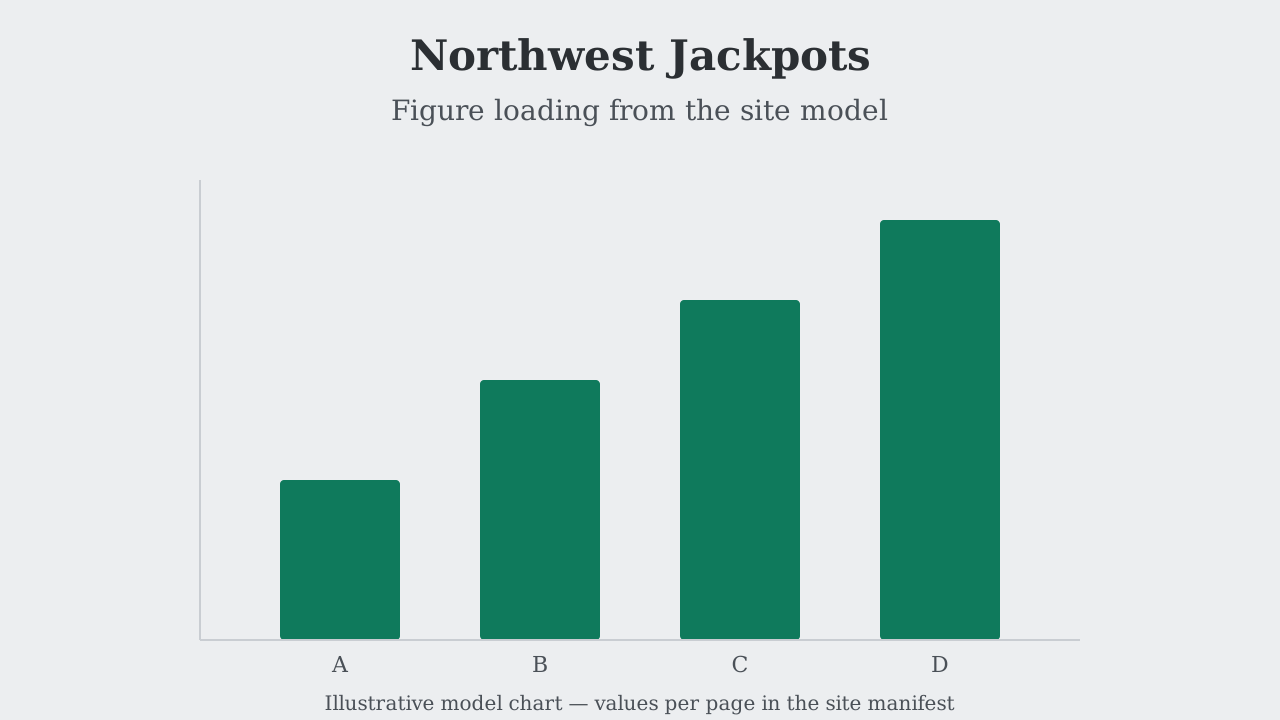
Read the chart as a planning tool. A large network’s payment team runs continuously and clears routine requests inside a day on the assumption used here. A mid network adds a day, and a small standalone brand adds a third. Behind those averages sit two structural factors the reader can actually influence. The first is the rail: e-wallets clear in minutes once the operator releases the payment, while debit cards and bank transfers inherit scheme clearing that adds hours or days regardless of how quickly the site acted. The second is verification: identity and source-of-funds checks are most commonly triggered at the first withdrawal, not the deposit, so the first cashout is nearly always the slowest across the market. Uploading documents before requesting a payout removes most of that delay.
Withdrawals also generally return by the rail used to deposit, which means the speed decision is made at the deposit stage whether you intend it or not. A player funding by debit card and hoping for e-wallet speed has confused the map with the territory. Choose the rail with the withdrawal in mind and the payout window becomes predictable; choose it for deposit convenience alone and the window is whatever the scheme’s clearing schedule says it is.
One caveat belongs here rather than in the small print. On a site holding a Gambling Commission licence, the processing commitment is bounded by licence conditions that require withdrawals to be handled without unreasonable delay, and a complaint about delay has a documented escalation route. On a site licensed elsewhere, the window is the operator’s own policy, and the recourse if it stretches is thinner. The chart prices the typical case. The licence prices the worst case, and the next comparison table puts both halves of the market in the same frame.
Comparison: what the ranges look like
The table below compiles category-typical ranges across a spread of slot sites serving the British market and the offshore market alongside it. Every figure is a range compiled from operator-published terms at the time of writing, not a quote of any single promotion, and no row should be read as the stated offer of the named site on the day you read this. Check live terms before depositing. The UKGC rows are the British baseline shown for comparison; none of them are claimable against the offshore offers in this category.
| Brand | Licence label | Welcome offer range | Wagering | Minimum deposit | Payout window | Payment rails |
|---|---|---|---|---|---|---|
| Bet365 | UKGC | Modest match or free spins bundle | Often 10–20x | £5–£10 | 1–3 days | Debit card, PayPal, bank transfer |
| Virgin Games | UKGC | Low-value spins bundle | Often under 10x | £10 | 1–2 days | Debit card, PayPal, bank transfer |
| MrQ | UKGC | Spins bundle, wagering-free wins | Frequently none on spins | £10 | 1–2 days | Debit card, PayPal, bank transfer |
| Unibet | UKGC | Casino match to £100 range | Commonly 30–40x | £10 | 1–3 days | Debit card, PayPal, Apple Pay, bank transfer |
| PlayOJO | UKGC | Spins bundle with no wagering | Frequently none | £10 | 1–2 days | Debit card, PayPal, bank transfer |
| 32Red | UKGC | Match to £150 range | Commonly 30–40x | £10 | 1–3 days | Debit card, PayPal, bank transfer |
| Mystake | Offshore | Multi-tier match to £1,000 range | Commonly 30–40x | £20 | 0–2 days | Debit card, e-wallets, crypto, bank transfer |
| Goldenbet | Offshore | Match package with reloads | Commonly 35–45x | £20 | 0–2 days | Debit card, e-wallets, crypto |
| Donbet | Offshore | Match package with free spins | Commonly 35–45x | £20 | 0–2 days | Debit card, e-wallets, crypto |
| Rolletto | Offshore | Multi-tier match to £2,000 range | Commonly 40–45x | £20 | 0–2 days | Debit card, e-wallets, crypto, bank transfer |
| Kinghills | Offshore | Match package with spins | Commonly 35–50x | £20 | 0–2 days | Debit card, e-wallets, crypto |
| NineWin | Offshore | Multi-tier match to £1,000 range | Commonly 35–45x | £20 | 0–2 days | Debit card, e-wallets, crypto |
The table tells two stories at once. On the British baseline, welcome offers are modest, wagering frequently runs light or, on spins bundles, not at all, minimum deposits sit at £10 and payouts are measured in days bounded by licence conditions. On the offshore side, headline matches run far larger, wagering is heavier, entry sits at £20 and the payout story is faster on the rails but thinner on recourse. Neither half is uniformly better, and the useful observation is where the ranges overlap: on wagering multipliers the middle of both distributions sits close together, which is why the multiplier alone rarely decides a comparison between sites.
The most visible day-one difference is the minimum deposit, the £10 against £20 split, and it is the figure most players notice before reading anything else. The most consequential difference is the least visible: the licence label in the second column, which determines what happens when a withdrawal stalls or a promotion is voided. A shortlist built from this table should keep both columns open at once.
The licence question, stated plainly
With that stated, the comparison can also run on the merits. The licensed British market constrains what a slot promotion can look like: stake caps during wagering, weighted game contributions, affordability checks at thresholds the licence conditions govern and hard limits on how a matched offer may be presented. Those constraints exist because the regulator judged them necessary, and for many readers that judgement is precisely the value of the licence. For a minority the constraints are the reason to look elsewhere, and the offshore market exists to serve them. This page’s role is to keep both facts visible at the same time, which is why the comparison table sets the two halves side by side rather than stacking one above the other.
Dispute resolution deserves a paragraph of its own because it is the difference most often priced at zero by readers who have never needed it. Under a British licence the route is documented, free at the point of use and ends at an independent adjudicator. Offshore, the route depends on the issuing jurisdiction, and outcomes range from reasonable to slow to absent. A reader who has never had a dispute may rationally discount this to nothing. A reader who has had one prices it far higher. Both positions are rational, but both require knowing the difference exists before the deposit rather than after the payout request stalls.
Payments, bonuses and the withdrawal path
The route from deposit to withdrawal on a slot site runs through three decision points, and most friction in this market comes from making each decision at the wrong moment. The first is the rail. British-licensed sites cannot accept credit cards, a prohibition in force since April 2020, so the practical choice is between debit cards, e-wallets such as PayPal, bank transfer and, offshore only, crypto. E-wallets are the fastest in both directions on the model used here, clearing in minutes once released, while cards and transfers inherit scheme clearing measured in hours to days. Because withdrawals usually return by the depositing rail, fund through the rail whose withdrawal speed you can live with.
The second decision is the promotion. Slot sites price their welcome offers through a wagering multiplier, and offers of this kind in the market usually ask around forty times the bonus amount, though each operator sets its own terms. On a £100 deposit matched at 100%, that is £4,000 of staking before a withdrawal unlocks. Slots contribute fully toward that requirement, which is why slot sites favour them, but the maximum bet during wagering is commonly capped around £5 and exceeding it can void winnings. The winnings cap, frequently in the hundreds of pounds, truncates the upside. A smaller match with lighter wagering is often the cheaper product at exactly the same headline generosity, and the difference is visible in the terms page before any money moves.
The third decision is verification timing. Identity checks are most commonly triggered at the first withdrawal, when the operator must confirm who is being paid. Have documents ready early: photo identification, a recent proof of address and, where deposits have been substantial, evidence of the source of funds. A first payout with documents already lodged behaves like a second one. A first payout without them acquires a delay measured in days, and the delay is routinely attributed by players to the site when it actually belongs to the check. Both things can be true at once, but only one of them is in your control.
For readers whose priority is speed rather than bonus size, the market offers a simpler product: no-wagering spins bundles and smaller matches with light requirements. Those pages on this site, covering no-wagering free spins and low wagering bonuses, price them on the same assumptions as this page. The point of the family is that a figure read on one page means the same thing on all of them, so shortlists can be built across pages without re-translating the terms.
Regulation: what the rules set
British online gambling operates under the Gambling Act 2005, with the Gambling Commission as the regulator. For a slot site the practical consequences reach every section above. Licensed operators must verify age and identity, must participate in GamStop, must offer deposit limits, reality checks and self-exclusion tools, must keep customer funds protected to a stated standard and must handle withdrawals without unreasonable delay. Promotional terms must be clear and fair, advertising is constrained, and disputes follow a documented route through the operator to independent adjudication. Those are not courtesies the better brands extend; they are conditions of the licence.
Two of those rules have direct wallet consequences worth restating. The credit card prohibition means every British-licensed slot site runs on debit rails, which is part of why card withdrawals sit at the slower end of the window chart. And the GamStop boundary means a self-exclusion registered in Britain does not reach operators licensed elsewhere, which is a fact about the scheme’s edge that every reader should understand before it matters, not a moral observation about anyone’s choices.
The offshore market operates outside that framework by definition, under licences from jurisdictions whose standards differ, sometimes in detail and sometimes in kind. This page treats that as a fact to disclose rather than a verdict to impose. The aside above sets out what is given up, the comparison table shows what is gained in headline terms, and the weighing belongs to the reader. Anyone finding their gambling hard to control should know that free confidential support exists: the National Gambling Helpline on 0808 8020 133 runs around the clock, and GambleAware and GamCare both provide support networks across the UK.
One final regulatory note concerns taxes, because readers occasionally ask. Gambling winnings for a consumer are not taxable in the United Kingdom; gambling duty is levied on the operators. A withdrawal from a slot site, British or otherwise, is not income in the tax sense, and no reader should adjust a session decision for a tax consequence that does not exist.
How to choose a slot site
Four questions close this page, and together they turn the comparison table into a decision. The first: what do you want the session to be? If the answer is entertainment at a known price, the session calculator above has already given you the number, and the site matters mainly for its rails and its licence. If the answer includes chasing a withdrawal from a welcome offer, the wagering terms matter as much as the game choice, and a lighter requirement on a smaller match is usually the cheaper route to the same outcome.
The second question: which rail do you need in both directions? Deposit convenience is trivial. Withdrawal speed is priced by the window chart, and the rail is chosen at the deposit whether you intend it or not. If payout timing matters to you, pick the rail first and let it narrow the site list, because a site that cannot return money by your rail is the wrong site regardless of its lobby.
The third question: where do you stand on the licence trade-off? Read the aside again if the answer is unsettled. No bonus percentage should be allowed to tip the scales against GamStop coverage, the ADR disputes route and fund protection for a reader who relies on any of them. Equally, a reader with no such reliance may weight the trade lightly, and the honest position of this page is that both weightings are legitimate when made in the open.
The fourth question: what does the terms page say that the promotion page does not? Six clauses decide it, and five minutes finds all six: the base of the wagering multiplier, the game weightings, the maximum bet during wagering, the winnings cap, the time limit and the withdrawal trigger. A site whose terms answer all six plainly is a better product than an identical site whose terms obscure them, because clarity is a signal about how the withdrawal will go too. Answer the four questions and the choice makes itself, which is the practical definition of a good decision process. Nothing on this page substitutes for the final step of checking live terms, and nothing on it tries to.
Frequently asked questions
How long do slot site withdrawals actually take?
On the model used across this site, around twenty-four hours at a large network, forty-eight at a mid network and seventy-two at a small brand, with the rail adding its own clearing time on top. E-wallets clear fastest once released, cards and bank transfers slower. First withdrawals are nearly always the slowest because identity checks usually trigger there.
Does the site I choose change the RTP of the slots?
The RTP is set in the game itself, not by the site hosting it, so the same title carries the same expected return wherever it appears. Some studios publish multiple RTP settings that operators can choose between, so a game’s information panel is worth a glance, but the site brand is not the variable that moves the edge.
Why do offshore slot sites offer bigger bonuses?
They operate outside the licence conditions that constrain British promotions, so they can advertise larger matches without the stake caps and presentation rules a Gambling Commission licence imposes. The trade is set out plainly in the licence aside above: larger headline offers in exchange for losing GamStop coverage, the ADR disputes route and British fund protection standards.
What wagering should I expect on a slot site welcome offer?
Offers of this kind usually ask around forty times the bonus amount, though each operator sets its own terms and British sites frequently run lighter, with some spins bundles carrying no wagering at all. Read the base of the multiplier carefully, because a requirement applied to deposit plus bonus doubles the staking compared with bonus alone.
Are slot sites on shared networks less safe?
Not inherently. A shared network often means shared cashier infrastructure, shared payment teams and faster processing, which is why network size features in the payout window model. The licence behind the network matters more than its shape, and both halves of the comparison table include established and newer names.
Can I use a credit card on a UK slot site?
No. Credit cards have been prohibited for gambling in Great Britain since April 2020, so British-licensed sites run on debit cards, e-wallets and bank transfer. Some offshore operators still accept credit cards, which is one of the visible markers of the licence difference described on this page.
What triggers verification checks at a slot site?
Age and identity checks happen at registration under British licence conditions, while source-of-funds and enhanced checks are most commonly triggered at the first withdrawal or when deposits reach thresholds the operator sets. Uploading documents before requesting a payout removes most of the delay the checks add.
Is there a minimum deposit that unlocks the full bonus?
British slot sites commonly set the full welcome offer at a £10 minimum, while offshore sites in the comparison table typically start at £20. Lower tiers sometimes receive a reduced package or spins only. The promotion page states the thresholds, and the terms page states what happens below them.
Does GamStop cover every slot site?
GamStop covers operators licensed by the Gambling Commission only. An offshore slot site, holding no British licence, is outside the scheme, so a registered exclusion is not enforced there. Anyone relying on self-exclusion should understand that boundary before considering any operator beyond the licensed market.
Do I pay tax on slot winnings?
No. Gambling winnings for a consumer are not taxable in the United Kingdom, with gambling duty levied on operators instead. A withdrawal from any slot site, licensed or offshore, carries no income tax consequence for the player.