Instant Withdrawal Casino
Instant is a marketing word. What the word buys you, when it buys anything at all, is a withdrawal measured in minutes rather than days, and the difference between those two states belongs almost entirely to the payment rail rather than the operator’s promise. A request approved in ninety seconds still takes a day to land on a debit card. A request queued behind an identity check takes nothing at all until the documents clear. This page costs the word instant in minutes, by rail, and shows which parts of the speed you can influence before the money is ever requested.
Payout speed at this end of the market is usually described in hours to days depending on the rail, with e-wallets clearing in tens of minutes once approved, card payouts running to a day or two, and no operator able to move money faster than the rail itself will carry it. Every figure on this page is a category-typical assumption, not a quote from any named promotion, and the live terms on the operator’s own cashier page always take precedence over anything modelled here.
Terms change often. Verify the current terms on the operator’s own page before depositing. Scores are editorial.
8.2/10See offer terms
8.0/10See offer terms
7.8/10See offer terms
7.5/10See offer terms
What instant actually means, and what it cannot mean
Strip the advertising away and an instant withdrawal is a three-stage journey. Stage one is the operator’s review queue, where the request sits while the cashier team or its automation checks that the account is verified, the balance is clean of active bonus restrictions and the amount fits inside any transaction limits. Stage two is the operator releasing the payment to the rail. Stage three is the rail itself, which clears on its own schedule that no casino controls. Marketing at this end of the market talks almost exclusively about stage two, because stage two is the one an operator can shorten, and it quietly assumes stages one and three away.
The honest framing is this: no casino moves money instantly in the way a cash machine dispenses notes. What the better operators do is compress stage one into minutes through automated checks, release quickly, and let the rail do the rest. Where the rail is fast, the whole journey feels instant. Where the rail is a debit card on standard clearing, the same release speed still ends in a wait measured in a day or more. That is why two players at the same site, requesting on the same evening, can describe the same operator as lightning fast and glacially slow, and both be reporting accurately. The rail they each used decides the story before the cashier team lifts a finger.
There is also a ceiling imposed by the regulator on what can be promised. A site licensed by the Gambling Commission must handle withdrawals without unreasonable delay under its licence conditions, but nothing in those conditions obliges a payout in a stated number of minutes, and a careful operator phrases its own commitments in working days precisely because it cannot bind the rail. Offshore sites often publish bolder wording, because nobody polices the phrasing, and the bolder wording tells you nothing about the actual queue. The reader’s defence is the same in both cases: judge the operator by the rail it pays through, not the adjective it prints above the cashier button.
One further assumption underpins everything on this page. We treat the word instant as shorthand for a payout that arrives within roughly the first thirty minutes after approval, which is the range e-wallets and some push-payment card services can genuinely achieve. Anything longer is fast, same day or standard, and those categories are costed on their own pages elsewhere on this site. Holding the definitions apart matters, because a reader searching for instant and being shown a site that pays within forty-eight hours has been sold a slower product under a faster label, and that gap between label and delivery is exactly the gap this page exists to price.
Minutes by rail: the chart that decides the outcome
The figure below states the model used across this page: assumed minutes from approval to funds, by method. The values are category-typical assumptions compiled from how these rails behave, not measurements of any named site, and they are planning numbers rather than commitments. Read them as the floor and the shape of the market.
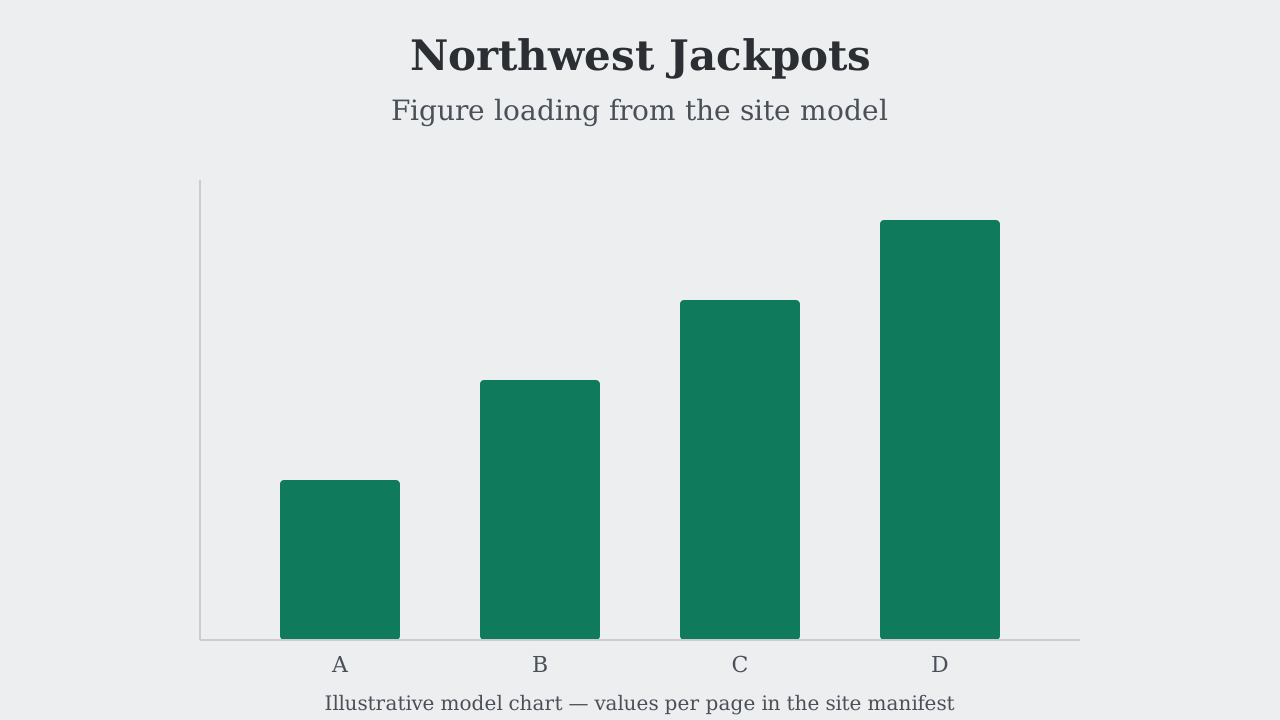
The e-wallet row sits at around five minutes because an e-wallet payment is essentially an internal transfer between accounts the moment it is sent. Once the operator has released the money, the wallet credits in seconds and the only remaining variable is the operator’s own queue. That makes e-wallets the closest thing the mainstream market has to an instant rail, and it is why nearly every genuinely fast payout story a player tells involves PayPal, Skrill or a comparable wallet rather than a card.
The Visa Direct row at around thirty minutes reflects a different mechanism. Visa’s push-payment service accelerates card payouts by pushing funds straight to the receiving debit card rather than waiting for standard scheme clearing, and where both the operator’s bank and the player’s bank support it, the money lands in minutes to a few hours. It is a genuine improvement over the standard card path, but it is patchier than e-wallets: not every operator’s processing bank is enrolled, and not every player’s bank receives push payments at full speed. A card that has supported it one week cannot be assumed to support it the next, which is why the row carries a wide effective range even though the headline figure is thirty minutes.
The standard card row at around two thousand eight hundred and eighty minutes, which is two days, is the honest price of the rail most British players default to. Standard card clearing runs through the scheme and the receiving bank, both of which batch and settle on their own schedules, and the operator’s pending period stacks on top. Nothing about that is a failure of the casino. It is what the rail costs. A player who deposits by card and then expects wallet speed has chosen the slow rail at the only moment the choice is actually available, because withdrawals generally return by the method used to deposit.
Two riders complete the picture. First, these windows assume the request has been approved; the verification section below deals with what happens when it has not. Second, bank transfers occupy a middle ground this chart leaves out, typically clearing within a day where Faster Payments applies, and the crypto rails sit at the fast end for offshore sites, though they bring volatility and wallet complexity that most readers depositing in pounds will not want. The practical takeaway is unchanged by any of it: the rail is chosen at the deposit, the chart prices each choice in minutes, and the operator’s promise sits on top of the rail rather than beneath it.
Verification and the first payout
Every fast-payout expectation in this market runs into the same wall eventually: the first withdrawal. Identity checks are most commonly triggered at that point rather than at registration, because the anti-money-laundering rules that require them bind most tightly at the moment money leaves the account. The operator must confirm who you are before paying out, and on a first request that confirmation is usually manual. A payout that would have cleared in five minutes clears in two days instead, and the player concludes the site is slow when in fact the site is complying.
The workaround is unglamorous and effective. Upload proof of identity and proof of address before requesting anything. Photograph or scan a passport or driving licence, take a recent utility bill or bank statement, and submit both through the account’s document page while the balance is still small. An account that is already verified when the first request lands behaves like an experienced account: the queue it joins is the automated one, and the rail’s own speed becomes the binding constraint. A player who skips this step has chosen a manual review worth a day or two of waiting, which dwarfs every difference between the rails on the chart above.
Larger requests raise the bar again. Operators commonly apply enhanced checks above certain thresholds, asking for evidence of the source of funds before releasing a big withdrawal. That is a licence condition on British sites and a policy choice on offshore ones, and either way it adds time that no marketing adjective removes. The planning consequence is simple: a reader who expects to withdraw a four-figure sum should expect a longer first payout of that size, should have documents ready, and should not interpret the additional review as a problem with the site.
There is a final wrinkle worth naming. Bonus balances slow everything down. If any part of the account is tied to an active wagering requirement, the request either forfeits the bonus or waits until the requirement completes, and the pending screen will not always explain which. A reader whose priority is speed should either play without a bonus, which is the genuinely fastest path to a withdrawal in this market, or read the wagering and withdrawal-trigger clauses before claiming anything. The calculator below is set to the standard matched case so the cost of that trade can be seen in pounds as well as in hours.
Bonus calculator
Bonus £100, staking requirement £4,000.
Model assumptions: the multiplier applies to the bonus amount, a house edge in line with popular titles is charged against the staking, and the cap truncates convertible winnings. Adjust the inputs to price your own case.
At the defaults the model shows a £100 deposit matched at 100%, a £4,000 staking requirement at forty times the bonus, and a £500 ceiling on convertible winnings. Translated into payout language: accepting the offer converts an account that could have requested a withdrawal immediately into one that cannot request one until the staking is done, which at ordinary session lengths means days before the payout clock even starts. The fastest instant-withdrawal experience on this page’s assumptions belongs to the player who never touched a bonus at all, and that is a conclusion worth sitting with before any promotion is claimed.
Category comparison: payout windows and terms side by side
The table below compiles category-typical ranges across a mixed set of operators serving the British market and the offshore market. Each figure is a range compiled from operator-published terms, not a quote of any single promotion on the day you read this, and the UKGC rows are the British baseline shown for comparison. Check live terms before depositing; the ranges exist to show the shape of the category.
| Brand | Licence label | Welcome offer range | Wagering | Minimum deposit | Payout window | Payment rails |
|---|---|---|---|---|---|---|
| bet365 | UKGC | Low-value credit on qualifying deposits | Varies by product | £5–£10 | 1–3 days | Debit card, PayPal, bank transfer |
| William Hill | UKGC | Matched stake credit to £30–£50 | Commonly 10–20x | £10 | 1–3 days | Debit card, PayPal, Apple Pay, bank transfer |
| Ladbrokes | UKGC | Matched stake credit to £50 | Commonly 10–20x | £10 | 1–3 days | Debit card, PayPal, Apple Pay, bank transfer |
| PlayOJO | UKGC | Spin bundle with no wagering on wins | None on spin wins | £10 | Under 1 day to 2 days | Debit card, PayPal, bank transfer |
| Mr Vegas | UKGC | Matched deposit with spin bundles | Commonly 20–35x | £10 | Under 1 day to 2 days | Debit card, e-wallets, bank transfer |
| All British Casino | UKGC | Matched deposit to £100 range | Commonly 30–35x | £10 | 1–2 days | Debit card, e-wallets, bank transfer |
| LeoVegas | UKGC | Matched deposit with spin bundles | Commonly 30–40x | £10 | 1–2 days | Debit card, PayPal, Apple Pay, bank transfer |
| MyStake | Offshore | Multi-tier match to £1,000 range | Commonly 30–40x | £20 | 0–2 days | Debit card, e-wallets, crypto, bank transfer |
| Goldenbet | Offshore | Match package with recurring reloads | Commonly 35–45x | £20 | 0–2 days | Debit card, e-wallets, crypto |
| Donbet | Offshore | Match package with free spins | Commonly 35–45x | £20 | 0–2 days | Debit card, e-wallets, crypto |
| Kinghills | Offshore | Multi-tier match package | Commonly 35–45x | £20 | 0–2 days | Debit card, e-wallets, crypto |
| Rolletto | Offshore | Multi-tier match to £2,000 range | Commonly 40–45x | £20 | 0–2 days | Debit card, e-wallets, crypto, bank transfer |
Read the two halves against each other and the pattern repeats across the category. The British rows publish payout windows measured in days, bounded by licence conditions on unreasonable delay, with minimum deposits usually at £10 and welcome offers modest in size. The offshore rows publish faster headline windows, larger matches and a £20 typical floor, with crypto among the rails doing much of the speed work. Neither half is uniformly quicker in practice: a UKGC site paying to PayPal within hours beats an offshore site whose crypto queue waits on a manual review, and the ranges on this table cannot capture that difference because the queue is invisible until you join it.
Note too what the wagering column does to speed. Rows with light or zero wagering turn a balance into a withdrawable one almost immediately, which makes their payout windows real rather than theoretical. Rows at forty times delay the moment a withdrawal can even be requested, so their published payout speed describes only the last leg of a much longer journey. For a reader whose actual question is how quickly money gets home, the wagering column and the payout column deserve equal weight, and the deposit floor decides whether the offer is reachable at all.
The licence trade-off behind fast payouts
On speed specifically, the licence matters more than most readers expect. A British operator that publishes a payout commitment is held to its own terms, and a dispute about a delayed withdrawal can be escalated, free of charge, to an independent adjudicator after the operator’s complaints process has run. That escalation route changes operator behaviour before any dispute arises, because the cost of arbitrarily holding funds is a documented complaint trail. On an offshore site the same delay is resolved, if it is resolved at all, by the operator’s own support desk and the willingness of its licensing jurisdiction to intervene, and neither is visible in the marketing.
The rail choice interacts with the licence as well. Because some British payment providers decline gambling transactions with unlicensed operators, offshore cashiers lean on e-wallets and crypto, which happen to be the fast rails. That creates a seductive surface impression of offshore speed, but the speed belongs to the rail, and the same rails are available at many licensed sites. When the comparison is run rail against rail rather than site against site, the licensed market’s payout performance is frequently indistinguishable, and it carries the recourse described above. This page’s position is simply that both columns of the ledger stay visible at once, which is why the comparison table puts the two halves of the market side by side rather than stacking one above the other.
For readers who want maximum speed without leaving the licensed market, the practical recipe is already on this page: play without a bonus, verify before the first request, fund through an e-wallet, and choose an operator with a published payout commitment. That combination is what most genuinely fast British payouts have in common, and none of it requires giving up GamStop, the disputes route or fund segregation to achieve.
How to make your own payouts faster
The chart prices the rails, but the reader controls several variables the chart cannot show, and they are worth listing in the order they cost time. The first is the deposit method, chosen with the withdrawal in mind. Withdrawals generally return by the depositing rail, so funding by debit card locks in the two-day row regardless of how quickly the operator releases. A reader whose priority is the money arriving today funds through an e-wallet on day one, even if the card is more convenient in the moment, because the convenience at deposit is paid for at withdrawal.
The second is document readiness. Verification is described in full above; the operational summary is that an account verified before the first request behaves differently from one verified during it, and the difference is measured in days. The third is the bonus decision, which the calculator priced: a balance free of wagering requirements can be requested at any moment, whereas a bonus-tied balance cannot be requested at all until the staking completes or is forfeited. A reader chasing payout speed should treat bonuses as a separate product that is normally incompatible with it.
The fourth is request timing. Many operators batch reviews during business hours, so a request placed on a Saturday evening waits for Monday regardless of the rail. Nothing on the cashier page says so, but the pattern is common enough across the category to plan around: a reader who can choose, requests on a weekday morning. The fifth is account hygiene, meaning a withdrawal address and payment details that match the verified identity, since a mismatch triggers the manual queue the first check was supposed to avoid. Small discrepancies, an old address, a card in a different name, cost more time than any rail difference on the chart.
The last variable is expectations, which is a planning tool rather than a speed lever. If the money genuinely needs to arrive within the hour, the honest options are an e-wallet at a site with automated review, and almost nothing else on the mainstream market. If the money needs to arrive today, e-wallets and Faster Payments bank transfers both fit inside the day for most requests. If the timing is flexible, the card’s two days is a perfectly good default and the cheapest rail to live on. Matching the rail to the real deadline, rather than demanding the fastest label everywhere, is the habit that separates readers who are satisfied with their payouts from readers who are perpetually disappointed by them. The hub page on fast withdrawal casinos extends this costing to same-day and next-day categories, and the sibling pages on minimum and low deposit sites cover the entry thresholds that decide which offers are reachable in the first place.
Frequently asked questions
Can any casino really pay out instantly?
In the sense the advertising implies, no. What exists is a short path: automated review in minutes, immediate release, and a rail that clears in seconds. E-wallets at well-run operators achieve that path routinely, which is why payouts in around five minutes after approval are realistic. What does not exist is money teleporting to a debit card, because standard card clearing takes the time it takes.
Why did my withdrawal take two days when the site said instant?
The most likely explanation is the rail. Card payouts on standard clearing run at around two days on this page’s model, so an instant release by the operator still ends in a wait. The second most likely is a manual review, usually on a first request or an unusually large amount. In both cases the label described the release, not the arrival.
Which payment method is fastest for withdrawals?
On the assumptions used across this site, e-wallets are quickest at around five minutes from approval, Visa Direct card payouts run at around thirty minutes where both banks support the push service, and standard card payouts sit at around two days. Bank transfers with Faster Payments land within a day. Crypto at offshore sites can be quick but brings wallet and volatility considerations most pound-staking readers avoid.
Do I have to withdraw to the same method I deposited with?
Generally yes. Operators return funds by the depositing rail wherever the rules allow, partly for anti-money-laundering reasons. Some sites permit a switch to a verified alternative, but it is a policy exception rather than a right, and planning on it is a mistake. Choose the deposit method as if you were choosing the withdrawal method, because you usually are.
Why is my first withdrawal slower than later ones?
Identity checks are usually triggered at the first cashout, when the operator must confirm who you are before money leaves. That review is often manual and adds a day or more. Once the account is verified, later requests join the automated queue and the rail’s own speed becomes the limit. Uploading documents before the first request removes most of the delay.
Does claiming a bonus slow down withdrawals?
Yes, structurally. A balance tied to active wagering cannot be requested until the requirement completes, and requesting early usually forfeits the bonus and its winnings. At forty times the bonus on a £100 match that is £4,000 of staking before the payout clock starts. A reader whose priority is speed is better served by playing without a bonus.
Are offshore casinos faster at paying out than UK licensed ones?
Not reliably. Offshore sites advertise bolder windows and lean on fast rails such as crypto and e-wallets, but the speed belongs to the rail, and the same rails exist at many licensed sites. The licensed operator’s commitments are enforceable through a documented dispute route, while an offshore delay can only be pursued through the operator and its own regulator. Judge rail against rail, and weigh the recourse difference.
What documents should I prepare in advance?
Photo identification such as a passport or driving licence, and a recent proof of address such as a utility bill or bank statement. For larger withdrawals, some operators request evidence of the source of funds. Having these ready before the first request turns a manual review into an automated one and saves the most time of any single step on this page.
Does request timing affect payout speed?
Often. Review teams at many operators work business hours, so an evening or weekend request waits for the next working day before release, and the rail’s clock starts only after that. A weekday morning request is the version of the same payout with the least dead time built in.
Are there limits on how much can be withdrawn at once?
Yes, most operators publish daily or weekly withdrawal limits, and some tier them by account level. Large requests may also trigger enhanced checks before release. The limits live in the cashier terms rather than the promotion page, so a reader expecting a big cashout should read them before depositing rather than discovering the ceiling at the moment of request.
Is a fast payout a sign a casino is trustworthy?
It is a useful signal but not a sufficient one. A site that pays small requests quickly and then stalls large ones, or voids winnings on a technicality, is fast where it suits it. The stronger signals are the licence, published payout commitments, a documented complaints route and clean terms. Speed is one column in that assessment, not the whole verdict.