Crypto Casino
A crypto casino moves money differently from every other gambling site a British player will meet. Deposits settle on a blockchain in minutes rather than days, withdrawals return to a wallet instead of a bank account, and the whole cashier sits outside the rails that most regulators can reach. That architecture cuts waiting times to minutes on a good day and cuts your recourse to nearly nothing on a bad one. This page costs both halves of that bargain in pounds, minutes and lost protections, and it shows where a Bitcoin deposit genuinely beats a debit card and where the comparison collapses.
Sites accepting Bitcoin, Ethereum and stablecoins are almost always licensed outside Great Britain, because British rules make crypto deposits commercially awkward for licensed operators, so the payment advantage arrives bundled with a licensing disadvantage. Verify the current terms on the operator’s own cashier page before moving any funds, because coin support, minimums and withdrawal policies change without notice, and a figure read last month may already be out of date today.
Terms change often. Verify the current terms on the operator’s own page before depositing. Scores are editorial.
8.2/10See offer terms
8.0/10See offer terms
7.8/10See offer terms
7.5/10See offer terms
- Why crypto casinos exist and who they serve
- How crypto banking actually works at a casino
- Coin choice: Bitcoin, Ethereum and stablecoins compared
- Bonus maths on a crypto deposit
- Payout speeds by coin and what slows them down
- Category comparison: what the ranges look like
- The licence trade-off, stated plainly
- Wallet safety and custody before you deposit
- Regulation: where the rules land
- How to choose a crypto casino sensibly
Why crypto casinos exist and who they serve
Start with the structural fact that explains the entire category. British licence conditions impose a bundle of obligations that sit awkwardly with crypto: affordability checks, source-of-funds scrutiny, card and payment rules shaped around banks, and safer-gambling tools that assume an identifiable customer behind a regulated account. A Gambling Commission licence does not formally ban Bitcoin, but the combination of those conditions makes accepting it commercially unattractive, so the practical result is what it is: licensed British casino sites almost never take crypto deposits, and the sites that do are almost always licensed elsewhere. Accept that pairing and the whole market becomes legible. You are not choosing between good and bad cashiers. You are choosing between two complete packages, each priced in its own currency of convenience and protection.
The readers this architecture serves well are easy to describe. The first is the player who values speed above everything and has already learned, on a fiat site, that the withdrawal queue is the least pleasant hour of any gambling week. Crypto removes the bank from the middle of the transaction, and when the operator releases a request promptly the money can sit in your own wallet inside a quarter of an hour. The second is the player who has been declined by a bank or a card scheme, because banks decline gambling transactions for their own reasons and a declined deposit at a licensed site leaves no obvious alternative. The third is the player who simply prefers holding money outside a bank account and treats a wallet balance as ordinary finance. All three groups exist in large numbers, and all three deserve the same honest statement of what the architecture costs.
The costs come in three layers. The first is the licence layer, taken up in full further down this page: no GamStop coverage, no independent dispute adjudication, no fund-segregation standard enforced by the Commission. The second is the volatility layer: a balance held in a coin can shrink in pounds between your deposit and your withdrawal, and that movement is a cost or a gain entirely outside the casino’s control. The third is the competence layer: self-custody puts you in charge of addresses, networks and fees, and a mistake at any of those points can lose money in ways no casino complaint process can repair. A reader comfortable with all three layers can find real value here. A reader uncomfortable with any of them should read this page as a description of a market they are choosing to watch rather than join, and that is a perfectly respectable outcome.
There is also a fairness question that deserves an early answer, because it recurs throughout the category. Provably fair games, which use published cryptographic seeds to let a player verify that an individual spin or hand was not altered, are a genuine technical innovation of the crypto casino world. They are real, they work, and they do not substitute for a licence. A verifiable random number generator proves the game was honest; it says nothing about whether the operator will pay a withdrawal, honour a bonus or answer a complaint. Readers who see the phrase “provably fair” used as a complete answer to the trust question should treat it as what it is: one column of a table that still needs every other column filled in.
This page therefore does three things at once. It explains the mechanics so that a deposit never surprises you. It costs the offers and the payout journeys on the same stated assumptions used across this site. And it holds the licence question open on every screen, because the speed of a Bitcoin withdrawal and the silence of a stalled one are the same mechanism viewed from two different days.
How crypto banking actually works at a casino
The cashier at a crypto casino runs on a short sequence of steps, and each step has its own way of costing you money if you rush it. Understanding the sequence is the difference between a smooth deposit and an afternoon spent watching a blockchain explorer. Here are the steps in order.
Step one is funding your own wallet, which happens entirely off the casino’s books. You buy coin from an exchange with pounds, pay the exchange’s spread and any card fee, and withdraw to a wallet whose keys you control. That first withdrawal from an exchange usually requires full identity verification, so the privacy that crypto casinos are often marketed on starts thin and stays thin: the exchange knows who you are even if the casino does not. Step two is the deposit itself. The casino displays an address, you send coin to it from your wallet, the network confirms the transaction, and the casino credits your account, either after a fixed number of confirmations or immediately at its own risk tolerance. Step three is play, which is identical to any other casino except that your balance may be denominated in coin rather than pounds, a point the next section takes up in detail. Step four is the withdrawal: you supply a destination address, the operator reviews and releases, the network confirms, and the money is yours without any bank in between.
Each step carries its classic mistake. At step one, the mistake is buying more coin than the session needs, which quietly turns an entertainment budget into an investment position. At step two, the classic and catastrophic mistake is sending coin on the wrong network. Many casinos issue deposit addresses for a specific chain, and a USDT address on one network is not a USDT address on another; coin sent across an unsupported bridge is usually unrecoverable, and the casino’s support team, however sympathetic, cannot reverse a blockchain. Read the network label on the deposit screen twice. At step three, the mistake is ignoring that your balance is volatile, because a £100 position in a major coin can be £90 or £110 in pounds by the end of a long evening, on top of whatever the games themselves did. At step four, the mistake is pasting a truncated or mistyped address, which is why every serious wallet makes you confirm the last several characters and why copying an address from a screenshot rather than the live field is a habit to break.
Fees deserve their own accounting because they arrive from three directions at once. The exchange charges for converting pounds into coin. The network charges a transaction fee that rises and falls with congestion. The casino itself may add a processing charge or, less visibly, build its cost into the exchange rate it applies between coin and play credit. On a £100-scale deposit the total can be a pound or two or it can be a noticeable slice, depending on the coin and the hour. Stablecoins on low-fee networks sit at the cheap end. Bitcoin during a busy period sits at the dear end. The figure that matters is the round trip: the cost of pounds-to-casino plus casino-to-pounds, because a deposit that is cheap to make and expensive to withdraw has not been cheap at all.
One further mechanic separates this cashier from every fiat equivalent and should be stated without decoration. A fiat withdrawal can be recalled in principle; a bank can investigate, a card scheme has chargeback machinery, and a regulator can lean on an operator. A blockchain transaction has no recall. Once the operator presses send, the money is on the network and no institution stands behind a mistake. That property is why fast crypto payouts and the complete absence of recourse are not contradictions but the same fact wearing two outfits, and it is why the licence section later on this page matters more here than at any fiat site.
Coin choice: Bitcoin, Ethereum and stablecoins compared
The coin you choose shapes the entire experience, from deposit wait to fee bill to the pound value of your balance at the end. Three families dominate the cashiers at this end of the market and each earns its place for a different reason.
Bitcoin is the default listing and the most widely supported, which matters when a casino’s altcoin support is thinner than its homepage suggests. Its weakness is speed and fee variability: block confirmations arrive on a schedule that averages minutes but stretches under load, and network fees spike when the chain is busy. A Bitcoin deposit that credits in twenty minutes at a quiet hour can take the better part of an hour at a busy one. Ethereum settles faster at the base layer and offers layer-two routes that cut fees to pennies, but the main network’s own gas costs swing widely, and a casino that credits only after a fixed confirmation count adds its own wait on top. Both of the major coins share the volatility problem: the pound value of your balance moves with the market every minute you hold it.
Stablecoins, most commonly USDT, are the third family and the pragmatic choice for most readers. A stablecoin is pegged to a reference currency, so a balance denominated in it does not drift while you play, which means the only variables left between deposit and withdrawal are the games and the operator. Combine a stablecoin with a low-fee network and you have the cheapest, most predictable round trip in the category: minimal fees, no volatility, fast settlement. The trade-offs are the peg itself, which is a promise by an issuer rather than a law of nature, and the network-support question from the previous section, because a stablecoin on the wrong chain is the single most common way readers lose deposits at crypto casinos.
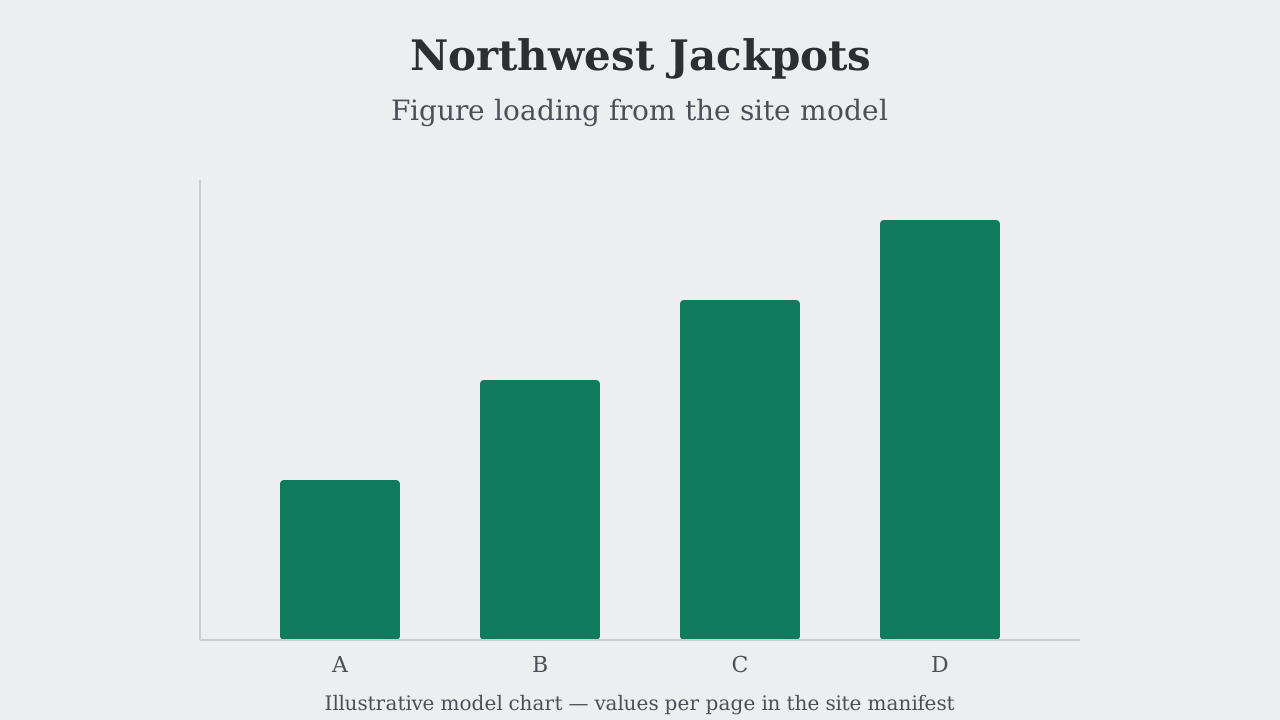
The chart above states the model in minutes, with Bitcoin at the slower end of the coin set, Ethereum in the middle and stablecoins at the fast end, because that ordering reflects network settlement behaviour plus the confirmation counts operators typically require. Read the figures as planning numbers rather than promises. The operator’s own release queue adds to every coin, sometimes minutes and sometimes a day on a first withdrawal while identity checks run, and the queue is usually the larger share of the total. A reader whose priority is speed should therefore optimise two things in sequence: the coin, which sets the network floor, and the operator’s withdrawal policy, which sets everything above it. A casino that advertises instant payouts in a fast coin can still be slower end to end than a modest operator with a disciplined release process in Bitcoin, and the comparison table later on this page is where that difference shows up.
There is a fourth choice worth a paragraph although it is not a coin: staying in fiat. Every point of this page’s advantage evaporates for a reader who funds by debit card at a licensed site, and the sibling page on payment methods costs that route properly. The honest summary of the comparison is that crypto wins on speed ceilings and loses on protection floors, and no coin selection changes either half of that sentence.
Bonus maths on a crypto deposit
The welcome offers in this category are larger in headline terms than their licensed counterparts, and the arithmetic behind them follows the same structure used across this site. Below sits the calculator set to the standard case: a £100 deposit, a 100% match, a forty-times multiplier and a £500 cap. Those are the defaults because offers of this kind usually carry terms in that region, and every figure on this page is stated as an assumption rather than a quote of any named promotion.
Bonus calculator
Bonus £100, staking requirement £4,000.
Model assumptions: the multiplier applies to the bonus amount, a house edge in line with popular titles is charged against the staking, and the cap truncates convertible winnings. Adjust the inputs to price your own case.
Worked at the defaults: the bonus is £100, the staking requirement is £4,000, and at an assumed 4% house edge on the slots used to clear it, the expected cost of the journey is £160. The cap sits at £500. On those assumptions the promotion’s paper value of £100 is exceeded by its expected cost, which is the standard result at this multiplier and the reason a matched bonus should be read as a purchase of extended play rather than a gift of money. Where crypto offers differ from fiat ones is in the term-level details around that structure, and the differences run in both directions.
The direction that favours the player: some offshore operators attach lighter wagering to crypto deposits specifically, treating the rail as one they want to encourage, and crypto-only reload or cashback promotions appear in this market that have no licensed equivalent. Cashback in particular, where a slice of net losses returns as withdrawable credit or low-wagering bonus, can be a cheaper product than any match, and it prices well on the same calculator: a 10% weekly cashback on a losing £200 of play returns £20 with far less attached friction than a £100 match at forty times.
The direction that works against the player: crypto offers at the aggressive end of the market carry multipliers above fifty times, deposit-plus-bonus bases rather than bonus-only bases, and caps that bite harder because the headline match was larger to begin with. A 200% match at fifty times on deposit plus bonus asks ten times the deposit in staking, ten thousand pounds on the standard case, and no headline percentage redeems that price. The market also has a habit of advertising crypto welcome packages across several deposits, which spreads the terms out until no single screen shows the whole cost. Add the tiers up before you add the percentages up.
Two crypto-specific clauses complete the checklist. The first is the denomination rule: some operators credit the bonus in coin, which means the wagering requirement is fixed in coin and the pound equivalent moves with the market, so a requirement that looked like £4,000 at deposit can be £4,400 by the time you clear it, or £3,600, with no action on your part. The second is the currency conversion spread applied when a bonus denominated in coin converts to withdrawable balance. Both clauses are price, both are printed in the terms, and both are invisible in the headline. A reader who checks the base, the multiplier, the cap and the denomination has read the four most expensive words in the document, and the remaining clauses are comparatively cheap.
| Input | Value | Effect on the model |
|---|---|---|
| Deposit | £100 in coin | Sets the scale of everything downstream |
| Match | 100% | Bonus amount equals the deposit |
| Wagering multiplier | 40x bonus | £4,000 total staking requirement |
| House edge assumption | 4% | £160 expected cost of clearing |
| Winnings cap | £500 | Ceiling on the convertible balance |
| Base of multiplier | Bonus only | Doubles to £8,000 if deposit plus bonus |
| Coin denomination | Fixed in coin | Pound value of the requirement drifts with the market |
| Round-trip fees | Model £2 | Charged in addition to the expected cost |
| Volatility exposure | Deposit to withdrawal | Plus or minus the coin’s move in pounds |
The last two rows are the ones a fiat comparison never needs and a crypto comparison cannot do without. Fees are small and knowable. Volatility is small on stablecoins and unbounded on everything else. A reader who wants the bonus journey to be purely a gambling decision prices both to zero by choosing a stablecoin on a cheap network, and that single choice does more for the predictability of the outcome than any selection between operators.
Payout speeds by coin and what slows them down
Speed is the headline promise of the category, so it deserves a costing rather than a slogan. The journey from withdrawal request to money in your own wallet has three legs, and only one of them is the blockchain. The first leg is the operator’s internal review: automated for small, established accounts and manual for first withdrawals or unusually large ones, and this leg is where days hide. The second leg is the operator’s release batch, because some sites process crypto payouts on a schedule rather than continuously, and a request arriving after the day’s batch waits until the next one. The third leg is the network itself, which is the part everyone talks about and the part that is usually the smallest.
On the model used across this site, the network leg runs to roughly fifteen minutes for a well-chosen coin at a quiet hour, and the figure the chart above shows is that floor, not the total. Add the review leg and the realistic end-to-end range stretches from half an hour, on a verified account at an operator with a disciplined queue, to a working day or more on a first withdrawal where document checks trigger. That range is the honest answer to “how fast are crypto casino payouts”, and any page that answers with a single number is quoting a best case as if it were a norm.
Three practical habits compress the range towards its floor. First, complete identity verification before the withdrawal request rather than during it, because the documents a site asks for at first cashout are predictable and uploading them while a withdrawal is pending converts minutes of work into days of waiting. Second, make a small test withdrawal early in the relationship with any new operator, so that the review leg is discovered when £50 is at stake rather than £500. Third, withdraw in the coin and on the network you verified at deposit, because rail-switching mid-relationship is where address errors and network mismatches breed.
The counterweight to all of this speed is the recall problem stated earlier, and it deserves repetition here in its payout form rather than its deposit form. When a licensed site’s fiat withdrawal stalls, a complaint escalates through a documented route to independent adjudication, and the escalation itself creates pressure. When a crypto payout stalls, the escalation route is the operator’s own support queue and whatever regulator issued its licence, in another country, at another pace. The mechanism that makes fast payouts possible, the absence of a bank and a regulator in the middle of the transaction, is precisely the mechanism that makes a stalled payout hard to fix. Speed and recourse are the same dial turned in opposite directions, and every crypto casino sits somewhere on that dial. The comparison table in the next section attempts to locate a dozen of them on it.
Category comparison: what the ranges look like
The table below compiles category-typical ranges across a spread of sites serving the British market and the offshore market alongside it. Every figure is a range, not a quote: these are the terms operators of each kind commonly publish, compiled from operator-published terms, and no row should be read as the stated promotion of the named site on the day you read this. Check the live terms before depositing. The UKGC rows are the British baseline shown for comparison, and note before reading them that licensed sites rarely accept crypto at all, which is itself the most important cell in the table.
| Brand | Licence label | Welcome offer range | Wagering | Minimum deposit | Payout window | Payment rails |
|---|---|---|---|---|---|---|
| 32Red | UKGC | Match to £50 style credit | Commonly 10–30x | £10 | 1–3 days | Debit card, PayPal, bank transfer |
| PlayOJO | UKGC | Spin bundle, wagering-free model | None on spin wins | £10 | 1–2 days | Debit card, PayPal, bank transfer |
| Mr Vegas | UKGC | Match to £100 style credit | Commonly 20–35x | £10 | 1–3 days | Debit card, e-wallets, bank transfer |
| All British Casino | UKGC | Match to £100 style credit | Commonly 30–35x | £10 | 1–3 days | Debit card, bank transfer |
| Casumo | UKGC | Match plus spins package | Commonly 30–35x | £10 | 1–3 days | Debit card, PayPal, bank transfer |
| Videoslots | UKGC | Match to £200 range | Commonly 35x | £10 | 1–3 days | Debit card, e-wallets, bank transfer |
| Mystake | Offshore | Multi-tier match to £1,000 range | Commonly 30–40x | £20 | 0–2 days | Debit card, e-wallets, crypto, bank transfer |
| Goldenbet | Offshore | Match package with recurring reloads | Commonly 35–45x | £20 | 0–2 days | Debit card, e-wallets, crypto |
| Rolletto | Offshore | Multi-tier match to £2,000 range | Commonly 40–50x | £20 | 0–2 days | Debit card, e-wallets, crypto, bank transfer |
| Donbet | Offshore | Match package with free spins | Commonly 35–45x | £20 | 0–2 days | Debit card, e-wallets, crypto |
| Kinghills | Offshore | Multi-tier match package | Commonly 35–50x | £20 | 0–2 days | Debit card, e-wallets, crypto |
| NineWin | Offshore | Match package with spins | Commonly 35–45x | £20 | 0–2 days | Debit card, e-wallets, crypto, bank transfer |
Read the table as the trade made visible. The UKGC rows show modest matches, comparatively light or transparent wagering, a £10 entry floor and payout windows of one to three days, bounded by published processing commitments, with the near-universal absence of crypto as the defining restriction. The offshore rows show headline matches several times larger, heavier wagering, a £20 entry floor and payout windows that compress to hours on crypto rails while the recourse behind them thins out. Neither column is uniformly better, and the reader who notices that the wagering midpoints of the two halves sit closer together than the headlines suggest has understood the market better than most of its advertising.
Three columns repay a second look. The payment rails column shows the offshore rows leaning on e-wallets and crypto, partly by choice and partly because some British payment providers decline transactions with unlicensed operators, which makes the rail list itself a regulatory signal. The minimum deposit column shows the £10 versus £20 split, which is the most visible day-one difference between the halves. The payout window column shows the offshore range compressing to zero-to-two days, but remember what that figure omits: the recourse available when the window stretches beyond it, which is the subject of the next section and the reason this page keeps repeating it.
The licence trade-off, stated plainly
With the aside stated, the comparison can be run on the merits. The licensed British market constrains promotions, runs affordability checks, bans credit cards and offers no practical crypto rail, and every one of those constraints was imposed for a reason the regulator documented. The offshore market serves the reader who weighs those constraints differently, and it does so with genuine technical advantages that this page has cost honestly: faster settlement, wider coin support, larger headline offers and a verifiability layer that licensed sites do not attempt. Both markets are real, both are priced, and the comparison table above holds them side by side rather than ranking them.
One practical difference deserves its own paragraph because it bites hardest in this category. Dispute resolution under a British licence is documented, free at the point of use and escalates to an independent adjudicator. Offshore dispute resolution depends on the issuing jurisdiction, and outcomes range from reasonable through glacial to absent. In a crypto context, where transactions cannot be recalled and balances are not segregated to a British standard, the quality of the dispute route is not an abstraction; it is the difference between a stalled withdrawal being an inconvenience and it being a loss. A reader who has never had a dispute may reasonably price that difference at zero. A reader who has had one will price it far higher. Both pricing decisions are rational; both require knowing the difference exists before the deposit, not after the payout request goes quiet.
A note on self-exclusion belongs here rather than in the regulation section, because crypto makes it urgent. GamStop covers licensed British operators only. A reader who has self-excluded and then deposits at an offshore crypto casino has stepped outside the exclusion they set, using a payment method that no bank can decline on their behalf. That is a fact about the boundary of the tool, stated here because this category sits exactly on that boundary, and every reader who has ever registered with GamStop should understand it before a wallet transfer makes it matter.
Wallet safety and custody before you deposit
Every other section of this page prices the casino’s behaviour. This one prices yours, because at a crypto casino the weakest link in the chain is often the player’s own wallet practice, and no complaint process covers a mistake made with your own keys. The material here is deliberately basic, because most losses at this end of the market are basic.
The first decision is custody. A custodial wallet, typically an account at an exchange, holds the keys for you, which is convenient and means you are trusting an institution that verifies your identity and can sometimes reverse errors. A self-custody wallet holds the keys on your device, protected by a seed phrase, which is the arrangement crypto purists prefer and the one where a single mistake is permanent. For casino purposes, a common workable pattern is to keep the main balance at a reputable exchange, move only the session budget to a self-custody wallet, and fund the casino from there, so that the amount exposed to your own operational errors is bounded by the deposit rather than by your total holdings.
The seed phrase deserves its own paragraph because it is where beginners lose money. The phrase is the wallet. Anyone who reads it owns the funds; no reset, no support desk and no operator can help after it leaks. Write it on paper, store it somewhere physically secure, never photograph it, never type it into any website, and treat any email or message asking for it as theft in progress, because that is what it is. The second losing pattern is address handling: always copy addresses from the live field, confirm the first and last several characters after pasting, verify the network label matches on both sides, and send a small test transaction before a large one. The third is phishing: casinos and their lookalikes both advertise by email, and a bookmark rather than a search result is the cheapest security control in existence.
Amount discipline belongs in the same section because custody errors and budget errors compound. A deposit is a transfer of money into an environment with no recall, no chargeback and no regulator within reach, so the amount transferred should be the amount you are prepared to treat as spent, set by the same deposit limits you would apply anywhere, enforced by your own arithmetic because no licence enforces it for you. Readers who find themselves topping up a crypto balance more often than the original plan assumed have discovered the frictionless-deposit problem, which is the downside of the very speed this page has been praising, and the remedy is the same as it is everywhere on this site: decide the number before the session, and let the session end when the number does.
Finally, a word on the exchange leg. Buying coin involves identity verification, fees and a spread, and the exchange you choose is a bigger trust decision than the casino, because more money lives there. Reputable, well-established platforms exist, and choosing one of them is beyond this page’s scope but not beyond a reader’s five minutes of research. What this page can say is that the round trip through an exchange is part of the price of every crypto casino session, and a reader who prices that round trip honestly sometimes finds that a licensed site’s slower, duller cashier was the cheaper product after all.
Regulation: where the rules land
British online gambling operates under the Gambling Act 2005 as amended, with the Gambling Commission as the regulator. Operators without a Commission licence may not lawfully advertise or offer gambling to consumers in Great Britain, and the Commission maintains a public register of licence holders. The practical consequences for this page’s subject are direct. Licensed operators must verify age and identity, must participate in GamStop, must offer deposit limits and safer-gambling tools, must protect customer funds to a stated standard and must process withdrawals without unreasonable delay. The same framework makes credit cards unusable for gambling with licensed operators and shapes the affordability checks that surprise players who have not encountered them.
The offshore market operates outside that framework by definition. Operators serving it hold licences from jurisdictions whose standards differ, sometimes in detail and sometimes in kind, and a licence from such a jurisdiction is not a substitute for a Commission licence and confers no British regulatory protection. The reader’s practical protection depends on the operator’s own policies and the issuing regulator’s willingness to intervene, and neither is visible in a payout-speed claim. This page treats that as a fact to disclose rather than a verdict to impose: the licence aside above sets out what is given up, the comparison table shows what is gained, and the weighing is the reader’s.
Taxation is the one area where the comparison runs the same way on both sides of the licence line, and it is worth stating because readers ask. Gambling winnings of a consumer are not taxable in the United Kingdom; gambling duty is levied on operators. That holds whether the win arrives by debit card at a licensed site or in a wallet from an offshore one, so the crypto route carries no tax penalty at the consumer level, and any figure on the cashier screen arrives whole.
Two further regulatory notes have direct wallet consequences. The first is the payment-provider layer: some British banks and payment companies decline transactions with unlicensed gambling operators on their own initiative, which is one reason the offshore rows of the comparison table lean on crypto and e-wallets. A reader should understand that a bank declining a gambling transaction is a policy of the bank operating within its own risk rules, not a judgement about the reader, and the crypto rail exists partly because it routes around that policy. The second is the boundary of GamStop, covered in the licence section and repeated here only because the repetition matters: the scheme covers Commission-licensed operators, and nothing beyond them. Anyone relying on it should understand the edge of the map before wandering off it.
How to choose a crypto casino sensibly
A shortlist is a legitimate product, and readers want one, so this closing section is about what to do with it, because the costing that puts any site on a shortlist here does not transfer automatically to your circumstances. Five questions decide it, and the first is the same on every page of this site.
Question one: what do you actually want from the offer? If the answer is extended play at a known price, a larger match with heavy wagering may suit you, and the calculator above prices it. If the answer is a realistic shot at a withdrawal, the same offer is expensive, and a smaller match, a cashback structure or no bonus at all is the cheaper product. Declining a welcome offer is always available and almost never advertised, and on a forty-times assumption it is frequently the highest-value decision available.
Question two: which coin and which network, decided before the deposit screen? The coin sets the fee bill and the volatility exposure; the network match with the casino’s deposit address is the single mistake that loses money irrecoverably. A stablecoin on a cheap network, verified against the cashier’s own instructions, is the default this page would suggest for any reader who has not already formed a preference.
Question three: what does the withdrawal policy say beyond the word instant? Look for the release schedule, the identity-check trigger, the maximum withdrawal per transaction and any fee the operator charges on payout. A small test withdrawal answers all four questions with money at the lowest possible stake, and the sibling page on fast withdrawal casinos costs the fiat side of the same journey.
Question four: what is your position on the licence trade-off? Read the aside again if the answer is unsettled. A reader with no dispute history, no self-exclusion in force and no need for the Commission’s protections may rationally weight the trade lightly. A reader for whom any of those applies should weight it heavily, and no payout speed should tip the scales against it. This is the question the category is worst at surfacing, which is why it gets its own section here.
Question five: what does the terms page say that the promotion page does not? Run the checklist: the base of the multiplier, the game weights, the maximum bet during wagering, the winnings cap, the time limit, the withdrawal trigger, and on this page two extras, the coin denomination rule and the conversion spread. Ten minutes. An offer whose terms answer all of it plainly is a better product than an identical headline whose terms obscure, and the difference is visible before any money moves.
Answer those five questions and the choice makes itself, which is the honest definition of a good decision tool. The coin narrows the field, the terms price it, the aside frames the trade, the wallet practice protects the rest. The reader closes the loop, and nothing on this page, or on this site, substitutes for that last step.
Frequently asked questions
Do any UK-licensed casinos accept Bitcoin?
In practice, essentially none. British licence conditions around verification, affordability checks and payment rules make crypto deposits commercially unattractive for licensed operators, so the sites accepting Bitcoin are licensed elsewhere. If a site advertises both a Gambling Commission licence and crypto deposits, verify the licence on the Commission’s public register before believing either claim.
How fast are crypto casino withdrawals really?
On the model used across this site, the network leg runs to roughly fifteen minutes for a well-chosen coin at a quiet hour. The total journey also includes the operator’s review and release process, so realistic end-to-end times range from half an hour on a verified account to a working day or more on a first withdrawal where document checks trigger. The blockchain is usually the smallest part of the wait.
Which coin is best for casino deposits?
For most readers, a stablecoin on a low-fee network, because it removes volatility from the balance, keeps fees minimal and settles quickly. Bitcoin is the most widely accepted but the slowest and most fee-variable of the major options. Ethereum sits between the two, with layer-two routes cutting costs where supported. Match the network on both sides of the transfer, whatever the coin.
What happens if I send crypto on the wrong network?
In most cases the deposit is unrecoverable, because a blockchain transaction cannot be recalled and an unsupported network has no bridge back. Read the network label on the casino’s deposit screen, match it in your wallet, and send a small test transaction before a large one. No support team, however sympathetic, can reverse a transaction the network has confirmed.
Are crypto casino bonuses better than fiat ones?
The headlines are larger, and the terms are usually heavier to match. Offers of this kind typically carry wagering in the region of forty times the bonus, sometimes on a deposit-plus-bonus base, with caps and coin-denomination rules that add price the headline hides. Price any offer with the calculator above before comparing it to a licensed site’s smaller, lighter alternative.
Is my money safe at a crypto casino?
Safe is the wrong frame; protected is the better one. An offshore operator’s balance is protected to whatever standard its own jurisdiction sets, not to the segregation standards a British licence enforces, and there is no chargeback or independent adjudication if a payout stalls. Your own wallet practice matters as much: seed phrases, address checking and network matching are the points where most reader-side losses actually happen.
Do I pay tax on crypto casino winnings?
Gambling winnings of a consumer are not taxable in the United Kingdom, and gambling duty is levied on operators, so a withdrawal from a crypto casino carries no consumer tax liability. Note that if you hold the coin after withdrawing and its value rises, that is a separate question about disposing of an asset, which is beyond this page’s scope.
Why do offshore casinos prefer crypto payments?
Three reasons stack up. Crypto has no bank in the middle, so no payment provider can decline the transaction on its own risk rules. Settlement is fast and cheap compared with card rails. And the irreversible nature of the rail removes the chargeback exposure that card-based operators carry. All three advantages serve the operator as much as the player, which is worth remembering when a cashier advertises them.
What is GamStop and does it cover crypto casinos?
GamStop is the free national online self-exclusion scheme for Great Britain, covering all operators licensed by the Gambling Commission for a minimum of six months per registration. It does not reach operators licensed elsewhere, so a crypto casino outside the scheme is not covered. Anyone relying on self-exclusion should understand that boundary before considering any operator beyond it, and free confidential support is available through the National Gambling Helpline on 0808 8020 133, twenty-four hours a day.
Can I use a crypto casino if I have self-excluded?
Technically the offshore market has no connection to GamStop, and this page will not help anyone defeat a scheme, a block or a register. What it will say is that a self-exclusion registered with GamStop represents a commitment you made to yourself, the offshore market sits outside every tool that enforces it, and anyone feeling the pull to route around their own exclusion should treat that feeling as the signal it is and call the helpline above instead.