Casinos Not on Gamstop
A casino operating outside the Gamstop register is an operator holding no Gambling Commission licence, and the difference is practical before it is philosophical. On a licensed British site, your self-exclusion, your deposit limits, your fund segregation and your dispute route are licence conditions, backed by a regulator and an independent adjudicator. Offshore, those things become promises printed by the operator on its own terms page. This page explains what that gap costs in pounds, hours and recourse, what the offshore market offers in return, and how to read its promotions with the arithmetic in the open.
Welcome packages at this end of the market usually attach forty times the bonus amount in wagering before any withdrawal unlocks, and we use that figure as the assumption behind every calculation on this page because it is what this segment tends to ask. Terms change often and vary by operator, so verify the live terms before depositing. The model below turns a headline percentage into a staking requirement, an expected cost and a capped outcome, which is the only honest way to price any promotion.
Terms change often. Verify the current terms on the operator’s own page before depositing. Scores are editorial.
8.2/10See offer terms
8.0/10See offer terms
7.8/10See offer terms
7.5/10See offer terms
- What “not on Gamstop” actually means
- The bonus maths, worked in the open
- What the licence gap costs you in practice
- Category comparison: the two halves of the market
- Payment rails and payout windows offshore
- Reading offshore bonus terms without a lawyer
- Safer gambling: the boundary of the register
- How to decide, if you decide at all
What “not on Gamstop” actually means
Strip away the marketing and the phrase describes one specific fact: the operator holds no Gambling Commission licence, so it is not connected to Gamstop, the free national self-exclusion scheme covering every licensed British gambling site. A registration with Gamstop runs for a minimum of six months and reaches all Commission licensees. It does not reach operators licensed in other jurisdictions. That boundary is a property of the scheme’s design, not a loophole, and this page explains the boundary honestly while offering nothing that would help anyone cross it.
Why does a casino end up outside the scheme? Usually because it never applied for a British licence in the first place. Offshore-facing operators commonly hold licences from jurisdictions such as Curacao or Anjouan, whose regulatory frameworks differ from the Commission’s in detail and often in kind. A local licence permits the operator to run its business under its own regulator’s rules. It confers nothing enforceable in Great Britain. The Commission is explicit that operators without its licence may not lawfully advertise or offer gambling to consumers here, which is why these sites advertise from abroad, take payments through international rails and write their terms without reference to British licence conditions.
The consequence for the reader is that everything a British licence guarantees becomes a policy choice by the operator. Age verification procedures, fund segregation, complaint handling, the fairness of bonus terms, the speed of withdrawals: all of it rests on the operator’s own word and on whatever recourse its offshore regulator provides, which in practice ranges from slow to negligible. Some offshore operators are competent businesses that honour their terms. Some are not, and the reader has no independent way to tell them apart before the first withdrawal, because no British register records their history and no British adjudicator will hear a complaint.
This page is deliberately even-handed about the trade. Larger headline bonuses, broader payment rails and lighter affordability checks are the visible reasons some readers choose these sites, and adults may make that choice lawfully. What this page insists on is that the choice be made with the full price visible. The welcome percentage is the price on the label. The missing licence is the part of the price paid in kind, and it only becomes visible when somebody writes down exactly what is given up. That is what the next sections do.
The bonus maths, worked in the open
Offshore welcome packages tend to be larger than their British equivalents, and they are also more heavily conditioned. The calculator below is set to the standard case for this part of the market: a £100 deposit matched at 100%, a forty-times multiplier on the bonus and a £500 ceiling on convertible winnings. Change any input and the model recalculates the journey in pounds.
Bonus calculator
Bonus £100, staking requirement £4,000.
Model assumptions: the multiplier applies to the bonus amount, a house edge in line with popular titles is charged against the staking, and the cap truncates convertible winnings. Adjust the inputs to price your own case.
The mechanics run in four steps. The deposit multiplied by the match percentage gives the bonus. The bonus multiplied by the wagering figure gives the total staking requirement. A house edge assumption applied to that staking gives the expected cost of clearing it. The cap truncates whatever balance remains at the end. At the defaults: a £100 bonus, £4,000 of staking, and at an assumed 4% house edge on the slots you clear through, £160 of expected losses on the way. The promotion’s paper value is £100; its expected value on those assumptions is less, and on many realistic combinations of edge and volatility it is nothing at all.
Where offshore offers diverge from the British pattern is in the shape of the terms rather than the arithmetic. Multi-tier packages that match across several deposits are common, and headline totals can climb into four figures. The wagering, however, usually rises with the match size, and this part of the market commonly asks between thirty-five and fifty times the bonus. We take forty times as our working assumption because it sits at the centre of the range this segment publishes. A larger match at a heavier multiplier is not automatically a better deal: a £200 match at fifty times carries £10,000 of staking, against £4,000 on the standard case, and the expected cost of clearing it rises in proportion.
Game weighting deserves particular attention at these sites. Slots generally contribute in full, while table games and live dealer titles contribute a small fraction or nothing, and the multiplier applied to live dealer play is often heavier still. The figure on this page assumes forty times for slot play; sixty times for table games and eighty for live tables are plausible at the stricter end of the market, and the terms page will state which applies. A player who intends to clear a requirement on blackjack should multiply the printed requirement by roughly ten before deciding whether the offer is worth anything.
One further term matters more offshore than at home: the maximum conversion rule, which limits how much of a bonus balance can become withdrawable cash. Caps in the hundreds of pounds are ordinary, and some operators apply conversion limits as a multiple of the deposit rather than a fixed figure. Read the cap before the percentage, because the cap is where the journey ends, and a promotion whose ceiling sits below the expected cost of clearing it is a product you are paying for, not a gift.
What the licence gap costs you in practice
The dispute gap is the sharpest single difference, and it deserves its own arithmetic. Under a British licence, a complaint about a held withdrawal follows a documented route: the operator’s process first, then an independent Alternative Dispute Resolution body, free at the point of use. Offshore, the same complaint goes wherever the operator’s licence jurisdiction sends it. Outcomes range from reasonable to glacial to absent, and the cost of chasing a dispute abroad, in time and often in legal fees, routinely exceeds the sum in dispute. A reader who has never had a complaint can price this at zero. A reader who has had one prices it very differently, and neither position is irrational; the failure is not knowing the difference before the deposit.
Fund protection is the second practical difference. British licence conditions govern how customer funds are held, and the Commission publishes the standard each operator applies. Offshore, balances are typically commingled with operating funds, which means that if the business fails or seizes up, balances stand in line with creditors. For most balances most of the time this never matters. When it matters, it matters completely, and there is no insurance behind it.
The third difference is the advertising and affordability framework. Licensed British operators work within rules that constrain how promotions are presented and may require evidence of income or spending before permitting large deposits. Offshore operators face no such constraints, which cuts both ways: fewer interruptions for the reader, and also fewer of the friction points that exist because a regulator judged them necessary. This page treats that as a disclosed trade-off rather than a verdict. The weighing belongs to the reader, provided the reader knows both sides of the scale, which is what this section and the comparison below are for.
Category comparison: the two halves of the market
The table sets typical ranges for each kind of operator side by side. Every figure is a range compiled from operator-published terms, not a quote of any single promotion on the day you read this, and no row should be read as claimable anywhere. The UKGC rows are the British baseline shown for comparison; check live terms before any deposit.
| Brand | Licence label | Welcome offer range | Wagering | Minimum deposit | Payout window | Payment rails |
|---|---|---|---|---|---|---|
| Betway | UKGC | Matched deposit to £50 | Commonly 10–30x | £10 | 1–3 days | Debit card, PayPal, bank transfer |
| MrQ | UKGC | Low-wagering spins bundle | Often under 10x | £10 | 1–2 days | Debit card, PayPal, bank transfer |
| PlayOJO | UKGC | Spins with no wagering on wins | None on spins | £10 | 1–2 days | Debit card, PayPal, bank transfer |
| Unibet | UKGC | Matched casino credit to £100 | Commonly 20–35x | £10 | 1–3 days | Debit card, PayPal, Apple Pay, bank transfer |
| Virgin Games | UKGC | Spins bundle with light terms | Commonly under 20x | £10 | 1–3 days | Debit card, PayPal, bank transfer |
| All British Casino | UKGC | Matched deposit to £100 | Commonly 30–35x | £10 | 1–3 days | Debit card, Trustly, bank transfer |
| Kinghills | Offshore | Multi-tier match package | Commonly 35–50x | £20 | 0–2 days | Debit card, e-wallets, crypto |
| NineWin | Offshore | Match package with spins | Commonly 35–45x | £20 | 0–2 days | Debit card, e-wallets, crypto |
| Rolletto | Offshore | Multi-tier match to a four-figure range | Commonly 40–50x | £20 | 0–2 days | Debit card, e-wallets, crypto, bank transfer |
| JackpotCity | Offshore | Match package with recurring reloads | Commonly 35–45x | £20 | 0–2 days | Debit card, e-wallets, crypto |
| Roobet | Offshore | Crypto-focused credit offers | Commonly 40–50x | £20 equivalent | 0–1 days | Crypto, e-wallets |
Read the table as two distributions rather than a ranking. The British rows cluster at modest headline sizes, lighter or zero wagering on the fairer end, a £10 entry floor and payout windows bounded by licence conditions on unreasonable delay. The offshore rows cluster at far larger headline matches, heavier multipliers, a £20 floor and payouts that are fast on the rails but dependent entirely on operator policy. Neither half is uniformly better. The licensed half buys enforceable protection and gives away headline size. The offshore half buys headline size and gives away the enforcement.
The overlaps are as informative as the gaps. On wagering, the middle of both distributions sits within ten points of each other, so the multiplier alone rarely decides anything. On minimum deposit, the £10 versus £20 split is the most visible day-one difference, and it is the one figure most readers notice first. On payout windows, the rail dominates the difference, which is why the payments section below matters more than any processing promise printed on a promotions page.
Payment rails and payout windows offshore
Offshore cashiers look broader than British ones, and the breadth is real but conditional. Debit cards are widely accepted in both directions. E-wallets such as MuchBetter and NETELLER appear frequently offshore, while PayPal, which maintains its own vetting for British gambling merchants, is essentially a licensed-market rail. Trustly and bank transfer appear at many offshore operators. Crypto rails, including Bitcoin, Litecoin and USDT, are common offshore and rare on British-licensed sites. Availability varies per operator and changes without notice, so treat any rail list as a check to run at the cashier rather than a fact to assume.
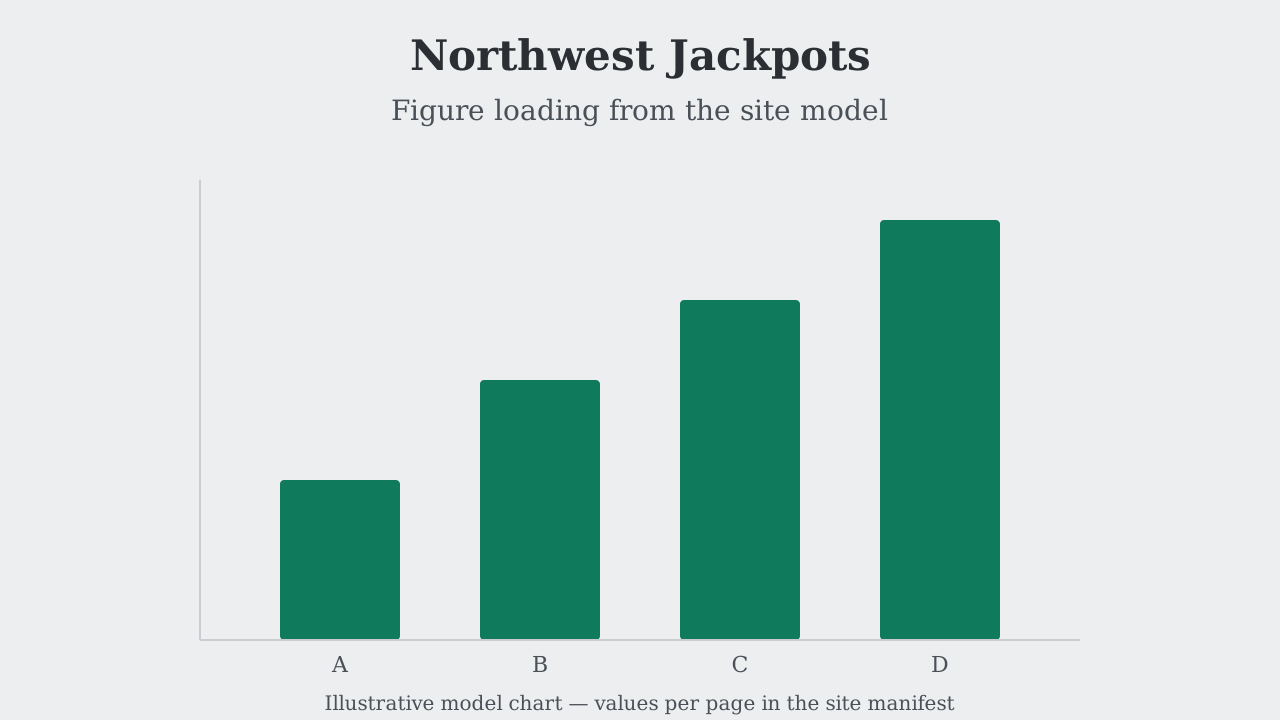
The chart states the model behind this page’s bonus costing: forty times on slot play, heavier on table games and heavier again on live dealer. Those multipliers are the quiet price of the large headline packages, and they vary by operator, so the terms page remains the authority. The payout story runs on parallel lines. Withdrawals at offshore operators are commonly stated in hours to a couple of days depending on the rail, with crypto fastest and card and bank transfers slower. Those windows are assumptions about the category, not commitments by any named site, and the operator’s pending queue can add time at its discretion, particularly on a first withdrawal when identity checks are most likely.
Two practical notes belong here. First, withdrawals generally return by the rail used to deposit, so the rail decision is made on day one whether you intend it or not; a player funding by card should not plan on crypto speed without confirming the operator’s policy. Second, because some British payment providers decline transactions with unlicensed operators, the rail that works for deposits can occasionally fail later, and a declined deposit is usually a bank-side decision rather than a site-side one. This is one of the quiet costs of operating outside the licensed framework, and it is worth knowing before a deposit rather than after.
Reading offshore bonus terms without a lawyer
Every promotion is governed by a terms page most readers never open, and offshore terms pages carry a few clauses that deserve special attention. The checklist below takes perhaps ten minutes and prices the difference between an offer worth considering and one worth declining.
First, the base of the multiplier. “Forty times bonus” and “forty times deposit plus bonus” differ by a factor of two on a matched offer: £4,000 against £8,000 of staking on the standard case. The base is the most expensive word in the document. Second, game weighting and the per-game multiplier. Offshore terms often publish different multipliers for slots, table games and live tables, and staking on the wrong category contributes little or inflates the requirement. Third, the maximum bet while wagering, commonly around £5, with winnings voided retroactively on breach. This clause generates more genuine disputes than any other, and the breach is usually accidental, so set a stake level on day one that cannot cross it.
Fourth, the conversion cap, sometimes expressed as a fixed figure and sometimes as a multiple of the deposit. Fifth, the time limit, usually seven to thirty days, with the bonus and any winnings forfeited at expiry. Sixth, the withdrawal trigger: requesting a payout before the requirement completes usually forfeits the lot. Seventh, and characteristically offshore, the order of operations on mixed balances, which determines whether your deposit plays before or after the bonus. Some operators ring-fence your cash; others treat the whole balance as bonus until the requirement completes, which changes what a withdrawal request costs you mid-wagering. None of these clauses is hidden. They are published, in small type, and the failure is one of reading rather than disclosure.
One honest observation about the market to close the section: because offshore operators compete on headline size, the differentiation between similar-looking offers lives almost entirely in the terms. Two packages can print the same percentage and differ by a factor of three in expected cost once the base, the weighting, the cap and the time limit are read together. A percentage-led review cannot capture that. A terms-led costing can, and this page’s calculator exists to run it on any offer you are weighing.
Safer gambling: the boundary of the register
The subject of this page requires a direct sentence about self-exclusion. Gamstop covers operators licensed by the Gambling Commission and nothing beyond them. A reader who has registered for self-exclusion and then considers an offshore site should understand precisely what that means: the exclusion they set will not be enforced on that site, because the scheme’s reach ends at the licensed market. This is a fact about the boundary of the tool, stated here so that no reader discovers it after a deposit. It is also a reason, not merely a technicality, why the licence question and the safer-gambling question are the same question.
The licensed market’s tools, by contrast, are conditions of the licence. Deposit limits, reality checks, time-outs and self-exclusion must be offered by every Commission licensee, and advertising carries the statutory warning that when the fun stops, it is time to stop. Offshore operators may offer some of these tools as policies, and some do, but they are choices rather than obligations, and they can be changed by the operator without a regulator’s approval.
For anyone worried about their own gambling, free confidential help exists regardless of where you play or whether you play at all. BeGambleAware provides free support, and the National Gambling Helpline, run by GamCare, is on 0808 8020 133 and answers around the clock. The Citizens Advice consumer service can signpost gambling-related disputes. These services cost nothing, judge nothing and are the correct first stop for anyone who recognises themselves in the harder paragraphs of this page.
How to decide, if you decide at all
The closing section is procedural, because the weighing of this trade belongs to the reader and works better with a method. Question one: what is your self-exclusion status? If a Gamstop registration is in force, the honest answer to this page is that the offshore market sits outside the exclusion you set, and the safer-gambling section above is the paragraph that should decide the rest. No bonus percentage belongs in that weighing.
Question two: what do you want from the offer? If the answer is extended play at a known price, a heavy multiplier is a feature and a large multi-tier package may suit you. If the answer is a realistic chance of a withdrawal, run the calculator with the terms you actually find, base and cap included, and treat the expected value as the price of the ticket. Question three: which rail, in both directions? Choose the payment method with the withdrawal in mind, because the deposit rail generally constrains the payout rail, and because some British payment providers decline transactions with unlicensed operators.
Question four: how much is recourse worth to you? If a dispute has never touched you, the absence of an adjudication route may rationally weigh little. If one has, it weighs heavily, and it should be priced before the deposit rather than during the stalled withdrawal. And a fifth, unwritten question the market never asks: read the terms page fully once, with the seven-clause checklist, before the first deposit. An operator whose terms answer every clause plainly is a better counterpart than one whose terms obscure them, whatever the headline says.
The hub guide on this site extends the licence comparison to the offshore market as a whole, and the sibling pages cost the bookmaker, casino and slots versions of the question on the same assumptions. Whatever you decide, decide it with the price visible. That is the whole purpose of this page, and nothing on it substitutes for the decision itself.
Frequently asked questions
What does “casino not on Gamstop” actually mean?
It describes an operator holding no Gambling Commission licence and therefore not connected to the Gamstop self-exclusion scheme, which covers licensed British operators only. Such casinos are usually licensed in other jurisdictions, and their terms, tools and dispute handling rest on the operator’s own policies rather than on British licence conditions.
Is Gamstop registration enforced at offshore casinos?
No. Gamstop reaches every Gambling Commission licensee and does not reach operators licensed elsewhere, so an exclusion you register is not enforced on those sites. Anyone relying on self-exclusion should understand that boundary before considering any operator outside the scheme, and the National Gambling Helpline on 0808 8020 133 offers free confidential help at any hour.
How much wagering do offshore welcome bonuses carry?
The model on this page takes forty times the bonus amount, because that sits at the centre of the range this segment tends to publish, commonly thirty-five to fifty times. The base of the multiplier matters too: requirements applied to deposit plus bonus double the staking figure. The terms page is the authority for any specific offer.
Are winnings from offshore casinos taxable in the UK?
Gambling winnings of a consumer are not taxable in the United Kingdom, and gambling duty is levied on operators rather than players. That position concerns tax, not protection: it says nothing about whether a payout will actually arrive, which depends on the operator’s terms and solvency.
What happens if a withdrawal is withheld at an offshore casino?
Your recourse is the operator’s own complaints procedure and whatever its licence jurisdiction provides, since the Commission’s disputes route and independent adjudication apply only to licensees. This is among the sharpest practical costs of the licence gap, and it is worth pricing before depositing rather than after a request stalls.
Why do offshore sites ask for larger minimum deposits?
A £20 entry floor is the ordinary figure at this end of the market, against the £10 common on licensed British sites, though figures vary by operator. The difference reflects payment processing costs on international rails and the absence of the competitive deposit-floor war the licensed market runs.
Which payment methods work at offshore casinos?
Commonly available rails include debit cards, e-wallets such as MuchBetter and NETELLER, Trustly, bank transfer and crypto such as Bitcoin and USDT, while PayPal is effectively a licensed-market option. Availability varies per operator and changes without notice, and withdrawals generally return by the depositing rail.
How fast are offshore payouts compared with licensed sites?
On the model used across this site, offshore windows run from minutes on crypto to a couple of days on cards and bank transfer, while licensed British operators are bound by licence conditions to handle withdrawals without unreasonable delay. Rail speed sets the floor in both cases; the licence is the reason the floor holds.
Can a winnings cap make a big bonus worthless?
Yes, in expected terms. If the cap on convertible winnings sits at £500 and clearing the requirement costs £160 in expected losses on the standard case, most of the upside is truncated before it can be reached. The cap is where every wagering journey ends, so read it before the percentage.
Are offshore casino sites legal for UK players to use?
Offshore operators hold licences from their own jurisdictions rather than the Gambling Commission, and the Commission states that operators without its licence may not lawfully advertise or offer gambling to consumers in Great Britain. The protections question is separate from the legality question, and this page’s purpose is to state what is given up so any decision is made in the open.