No KYC Casinos
A casino that advertises itself as skipping identity checks is selling you minutes, and charging you in protections. This page explains what those sites actually are, what verification the law requires even where the marketing says otherwise, and precisely what a player gives up when the checks disappear. There is no advice here on avoiding a check, a block or a register. There is a plain accounting of the trade, so that anyone who makes it makes it with open eyes.
Identity verification at gambling operators exists for three reasons: the law demands it, payment providers demand it, and it protects the player’s own money. Offers of this kind, sites marketing themselves on absent checks, usually delay verification rather than remove it, and the delay tends to arrive at the worst possible moment, which is when a withdrawal is pending. Verify the current terms on the operator’s own pages before depositing, because the marketing of this segment rarely matches its own cashier.
Terms change often. Verify the current terms on the operator’s own page before depositing. Scores are editorial.
8.2/10See offer terms
8.0/10See offer terms
7.8/10See offer terms
7.5/10See offer terms
- What no KYC actually means, and what it does not
- Why verification exists even offshore
- The timing trap: checks arrive at withdrawal
- What you give up when the checks are absent
- Category comparison: the ranges across the market
- Payments, payouts and where the friction lands
- How to weigh the trade honestly
What no KYC actually means, and what it does not
Start with the phrase itself. KYC stands for know your customer, the set of checks a business runs to confirm who its customer is. In gambling, those checks confirm age, identity, and sometimes the source of the money being staked. A casino described as no KYC is not claiming that no verification ever happens. It is claiming that verification does not happen at the moment you sign up. That distinction does all the work in this section, because almost every disappointment in this segment of the market comes from readers hearing one claim and receiving the other.
What the claim usually means in practice is this: you can register an account with an email address and a password, sometimes little more, and you can deposit before anybody has looked at a document. The deposit is fast. The lobby opens. The slots spin. To that point, the marketing has been accurate. The claim says nothing at all about what happens when you ask for money back, and what happens then is governed by the operator’s licence, its payment providers and its own risk rules, none of which care what the homepage advertised.
Some operators in this segment genuinely never ask for documents from most customers. They manage that by keeping deposits small, by relying on payment rails that carry their own verification upstream, or by operating in jurisdictions whose requirements are lighter than Britain’s. Others ask at a threshold, cumulative or per-transaction, and the threshold is often lower than the reader expects. Neither pattern is a promise. Both are policies that can change without notice, and the version of the policy that matters is the one in force on the day you request a withdrawal.
There is also a distinction worth drawing between anonymity and lightness. A site that verifies you through a database check in the background, matching your name and date of birth against public records without you uploading anything, has run a KYC process. It simply has not interrupted you to do it. From the player’s side those two things can feel identical, and in the happy case they are. The difference shows up in the unhappy case: when a background check flags something, when a payment is frozen upstream, or when a large withdrawal arrives and the operator’s risk team wants paper. Sites that never interrupted you often have no relationship with you at all by then, and an operator that holds your money and knows nothing about you is an operator whose compliance team starts from zero at the worst possible time.
This page takes the claim at face value and asks a better question than the marketing does. Not whether you can deposit without showing a passport, but what the absence of that step costs you, when the cost lands, and who pays it. The rest of the sections answer those three questions in order.
Why verification exists even offshore
A reader could be forgiven for thinking verification is a British eccentricity, invented by the Gambling Commission and imposed on a market that would otherwise run smoothly. That reading gets the history backwards. Identity checks in gambling exist for reasons that follow the money, and the money in gambling runs through banks, card schemes and payment processors, all of which carry their own obligations regardless of where an operator holds its licence.
The first layer is anti-money-laundering law. Gambling is a recognised channel for moving funds of unclear origin, and the international standards that govern that risk apply to operators in most licensing jurisdictions, not only Britain. A Curacao licence, to take the most common example at this end of the market, does not exempt an operator from the expectations of the banks and processors that actually move its money. Those institutions impose their own onboarding and monitoring requirements on the operator, and the operator passes them down to the customer in the form of checks. The licence sets a floor. The banking relationships frequently set a higher one.
The second layer is the operator’s own commercial protection. A casino that pays out to whoever holds the login, with no identity check anywhere, is a casino that pays out to account thieves. Verification is how an operator confirms that the person requesting a withdrawal is the person who funded the account. Players benefit from this more than most ever realise: the check that feels like an obstacle at withdrawal time is the same check that prevents somebody else from emptying a compromised account. Any operator that skipped the step entirely would be advertising to fraudsters as much as to players, and the fraud would be priced back into everyone else’s experience.
The third layer is age verification. Whatever a licence jurisdiction’s standards, no legitimate operator anywhere wants the legal and reputational exposure of taking money from under-age players, and payment providers want that exposure even less. In practice, even the lightest-touch offshore operators run some form of age assurance, however minimal, because the alternative eventually costs them their processing relationships.
The honest summary is this: no KYC casinos do not operate outside verification. They operate on deferred verification, or on verification pushed onto third parties. The check exists somewhere in the chain. The question the marketing never asks is where it sits and who bears its cost when it arrives late.
The timing trap: checks arrive at withdrawal
The pattern that defines this segment, and that generates most of its complaints, is the timing of the check. Deposit with no documents, play with no interruption, build a balance, request a withdrawal, and only then receive the request for identity documents, proof of address, or evidence of where the deposits came from. Nothing about that sequence is a bait and switch in the legal sense; the operator’s terms almost always reserve the right to verify at any point, and readers who never opened the terms did not know the right existed. But the experience lands like one, and the landing is the point this section makes.
On the model used across this site, a first withdrawal at a site that defers its checks runs materially slower than one at a site that verified at registration. The operator cannot release funds it cannot attribute, so the request sits in a review queue while documents are produced, exchanged and processed. A reader who has documents to hand loses hours or days. A reader who does not, because no document list was ever communicated at sign-up, loses longer, and some requests fail outright when a reader cannot or will not produce what is asked. The balance in that case does not simply vanish; it sits in limbo under the operator’s terms, and the reader’s recourse depends entirely on the operator’s regulator and the operator’s goodwill.
There is a second, quieter cost in the same pattern. Verification requests made under time pressure, when a withdrawal is pending and a reader is anxious, are the verification requests most often completed carelessly. Blurred photographs, mismatched addresses, documents in a partner’s name. Each of those adds another review cycle. None of it is evadable in any legitimate sense; the documents are what they are. The practical mitigation is not cleverness at the withdrawal stage, it is choosing at the deposit stage an operator whose verification approach you have actually read, and producing documents promptly and clearly if they are asked for.
The model below is the site’s standard bonus costing, carried here because bonus terms and verification terms interact. A deferred-check operator frequently attaches heavier wagering and tighter caps to its promotions, precisely because its acquisition funnel trades friction at sign-up for friction at cashout.
Bonus calculator
Bonus £100, staking requirement £4,000.
Model assumptions: the multiplier applies to the bonus amount, a house edge in line with popular titles is charged against the staking, and the cap truncates convertible winnings. Adjust the inputs to price your own case.
Run at the defaults, the model shows a £100 deposit matched at 100%, a £4,000 staking requirement at forty times, and an expected cost of clearing that meets or exceeds the bonus value on typical assumptions. That arithmetic holds at licensed British sites and offshore ones alike. What differs is what happens after the requirement completes: at a site with checks completed in advance, the withdrawal that follows is routine. At a site with deferred checks, the withdrawal that follows is the first conversation the operator has ever really had with you.
What you give up when the checks are absent
With that stated, the giving-up can be costed more precisely, and the first item deserves its own paragraph because it is the one with consequences beyond money. Self-exclusion at an offshore site is a matter of the operator’s own tools, if it offers any. A reader who has registered with GamStop and then deposits at a site outside the scheme has stepped outside the exclusion they set. That is a fact about the tool’s boundary, not a commentary on the reader, and understanding the boundary before it matters is precisely why this page exists. Anyone for whom self-exclusion is a live protection should weight this item above every other row in any comparison, because no payout speed or bonus size prices it.
The second item is dispute resolution. Under a British licence, a complaint that the operator cannot resolve escalates to an independent alternative dispute resolution body, free at the point of use. At an offshore operator, the complaint goes to the issuing jurisdiction’s process, and the practical outcomes range from reasonable to slow to nothing. A reader who has never disputed a withdrawal may price this at zero. A reader who has had a request held will price it far higher, and the pricing difference is the whole argument for knowing the difference exists in advance.
The third item is the money itself. British licence conditions require customer funds to be protected to a stated standard, which means a declared portion of balances sits apart from the operating business. Offshore licences vary on this, and several impose no segregation requirement comparable to the British one. In plain terms, if the operator’s business fails, the money in your balance ranks wherever the local rules and the operator’s terms put it. That risk is invisible on every day the business is healthy, which is most days, and total on the day it is not.
The fourth item is the softer one: the checks themselves are also the safety net. Affordability interactions, reality checks, deposit limits as licence conditions. Readers who find those intrusive are not wrong about their own experience, and the offshore market’s lighter touch is one of the honest reasons it exists. What the aside insists on is symmetry: the same absence that removes the friction removes the net. Both halves of that sentence belong in any decision.
Category comparison: the ranges across the market
The table below sets category-typical ranges across a spread of operators serving the British market, licensed and offshore side by side. Every figure is a range compiled from operator-published terms, not a quote of any single promotion, and no row should be read as the stated offer of the named site on the day you read this. Check live terms before depositing. The UKGC rows are the British baseline shown for comparison.
| Brand | Licence label | Welcome offer range | Wagering | Minimum deposit | Payout window | Payment rails |
|---|---|---|---|---|---|---|
| Mr Vegas | UKGC | Match package to £100 range | Commonly 20–35x | £10 | 1–2 days | Debit card, PayPal, e-wallets, bank transfer |
| PlayOJO | UKGC | Spins bundle, no wagering on wins | None on spin wins | £10 | 1–2 days | Debit card, PayPal, e-wallets |
| Casumo | UKGC | Match package with spins | Commonly 30–40x | £10 | 1–3 days | Debit card, PayPal, e-wallets, bank transfer |
| Videoslots | UKGC | Match package to £200 range | Commonly 20–35x | £10 | 1–2 days | Debit card, e-wallets, bank transfer |
| All British Casino | UKGC | Match package to £100 range | Commonly 30–40x | £10 | 1–3 days | Debit card, e-wallets, bank transfer |
| Pub Casino | UKGC | Match package to £100 range | Commonly 15–30x | £10 | 1–2 days | Debit card, PayPal, bank transfer |
| 32Red | UKGC | Match package to £150 range | Commonly 30–40x | £10 | 1–3 days | Debit card, PayPal, e-wallets |
| Mystake | Offshore | Multi-tier match to £1,000 range | Commonly 30–40x | £20 | 0–2 days | Debit card, e-wallets, crypto, bank transfer |
| Goldenbet | Offshore | Match package with recurring reloads | Commonly 35–45x | £20 | 0–2 days | Debit card, e-wallets, crypto |
| Donbet | Offshore | Match package with free spins | Commonly 35–45x | £20 | 0–2 days | Debit card, e-wallets, crypto |
| Rolletto | Offshore | Multi-tier match to £2,000 range | Commonly 40–45x | £20 | 0–2 days | Debit card, e-wallets, crypto, bank transfer |
| Kinghills | Offshore | Match package with spins | Commonly 35–50x | £20 | 0–2 days | Debit card, e-wallets, crypto |
Read the two halves against the theme of this page rather than against each other’s headlines. The UKGC rows show modest matches, lighter wagering, a £10 entry floor and payouts bounded by published processing commitments, with verification completed early and therefore never in the way of a withdrawal. The offshore rows show larger headline matches, heavier wagering, a £20 floor and rail-dependent payout speed, with the verification question deferred and therefore unresolved until it matters. The lighter-touch registration experience is real, and it is priced into every other column of the table in one way or another.
Two overlaps are worth naming. On payout windows, the offshore rows often look faster, but that speed belongs to the rail, usually crypto or an e-wallet, and it holds only while no verification request is open. On minimum deposit, the £10 against £20 split is the most visible day-one difference, and it is also among the least consequential. The consequential columns are wagering and the licence label, and those are the two the marketing talks about least.
Payments, payouts and where the friction lands
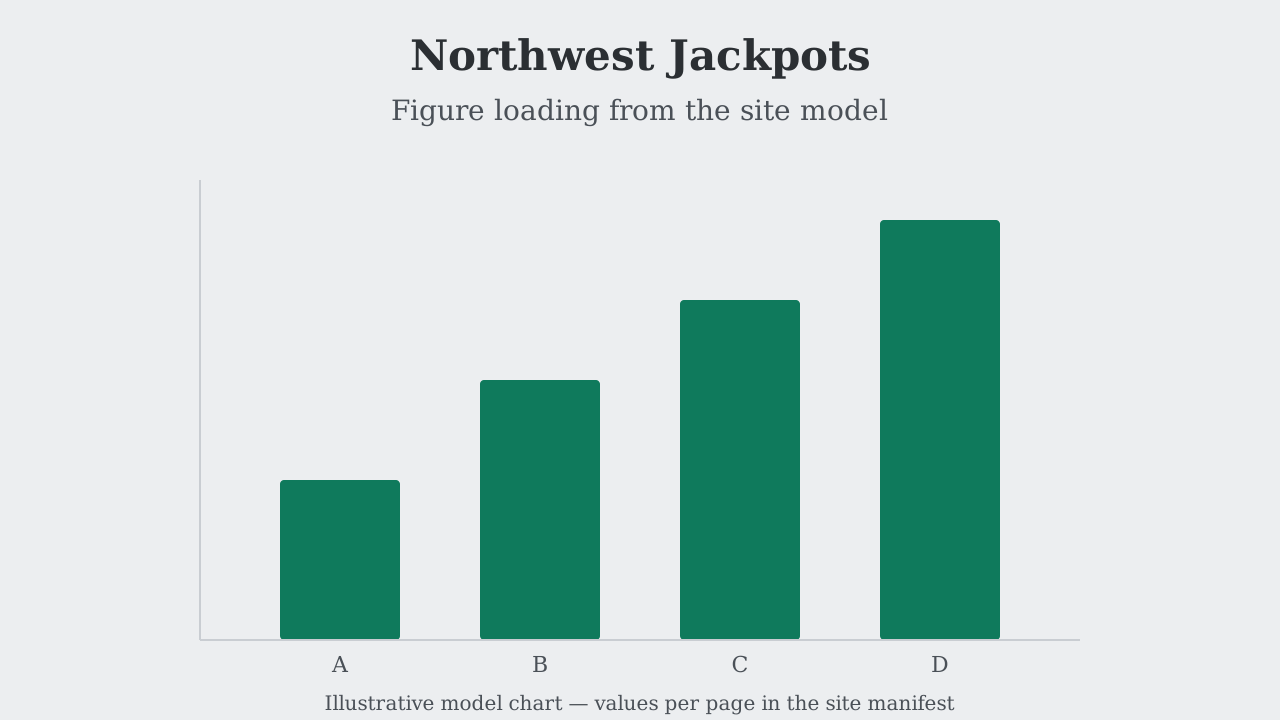
The chart above states the model in minutes: a registration that reaches a first deposit in around three minutes where no checks run at sign-up, around ten where light background checks apply, and around thirty where full verification completes before the first deposit. The gap that matters is the first gap, the three minutes, because that is the entire product the segment sells. Thirty minutes saved at sign-up is the headline. What the chart cannot show is where the equivalent minutes reappear later, and the honest answer is that they reappear at the first withdrawal, multiplied by the weight of the review that a never-verified account triggers.
The rail choice shapes all of this more than most readers expect. Withdrawals generally return by the rail used to deposit, so the decision is made at funding whether it is intended or not. Card withdrawals run at the slow end of the model, typically around two days once released, and card schemes carry their own verification expectations that no operator can waive. E-wallets clear faster, and crypto fastest of all, but a fast rail does not shorten a review queue; it only shortens the leg after release. At a deferred-check operator the review is the long leg, so the rail’s speed advantage is largely consumed by it.
Payment providers are also the quiet enforcement layer of the whole subject. Some British payment firms decline gambling transactions with unlicensed operators, which is why the offshore rows of the comparison lean on e-wallets and crypto, and why a rail list is itself a signal about the operator’s banking relationships. A reader who finds their preferred method unavailable at a site marketing absent checks is seeing that enforcement layer, not a technical limitation, and no change of method changes what the rail is responding to.
The practical guidance that survives all of this is small and dull, which is what good guidance usually looks like. Read the verification policy before the deposit, not the promotion. Choose a rail you would be content to be paid back through. If documents are requested, produce them promptly, clearly and in your own name, because every review cycle saved is time your balance is not sitting in limbo. And treat the first withdrawal at any deferred-check operator as the slow one by default, planned for rather than hoped around.
How to weigh the trade honestly
This closing section does not tell readers what to choose. It sets out the ledger so the choice is a decision rather than a drift. Four entries decide it, and each can be answered in a minute.
Entry one: is self-exclusion a live protection for you, now or possibly later? If the answer is yes or even maybe, the absence of GamStop coverage is the whole decision, and no other row on any comparison table moves it. The helpline run by GamCare and BeGambleAware, on 0808 8020 133, is free and open around the clock, and a conversation there costs nothing.
Entry two: what is your realistic tolerance for a withdrawal held in review? A reader who needs certainty about timing should weight the verification-at-registration model heavily, because it is the only model where the first withdrawal behaves like the second. A reader with no timing pressure can price the delay lower, provided they understand the request can be refused, not merely slowed, if documents cannot be produced.
Entry three: what do the terms say that the marketing does not? Find the verification clause, the withdrawal clause and the cap in the operator’s terms before depositing. Five minutes. If the terms reserve the right to verify at any point, which they almost always do, then the no KYC label is a scheduling claim and nothing more, and you now know its true scope.
Entry four: what is the licence worth to you? The aside set out what a British licence provides: self-exclusion, disputes resolution through independent adjudication, fund protection, deposit limits as conditions. Weighing that against a larger headline match is a legitimate judgement, and readers land on both sides of it. What separates a judgement from an accident is timing, and the only moment it can be made consciously is before the first deposit. After that, the terms are the terms, and the minutes you saved at sign-up are spent.
Frequently asked questions
What is a no KYC casino?
It is a casino that markets itself on allowing registration and deposit without document checks at sign-up. The label describes the timing of verification, not its absence. Most such operators reserve the right to verify at any point, and the check most commonly arrives when a withdrawal is requested.
Do these sites really never ask for documents?
Some never ask most customers, usually because deposits stay small and verification is pushed onto the payment rails. Others ask at a cumulative or per-transaction threshold that is lower than readers expect. Either policy can change without notice, and the terms almost always reserve verification rights regardless of the marketing.
Is verification legally required even at offshore casinos?
In practice, yes, at some layer. Anti-money-laundering expectations, banking relationships and payment provider rules all impose identity obligations on operators in most licensing jurisdictions. The check may be deferred, automated or upstream, but it does not disappear, and where it sits determines who bears its cost.
When do checks usually trigger?
Most commonly at the first withdrawal, when the operator must confirm the request comes from the person who funded the account. Large or repeated withdrawals, mismatches in payment details and random risk reviews can also trigger them. First withdrawals at deferred-check sites are therefore the slowest across this segment.
What happens if I cannot provide the documents requested?
The withdrawal typically remains pending under the operator’s terms, and a request that cannot be satisfied can be refused. The balance is then governed by the operator’s terms and whatever recourse its licence jurisdiction provides, which is far thinner than the British disputes route. This is the main practical reason to understand a site’s verification policy before depositing.
Does GamStop cover these sites?
No. GamStop is the national self-exclusion scheme covering operators licensed by the Gambling Commission, and it does not reach operators licensed elsewhere. A reader who has self-excluded and deposits at an offshore site has stepped outside that exclusion, which is a boundary anyone relying on the scheme should understand.
Are no KYC casinos legal for UK players?
Operators without a Gambling Commission licence may not lawfully advertise or offer gambling to consumers in Great Britain. Players who use offshore sites make their own choices, but the licence question is inseparable from the protection question: no British licence means no GamStop, no independent disputes adjudication and no British fund-protection standards.
Are withdrawals faster without verification?
The rail is faster, not the process. Crypto and e-wallet payouts clear in minutes to hours once released, but at a deferred-check site the release itself can wait on a review. Verification completed at registration is what makes repeated withdrawals fast, because the review has already happened.
What are the alternatives that keep sign-up quick?
Licensed British sites increasingly use automated database checks that confirm identity in minutes without document uploads, and pages on this site covering fast verification casinos cost that route in detail. It is not identical to deferred verification, but it removes most of the sign-up friction while keeping the protections a British licence provides.
Is my money protected if an offshore operator fails?
Only to the extent its licence and terms provide, and several offshore licensing regimes impose no customer-fund segregation requirement comparable to the British one. Balances at such an operator rank as the local rules and the terms determine. This risk is invisible in normal times and total when it is not.