No ID Verification Casinos
A site advertising sign-up without documents is not a site that will never ask for them. Almost universally, the checks arrive later, at the moment you request a withdrawal, and the delay they add is measured in hours on a good day and weeks on a bad one. This page explains what identity checks actually are, why regulation demands them, what you give up on a site that skips them until late, and how to prepare so that the eventual request costs you the least possible time.
Operators serving the British market typically verify identity at some point between registration and the first withdrawal, and offers of this kind usually carry wagering in the region of forty times the bonus amount, though every operator sets its own terms. Figures on this page are stated as assumptions about category-typical practice. Verify the current terms on the operator’s own pages before depositing, because the point at which a site asks for documents varies more between operators than almost any other term.
Terms change often. Verify the current terms on the operator’s own page before depositing. Scores are editorial.
8.2/10See offer terms
8.0/10See offer terms
7.8/10See offer terms
7.5/10See offer terms
What the phrase actually means
The first thing to understand is that “no ID verification casinos” is a marketing phrase, not a technical description. It describes sites that do not ask for documents at the point of registration, and it says nothing whatsoever about what happens later. On the majority of sites marketed this way, the identity check still happens. It is merely postponed, usually until the moment a withdrawal is requested, at which point the account that took three minutes to open can take several days to pay out. The phrase sells speed at the front door and stays quiet about the queue at the back.
Why the delay exists has a simple mechanical answer. An operator can let you deposit and play without knowing who you are, up to the thresholds and rules of whatever jurisdiction licenses it, because the risk during play runs in one direction only: you are spending your own money. The moment you ask to take money out, the direction reverses. Now the operator must satisfy itself that it is paying the right person, that the funds are not the product of fraud on a stolen card, and that it is not laundering money for somebody else. That is the moment the document request lands, and it is the moment the marketing phrase quietly expires.
It follows that a reader searching for this phrase is usually searching for one of two things. The first is speed: an account open in minutes, a small deposit, a quick session. That is achievable on many sites, licensed and offshore alike, because database checks against public records can verify a British player almost instantly without any upload at all. The second is the hope that verification will never arrive at all, that winnings can be extracted without ever producing a document. That second hope is worth examining honestly, because on licensed British sites it is simply false, and on offshore sites it is a coin toss governed by terms the player has no power to negotiate.
There is also a third group of readers, and this page takes them seriously: people who find the document request intrusive and want to know in advance exactly what will be asked and why. That is a reasonable position. Being told on day one what documents a site will eventually want is a legitimate factor in choosing where to play, in the same way that knowing a payout window is a legitimate factor. What this page does not do, and will never do, is help anyone avoid a check that a regulator or the operator is legally entitled to run. The goal here is the opposite: understanding the checks well enough that they cost you the minimum time and no more.
So the honest restatement of the topic is this: some casinos front-load their verification, some back-load it, and the ones marketed as requiring no ID are almost always the back-loaded kind. The rest of this page prices that difference, because a check that arrives after you have wagered for two weeks is more expensive than a check that cleared before your first deposit, even if the paperwork involved is identical.
Why identity checks exist at all
Identity verification is not an operator invention designed to annoy winners. It sits at the centre of anti-money-laundering law and of gambling regulation in most serious jurisdictions, and its purposes are specific and practical. Knowing who a customer is lets an operator prevent underage gambling, because a birth date typed into a registration form is not evidence of anything. It lets the operator detect one person controlling several accounts, which matters because bonus terms are written per person. It lets the operator confirm that deposits come from a payment method the customer actually controls, which is the basic defence against stolen-card fraud. And it lets the operator spot play that looks like laundering rather than entertainment, which is a legal obligation on the operator, not a courtesy to the player.
On a site licensed by the Gambling Commission, these obligations are licence conditions, and the regulator’s rules require operators to verify age and identity, to participate in the national self-exclusion scheme, to offer deposit limits and reality checks, and to keep customer funds protected to a stated standard. A licensed operator who fails to verify properly answers to the Commission for it. That enforcement layer is what makes the check meaningful rather than theatrical: the document you upload is not disappearing into a void, it is satisfying an obligation that a regulator actively polices.
Self-exclusion deserves its own paragraph here because the connection to identity is close and often missed. The national self-exclusion scheme covers operators licensed by the Commission, and matching a player to their exclusion entry depends on the operator holding verified identity data. A site that never learns who you are cannot reliably match you against a register, which is precisely why self-exclusion does not reach offshore operators. For a reader who has never needed to exclude, that may sound abstract. For a reader who has registered a self-exclusion, it should sound like a warning shot: a site with thin identity checks is, by construction, a site that self-exclusion cannot follow you onto. Anyone relying on exclusion should understand that boundary before considering any operator outside the scheme.
The offshore market operates under different rules. Operators licensed in jurisdictions such as Curacao or Anjouan hold licences that allow them to serve players in Britain, but those licences are not a substitute for a Gambling Commission licence and confer none of its protections. What identity checks those operators run, and when, is a matter of their own policy. Some run them at registration, some at withdrawal, some only above certain deposit thresholds. The reader cannot appeal to a British regulator if a policy is applied arbitrarily, because the British regulator has no jurisdiction there. The check itself may be similar in content; the accountability behind it is entirely different.
One more purpose deserves mention because it surprises players: source-of-funds checks. Where a player deposits amounts that look large relative to their known circumstances, or where play patterns suggest money that may not be the player’s own, operators can and do ask where the money came from. This is heavier than a standard identity check, usually requiring payslips, bank statements or evidence of the origin of a lump sum, and it takes longer to clear. Licensed operators are expected to apply it proportionately. It exists because gambling is one of the channels through which illicit money moves, and the operator is legally required to notice when a pattern looks like movement rather than play.
When the check arrives and what it costs
The timing of a verification request varies more than any other term in this part of the market, and the timing is what determines its real cost. The chart below models the delay a document request adds to a withdrawal under three conditions, and those conditions describe most players’ experience across the market.
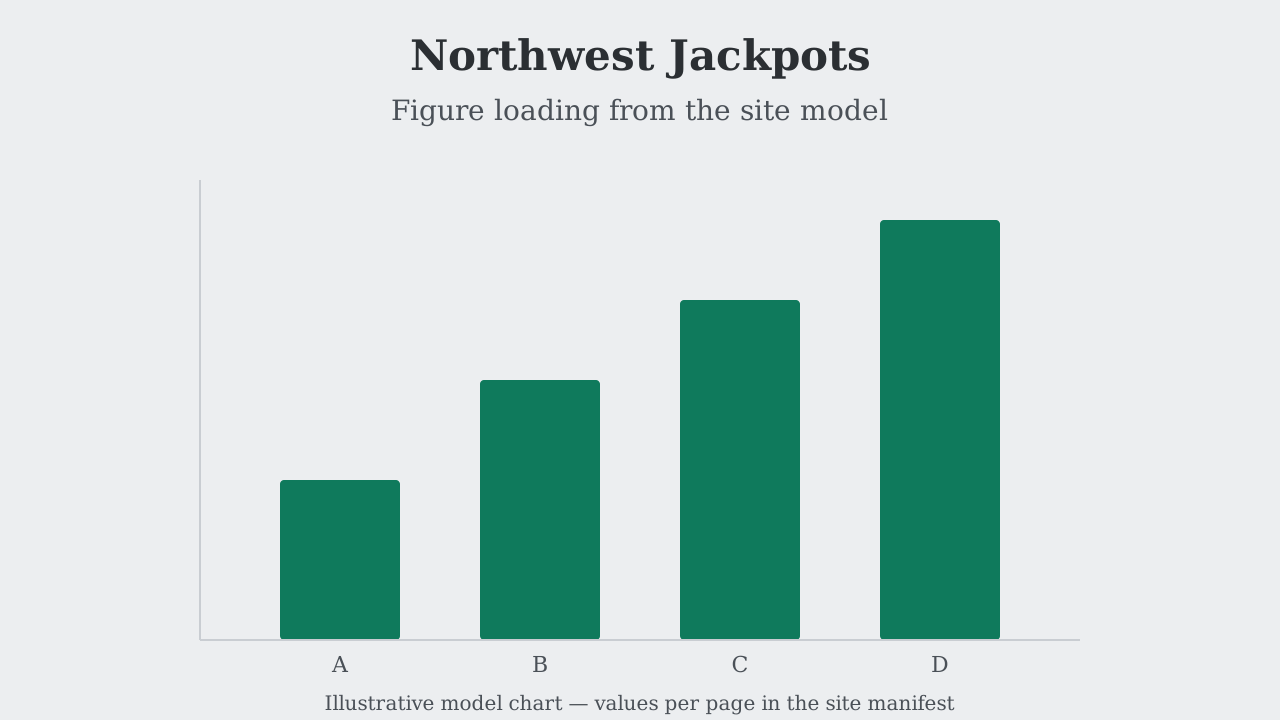
Read the chart as three scenarios rather than three guarantees. The first bar is the prepared player: documents ready, photographed or scanned cleanly, uploaded the moment they are asked for, on a site running a reasonably efficient review. On those assumptions the check adds a couple of hours, which most players would accept without complaint. The second bar is the unprepared player: the request arrives, the passport is in a drawer, the utility bill is at an old address, and two days pass while documents are located, captured, rejected once for glare or cropping, and resubmitted. The third bar is the source-of-funds scenario, the heaviest check, where evidence of income or the origin of a windfall is requested and the review is genuinely investigative. That can consume the better part of a week.
The structural point underneath the model is that verification cost is mostly a function of preparation, not of the site. The same document request that adds two hours to one player’s payout adds five days to another’s, and the difference is whether the paperwork existed before the request arrived. This is the practical core of the whole topic, and it is the reason this page spends its energy on preparation rather than on finding sites that promise never to ask. A promise never to ask is worth little on a site where the first withdrawal stalls indefinitely; a document folder assembled in ten minutes is worth hours saved on every site you will ever use.
Timing also varies by trigger. On British-licensed sites, database checks against electoral roll and credit reference data usually clear most players silently at registration, and a document request only surfaces where the database match fails, where the player’s activity crosses a threshold, or at the first withdrawal. On offshore sites, the pattern leans harder toward the withdrawal trigger, because registration is the marketing surface and the site has an incentive to make it frictionless. Either way, the first withdrawal is the slowest one on most sites across the market, and the second is usually fast because the file already exists.
A final cost, harder to price in hours, is the risk of dispute. When verification happens before play, any problem with the account is found while the player’s money is still in their own hands. When verification happens after weeks of play, a failed check can leave a balance frozen while the dispute is resolved, and on an offshore site the player’s recourse in that dispute is whatever the operator’s licence jurisdiction offers, which may amount to very little. The delayed check does not just add hours. It moves the moment of maximum risk from before your money is committed to after it is committed, and that reordering is the real price of the three-minute sign-up.
Category comparison: what the ranges look like
The table below compiles category-typical ranges across a spread of sites serving the British and offshore markets alongside each other. Every figure is a range, not a quote: these are terms operators of each kind commonly publish, compiled from operator-published terms, and no row should be read as the stated promotion of the named site on the day you read this. Check the live terms before depositing. The UKGC rows are the British baseline shown for comparison.
| Brand | Licence label | Welcome offer range | Wagering | Minimum deposit | Payout window | Payment rails |
|---|---|---|---|---|---|---|
| bet365 | UKGC | Low-value credit for qualifying stakes | Varies by product | £5–£10 | 1–3 days | Debit card, PayPal, bank transfer |
| Virgin Games | UKGC | Spin bundle on registration | Often under 10x | £10 | 1–2 days | Debit card, PayPal, bank transfer |
| MrQ | UKGC | Small spins or ticket bundle | Often zero to light | £10 | 1–2 days | Debit card, PayPal, bank transfer |
| All British Casino | UKGC | Matched deposit to £100 range | Commonly 30–35x | £10 | 1–3 days | Debit card, Trustly, bank transfer |
| PlayOJO | UKGC | Spins bundle, no-wagering structure | Typically none on spins | £10 | 1–2 days | Debit card, PayPal, bank transfer |
| Pink Casino | UKGC | Match package to £150 range | Commonly 30–40x | £10 | 1–3 days | Debit card, PayPal, bank transfer |
| Mystake | Offshore | Multi-tier match to £1,000 range | Commonly 30–40x | £20 | 0–2 days | Debit card, e-wallets, crypto, bank transfer |
| Goldenbet | Offshore | Match package with recurring reloads | Commonly 35–45x | £20 | 0–2 days | Debit card, e-wallets, crypto |
| Donbet | Offshore | Match package with free spins | Commonly 35–45x | £20 | 0–2 days | Debit card, e-wallets, crypto |
| Rolletto | Offshore | Multi-tier match to £1,000+ range | Commonly 35–50x | £20 | 0–2 days | Debit card, e-wallets, crypto, bank transfer |
| Kinghills | Offshore | Multi-tier match package | Commonly 35–45x | £20 | 0–2 days | Debit card, e-wallets, crypto |
| JackpotCity | Offshore | Match package on first deposits | Commonly 35–50x | £10–£20 | 0–2 days | Debit card, e-wallets, crypto |
Two patterns in the table matter for the verification question specifically. The first is that the UKGC rows describe a market where light wagering and modest offers are normal, and where database verification at sign-up is the standard mechanism, so the phrase “no ID verification” is largely meaningless there: the check happens invisibly and most players never see a document request at all. The second is that the offshore rows pair larger headline offers with rails such as crypto and e-wallets, and it is those rails, combined with no British regulator looking over the operator’s shoulder, that make the timing and intensity of the eventual document request purely a matter of the operator’s own policy.
Note also the minimum deposit split. A £10 floor on the licensed side against a £20 floor at most offshore sites is the most visible day-one difference, and it interacts with verification because lower deposits generally reach thresholds later. A player making small, occasional deposits may go months on an offshore site without triggering any check, and then encounter the full document request in a single week when a withdrawal finally arrives. Deferral does not reduce the check. It concentrates it.
What you give up when checks are thin
The verification angle sharpens that trade-off in one particular way, and it is worth stating precisely. The value of a document request depends entirely on what stands behind it. When a licensed operator asks for your passport, the request is backed by a regulator who will act on a complaint about how the request was handled, by a published complaints route, and by an adjudicator who can review the outcome. When an offshore operator asks for the same passport, the request is backed by the operator’s own policy and by a licensing jurisdiction whose willingness to intervene in individual disputes varies from engaged to absent. The document is the same. The accountability around it is not, and accountability is what you are paying for with any check you comply with.
The second loss is subtler and concerns the account itself. A fully verified account on a licensed site is a settled thing: your identity is confirmed, your payment methods are bound to you, and your balance is unambiguously yours to withdraw. A thinly verified account is provisional in a way that never fully resolves until the check passes. The balance exists at the operator’s discretion until they are satisfied about who holds it. Players who have experienced a frozen balance on an unverified offshore account will recognise the feeling; players who have not should price that experience before it happens rather than during it.
The third loss is the collective one, and it is fair to say it plainly even though it sounds preachy. Identity checks are the mechanism by which the market excludes underage players, blocks stolen-card deposits and detects laundering. A reader who chooses the thinnest available checks is not merely accepting personal risk; they are playing on a site whose onboarding weakness extends to everyone it accepts. That is not an argument for any particular licence. It is a fact about what the check is for, and it belongs in an honest page on this topic, because “no ID” marketing works precisely by making readers forget what the check does for them.
Preparing for the request, honestly
If the thrust of this page so far is that the check will come, the useful response is preparation, and preparation is fully compatible with choosing a site that asks for nothing at sign-up. There is nothing improper about choosing frictionless onboarding. There is also nothing improper about being ready for the friction that follows. What follows is a preparation checklist, and its entire purpose is to make the eventual request pass on the first submission.
First, the core documents. A photographic identity document, usually a passport or driving licence, is the near-universal ask. Photograph it flat, in even light, with all four corners visible and no glare across the photo page or the hologram. A proof of address dated within the last three months, typically a utility bill, bank statement or council tax letter, is the second most common request. If your recent correspondence goes to a paperless address, download a PDF statement rather than photographing a screen, because screenshots and photographs of screens are the single most common cause of a rejected submission. Both documents take under five minutes to prepare properly, and they can sit in a folder on your phone for years.
Second, the payment proof. Operators commonly ask to confirm that a card or account used to deposit belongs to you, often a photograph of the card showing the name and the last four digits only, with the middle digits and the security code covered. Preparing this is quick, and covering the right digits matters for your own security as much as for the operator’s review. If you deposit by e-wallet, a screenshot of the wallet account showing your name is the usual equivalent. If you deposit by crypto, expect the operator to ask for evidence of the wallet’s ownership or, on larger amounts, of where the coins came from.
Third, the source-of-funds scenario. Where deposits are large relative to visible income, or where a lump sum appears, evidence of the money’s origin may be requested: recent payslips, a bank statement showing salary credits, a completion statement if a property was sold. No reader can predict whether this will be asked, but a reader making a large deposit should know it is a possibility and should be able to lay hands on the evidence quickly if it arrives. The check is proportional and routine. It is also the slowest one to clear, as the chart above models, which is exactly why advance preparation pays its largest dividend here.
Fourth, behaviour during the review. Submit exactly what was asked, in the format asked, and then wait. Submitting partial documents, or a different document than the one requested, almost always restarts the review from the beginning. If a submission is rejected, the rejection reason is usually stated, and fixing the stated reason rather than resubmitting the identical file is what moves the review forward. None of this is because the operator is difficult. It is because the reviewer is working to a checklist imposed on them, and the fastest path through any checklist is to answer it in order.
Finally, a note on what preparation is not. Preparing documents for a check you expect is legitimate. What is not legitimate, and what this page will not assist with in any way, is attempting to avoid a check that a site or a regulator is entitled to run: no false documents, no borrowed identities, no account structures designed to keep cumulative deposits under a threshold, no tools or routes whose purpose is to defeat a block, a register or a self-exclusion. Beyond being improper, such attempts carry their own hard cost, because a detected false or manipulated document is the most reliable way to have a balance confiscated and an account closed, and no promotion on any site is worth that outcome. Preparation makes checks faster. Nothing makes them optional, and on the sites where someone claims otherwise, the claim is doing the marketing and the terms are doing the taking.
How to choose a site with verification you can live with
Having costed the check, the choice reduces to three questions, and they fit in a paragraph each. Run them before you register anywhere and the verification experience stops being a lottery.
Question one: when does this site verify, and what triggers it? The answer should be findable in the terms or by asking support before you deposit. A site that verifies at registration, or that runs database checks silently at sign-up, front-loads all its friction into the first five minutes and leaves the withdrawal clean. A site that verifies only at withdrawal leaves you playing for weeks on an account that has not yet been confirmed, which is fine if you accept it knowingly and expensive if you discover it by surprise. Neither answer is wrong. Being surprised by the answer is what is wrong, and surprise is entirely avoidable with one question asked in advance.
Question two: what is your own preparation level, honestly assessed? If your documents are ready and your payment proofs are clean, the timing of the check matters little and you can choose on other grounds, including bonus size and rails. If your paperwork is scattered, if your proof of address is stale, or if you plan deposits large enough to invite a source-of-funds review, then front-loaded verification is worth actively seeking out, because it converts a potential week-long freeze into a one-off administrative step completed before your money is committed. The calculator below prices the bonus side of that trade on the standard assumptions this site uses across its pages.
Bonus calculator
Bonus £100, staking requirement £4,000.
Model assumptions: the multiplier applies to the bonus amount, a house edge in line with popular titles is charged against the staking, and the cap truncates convertible winnings. Adjust the inputs to price your own case.
At the defaults, a £100 deposit matched at 100% carries a £100 bonus, forty times that is £4,000 of wagering, and a £500 cap bounds what the journey can pay. Change any input and the model recalculates. The connection to this page’s subject is direct: wagering takes time, and any verification delay at the end of that time extends the journey further. A player who has wagered for two weeks and then waits another week for documents has run a three-week promotion. A player whose verification cleared on day one has run a two-week one. Same bonus, same terms, materially different experience, and the difference is preparation rather than luck.
Question three: which rail will you withdraw by, and does the site’s verification policy differ by rail? Crypto and e-wallet withdrawals are usually the fastest once a request is released, but the release is what the verification gates, and some operators apply additional review to crypto payouts above certain amounts. A player whose priority is speed should verify early, choose the rail deliberately at the deposit stage, and read the operator’s withdrawal policy rather than its deposit page. The pattern across the market is consistent: the sites that are fastest at paying are the ones that verified early, and the sites that advertise the slowest verification are rarely the ones that pay fastest when it matters.
Those three questions, asked in order, turn “no ID verification casinos” from a marketing phrase into a decision. When does the site check, what have I prepared, and how do I intend to be paid. Answer them and you can sign up to a frictionless onboarding with your eyes open, which is the only version of that sign-up worth having.
Frequently asked questions
Do no ID verification casinos really never ask for documents?
Almost never in the sense the marketing implies. The usual pattern is that documents are not requested at registration but are requested at the first withdrawal, or above certain deposit thresholds. The check is deferred, not removed, and deferring it means the delay lands on your payout rather than on your sign-up.
Why do casinos ask for identity documents at all?
Verification prevents underage gambling, links accounts to real people, confirms that payment methods belong to the customer, and lets operators detect money laundering. On Gambling Commission licensed sites these are licence conditions, policed by the regulator. On offshore sites they are a matter of the operator’s own policy and the rules of its licensing jurisdiction.
How long does a withdrawal take if documents are requested?
On the model used across this site, a prepared player with clean documents adds around two hours to the payout, an unprepared player adds around two days while documents are located and resubmitted, and a source-of-funds review can add five days or more. These are planning assumptions, not promises, and individual operators vary.
What documents will I be asked for?
Commonly a photographic identity document such as a passport or driving licence, a proof of address dated within the last three months, and proof that the depositing card or account belongs to you. Larger deposits or unusual patterns can trigger a source-of-funds request, such as payslips or bank statements showing where the money came from.
Can I withdraw without verifying my identity?
On a licensed British site, no: verification is required before a withdrawal can complete, and the operator answers to its regulator for skipping it. On offshore sites the operator sets its own policy, and some pay small amounts without full verification, but a request can arrive at any point up to and including the payout, at which point the balance waits for the review.
Is it safe to upload a passport to a casino site?
A licensed operator is bound by data protection law and regulatory expectations about how your documents are stored and used, and there is a complaints route if that breaks down. An offshore operator is bound by the data rules of its own jurisdiction, which may offer far less recourse. Wherever you upload, the document you provide should be exactly what is asked, and card images should show only the name and last four digits.
What is a source-of-funds check?
It is a request to evidence where your gambling money came from, typically triggered by large deposits relative to visible income or by unusual play patterns. Payslips, salary-credited bank statements or documents showing the origin of a windfall are the usual evidence. It is a legal obligation on operators rather than a judgement about you personally, and it is the slowest check to clear.
Does self-exclusion work on sites that do not verify identity?
The national self-exclusion scheme covers Gambling Commission licensed operators only, and matching a player to their exclusion depends on the operator holding verified identity data. A site with thin or absent checks is outside that scheme by construction. Anyone relying on self-exclusion should understand that boundary before considering any operator beyond it.
Why is my first withdrawal slower than later ones?
The first withdrawal is when most sites complete any outstanding verification, confirm the payment method and review the account history. Once that file exists, subsequent withdrawals skip the review, which is why the second payout is usually fast. Uploading documents before the first request, where the site permits it, makes the first payout behave like the second.
What happens if my documents are rejected?
The operator states a reason, commonly glare or cropping on an identity photo, an out-of-date proof of address, or a screenshot instead of a statement. Fix the stated reason and resubmit. Submitting the identical file again restarts the review, and repeated failures can lead to the account being closed and the balance returned by the original deposit method.
Can a casino confiscate my winnings if I fail verification?
A failed honest verification usually leads to the account being closed and the deposit balance returned, though winnings may be withheld where the account could not lawfully have been operated. Providing false or manipulated documents is different: it is the most reliable route to forfeiture of the balance and closure, and it is never worth the risk of any promotion.
How do I pick a site where verification will be painless?
Ask when the site verifies before you deposit, prepare your documents in advance regardless of the answer, and choose the withdrawal rail deliberately at the point of deposit. Sites that verify early tend to pay fastest later, because nothing stands between the withdrawal request and its release. The choice costs one question and five minutes of preparation.