Fast Verification Casinos
The gap between opening an account and playing is not the marketing problem in British online gambling. The gap that costs players time, and occasionally money, is the one between depositing and withdrawing, because identity checks cluster at the first cashout rather than the first deposit. This page works through how verification actually operates, which routes clear quickest, what documents settle each request in one pass, and where the promise of a speedy sign-up quietly defers the delay to the worst possible moment.
Verification at offers of this kind in the British-facing market is usually completed through automated database checks within minutes of registration, with document uploads held in reserve for the cases where those checks fail or a withdrawal triggers a deeper review. Every timing figure on this page is a category-typical assumption rather than a measurement of any named site, and you should confirm the current terms and check levels on the operator’s own pages before you register.
Terms change often. Verify the current terms on the operator’s own page before depositing. Scores are editorial.
8.2/10See offer terms
8.0/10See offer terms
7.8/10See offer terms
7.5/10See offer terms
- Why verification exists and when it actually happens
- The three verification routes and their real timings
- Documents that settle a check in one pass
- Category comparison: how the ranges look
- The licence question behind the speed promise
- Verification, withdrawal speed and the first cashout
- How to choose a fast-verification site sensibly
Why verification exists and when it actually happens
Verification is not a hoop any single operator invented. It is the product of anti-money-laundering law, age restrictions and the licence conditions the Gambling Commission attaches to every British operator. A licensed site must know who its customer is, must be satisfied the customer is over eighteen and must be alert to funds whose origin looks unusual. Those duties arrive whether the player wants them or not, and the differences between operators lie not in whether the checks happen but in when they happen and how smoothly they run.
The common misunderstanding is that verification is a single gate at sign-up. In practice the checks arrive in stages. The first stage, at registration, is a lightweight one: the operator runs your name, date of birth and address against public databases, and where the match is clean the account opens within minutes. The second stage arrives when you deposit or reach certain spending levels, where affordability considerations may prompt a wider look. The third and most consequential stage arrives at withdrawal, particularly the first withdrawal, when the operator is moving money out and has the strongest legal reason to be certain of the recipient. Many players who describe a site as instant on day one have simply not yet reached the stage where the deeper checks live.
Fast verification, properly understood, is not the absence of checks. It is the design of a process whose checks clear early, run automatically and rarely need human intervention. The best implementations pull data from the electoral roll, credit header records and document authentication services in a single flow, so that most players never see a document request at all. The worst implementations let a player deposit freely for weeks and then stack document demands on top of the first payout request, which is precisely the arrangement the phrase “instant sign-up” was designed to distract from.
A second misunderstanding concerns what a player can do about all this. The timing of the checks is not yours to control, but the readiness of your documents is, and preparation is the single largest lever on the total elapsed time. The sections below price each route in minutes, list the documents that settle a request in one pass, and set out what the licence trade-off looks like when a site advertises fewer checks as a feature rather than as a cost.
The three verification routes and their real timings
Across the market, checks run along one of three routes, and the route determines the wait more than the brand’s marketing does. The chart below states the model: database checks clearing in around three minutes, photograph-based checks in around fifteen, and manual review at several hours. Those are assumptions about this end of the market, and the figure captions them as such.
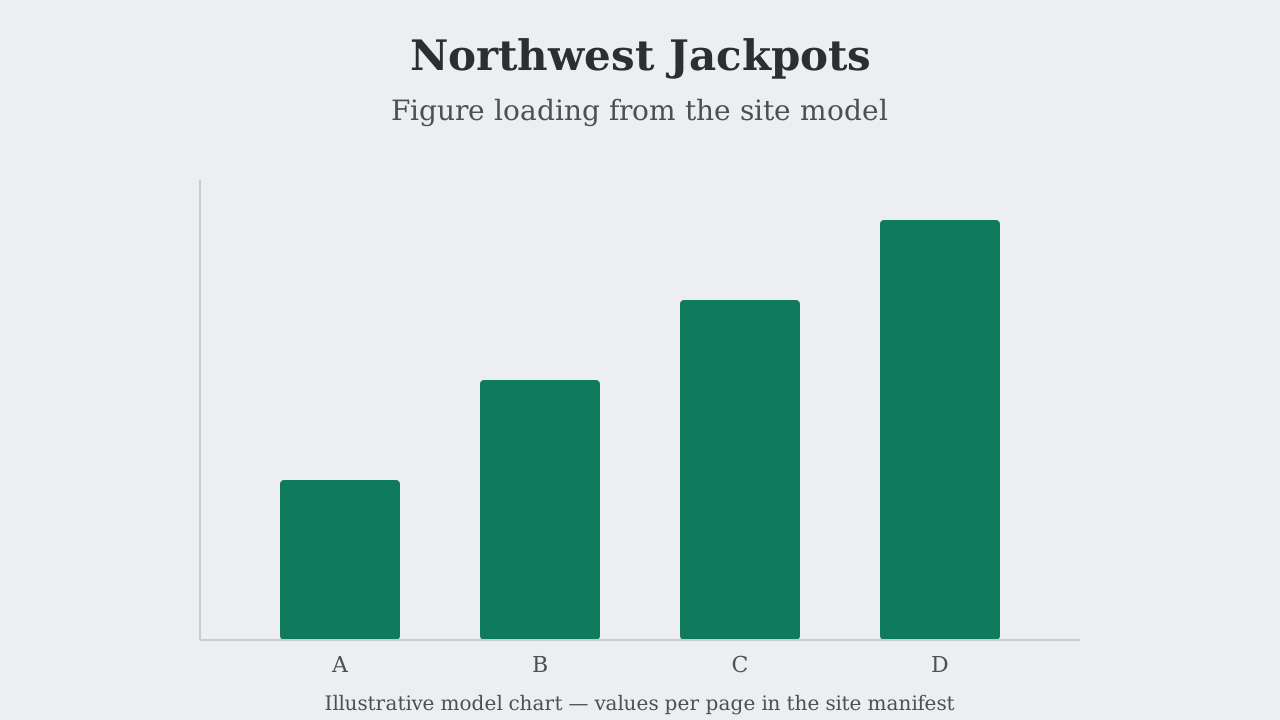
The database route is the fastest and the most common for British players with a stable address history. The operator submits your details to a data provider, the provider matches them against electoral roll and credit header records, and a clean match clears the age and identity requirement outright. No document is uploaded, nothing is queued, and the account is fully open inside a few minutes. The route fails mainly on thin address histories, recent house moves and name discrepancies, which is why a player who has moved house in the past year should expect the next route.
The photograph route clears those cases by asking for the physical evidence the databases lack. A passport or driving licence photo, usually captured in the browser or app, is authenticated automatically: the service checks the document’s security features, reads the machine-readable zone and compares a selfie where the operator asks for one. The authentication itself runs in minutes, but the full route costs longer than the database route because of the interface between camera and document. Glare, cropped edges, expired documents and covers obscuring the photo panel are the four ordinary causes of rejection, and each rejection adds a queue cycle to the wait.
The manual route is the residual: cases the automated services cannot settle, escalated to a human reviewer. Source-of-funds questions, mismatched names, documents the authentication service flags and large first withdrawals commonly land here. The wait is measured in hours rather than minutes, and at busy operators the queue can stretch the request across a working day. This is also the route where the quality of your submission matters most, because a reviewer who receives complete, legible, unexpired documents settles the case in one pass, while a reviewer who receives partial evidence opens a correspondence that costs days.
Two practical notes belong here. First, the routes are not exclusive: an account cleared by database check can still face the manual route at first withdrawal if the deposit pattern trips a threshold. Second, the thresholds themselves are lower at some offshore operators, which is not the efficiency it appears in marketing; the next section but one takes up what that difference buys and what it costs.
Documents that settle a check in one pass
The fastest verification is the one that needs no second request, and the second request is what preparation prevents. The list is short, and every item on it is standard across the market. Identity: a passport or photocard driving licence, in date, photographed flat against a plain background with all four edges visible and no glare across the photo panel or the machine-readable zone. Address: a bank statement or utility bill dated within the last three months, showing your name and the address you registered with. The mismatch that slows more requests than any other is a registered address that differs from the document’s, usually after a recent move, so register with the address your documents actually carry.
Payment verification comes third and catches players by surprise most often. If you deposit by card, the operator may ask for a photo of the card with the middle numbers covered, and the name on the card must match the name on the account. If you deposit by e-wallet, a screenshot of the wallet account showing the registered email or name usually settles it. Deposits made from another person’s card or wallet are refused outright at licensed sites, and attempting them is the single most common cause of a frozen account followed by a protracted review. This is not pedantry on the operator’s side; it is the anti-money-laundering duty in operation, and no speed of service can be built around it.
Source-of-funds evidence is the rarest request and the one with the longest resolution time. It appears when deposits are large relative to the operator’s expectations, when a big win precedes a big withdrawal, or when spending patterns change abruptly. The evidence accepted is ordinary: recent payslips, a bank statement showing salary credits, sale documents for an asset. Players who hold such documents ready rarely need them, but the player caught without them at a withdrawal moment waits days for a conversation that a prepared player never has. The point is not anxiety; it is that the documents exist in your life already and cost five minutes to locate on a quiet evening rather than on the day the request lands.
Preparation has a second-order effect worth naming. At operators whose automated checks clear most players outright, a well-prepared player may never see a document request at all, which makes the whole subject vanish. The entire cost of poor preparation is therefore hidden until the day it is charged, and it is charged at the worst moment in the process: when money is already on its way out.
Category comparison: how the ranges look
The table below compiles category-typical ranges across a spread of sites serving the British market and the offshore market alongside it. Every figure is a range compiled from operator-published terms at the time of writing, not a quote of any single promotion, and no row should be read as the stated offer of the named site on the day you read this. Check the live terms before registering. The UKGC rows are the British baseline shown for comparison.
| Brand | Licence label | Welcome offer range | Wagering | Minimum deposit | Payout window | Payment rails |
|---|---|---|---|---|---|---|
| 32Red | UKGC | Match to £150 range | Commonly 30–40x | £10 | 1–3 days | Debit card, PayPal, bank transfer |
| PlayOJO | UKGC | Spins bundle, no wagering on wins | None on spins | £10 | 1–2 days | Debit card, PayPal, bank transfer |
| All British Casino | UKGC | Match to £100 range | Commonly 35x | £10 | 1–2 days | Debit card, Trustly, bank transfer |
| Virgin Games | UKGC | Low-value spins bundle | Often under 10x | £10 | 1–2 days | Debit card, PayPal, bank transfer |
| Mr Vegas | UKGC | Match with spins across first deposits | Commonly 20–35x | £10 | 1–3 days | Debit card, Trustly, bank transfer |
| BetMGM | UKGC | Match or spins bundle | Commonly 20–35x | £10 | 1–3 days | Debit card, PayPal, Apple Pay, bank transfer |
| Rolletto | Offshore | Multi-tier match to £1,000+ range | Commonly 35–45x | £20 | 0–2 days | Debit card, e-wallets, crypto, bank transfer |
| Kinghills | Offshore | Match package with spins | Commonly 35–45x | £20 | 0–2 days | Debit card, e-wallets, crypto |
| NineWin | Offshore | Multi-tier match to £500+ range | Commonly 35–45x | £20 | 0–2 days | Debit card, e-wallets, crypto |
| Slots Temple | Offshore | Match package, social-first floor | Varies by promotion | £20 | 0–2 days | Debit card, e-wallets, crypto |
Read the table as two systems for the same job. The UKGC rows show a market where identity verification is completed before meaningful play, where minimum deposits sit at £10 and where payout windows are measured in days bounded by the licence conditions. The offshore rows show a market where headline offers run larger, where entry sits at £20 and where payout windows are shorter on the rails but governed by the operator’s own policy rather than by a regulator’s expectations. On verification specifically, the offshore sites’ advertised lightness of checks is real as a description of the sign-up stage and incomplete as a description of the whole journey, because the source-of-funds question tends to arrive at payout wherever the operator is licensed, just at thresholds the reader cannot see in advance.
The overlap is worth noticing too. On payout windows the rails dominate the difference, so the payment method you fund with matters more than the brand you fund it at. On minimum deposit the £10 against £20 split remains the most visible day-one distinction. On wagering, the middle of both distributions sits close together, which is why a multiplier alone rarely decides anything. The verification question cuts across all three: an account that opens in three minutes is worth little if the first withdrawal takes a week because documents were never prepared.
The licence question behind the speed promise
With that stated, the speed question can be run on the merits. A licensed British operator verifies identity early because its licence conditions require it, and the early completion of checks is why the British market’s withdrawal process runs as reliably as it does once the first payout has been processed. An operator outside that framework may advertise a lighter sign-up, and the sign-up genuinely is lighter. What the advertisement omits is that the same legal duties to know your customer exist wherever the operator is licensed, and that when those duties bite offshore, they bite at a moment and through a process with no regulator’s clock running on it. A document request at a licensed site comes with published processing commitments and, if the operator stalls, an ADR route. The same request offshore comes with the operator’s own promises, which is a thinner guarantee by definition.
There is also the self-exclusion boundary to keep in plain sight. GAMSTOP covers operators licensed by the Gambling Commission only, so a reader who has registered an exclusion and then signs up offshore has stepped outside the register they set. This is a fact about the scheme’s boundary, not a moral observation, and it is a boundary worth understanding before it matters rather than after. Anyone relying on self-exclusion should treat the offshore rows of the comparison table with that fact in hand.
Verification, withdrawal speed and the first cashout
The reason a page about verification spends so long on withdrawals is that the two are the same subject at different moments. Across the market, the first withdrawal is the slowest payout most players experience, and the reason is rarely the rail. It is the stack of checks that trigger at that point: identity if it was never fully completed, payment verification if the depositing method has not yet been confirmed, and source-of-funds if the deposit pattern or the win size warrants a look. A player whose identity and payment checks cleared at sign-up turns that stack into a single short review. A player who skipped through sign-up on a thin check meets the whole stack at once, and the hours the marketing promised reappear as days.
The rail still matters, and it is worth pricing. E-wallet payments execute in seconds once released, so a verified account withdrawing to an e-wallet typically sees funds within an hour of approval. Debit card withdrawals run at around a day to two, because card scheme clearing adds its own delay on top of the operator’s pending period. Bank transfer sits around a day. Withdrawals generally return by the rail used to deposit, which means the speed decision is made at the deposit stage whether the player intends it or not. Choosing the rail with the withdrawal in mind is one of those boring decisions that quietly pays for itself on every subsequent cashout.
The pattern that produces the best experience at any site is unglamorous. Complete every check the account offers before being asked. Upload documents early rather than at the moment of the first payout request. Keep the registered address matched to the documents. Fund with a rail in your own name and withdraw to the same one. None of this changes the operator, the offer or the odds. It changes only whether the process you meet is the one described in the marketing or the one described in this section, and that difference is worth more than most headline percentages.
For readers whose priority is getting money out rather than getting in, the sibling coverage on this site costs the rest of the journey: the no-deposit hub that owns this page looks at credit offers without a deposit, and the fast withdrawal guide prices payout windows by rail on the same assumptions used here. Keeping one yardstick across the family is the point, because a figure read on any page should mean the same thing on all of them.
How to choose a fast-verification site sensibly
Every site in this category claims speed, so the claim itself carries no information. What carries information is the shape of the process behind the claim, and four questions reveal that shape before any money moves.
Question one: when does the site say verification happens? A terms page that states identity checks are completed at registration, and names the documents, is describing a process you can plan around. A terms page that mentions verification only in the withdrawal section is describing the deferred model, and no amount of sign-up speed changes the arithmetic. Read for the word “registration” in the verification clause; its absence is the finding.
Question two: which route does the automated check run? A site that matches against databases and only falls back to documents on a failed match will clear most British players outright. A site that requires photo documents from everyone has priced the queue into your first session. Neither is illegitimate, but the difference is a real difference in minutes, and it belongs in the decision rather than in the discovery.
Question three: what does the licence cost, and is it priced consciously? Run the aside again if the answer is unsettled. A reader with no self-exclusion in force and no history of disputes may weight the trade lightly. A reader for whom either applies should weight it heavily, and no sign-up timer should tip the scales. This is the question the market is worst at surfacing, which is why it gets its own paragraph rather than a footnote.
Question four: what happens at the first payout? Look for published processing times, named rails and any statement about document requests. A site that publishes its payout commitments and its verification stages is a site whose speed claims can be checked after the fact. A site that publishes neither has asked you to take a timer’s word for a process you cannot see, and the reasonable response is to fund small until the first withdrawal has tested the promise.
Answer the four and the choice makes itself, which is the honest definition of a good decision tool. The terms narrow the field. The timings price the field. The licence frames the trade. The reader closes the loop, and nothing on this page tries to close it for them.
Frequently asked questions
How long does casino verification usually take?
On the model used across this site, a database check clears in around three minutes, a photo upload in around fifteen and a manual review at several hours. Those are category-typical assumptions. The total journey also includes withdrawal-stage checks, and the first payout is where most of the waiting in the market actually happens.
Why do casinos ask for documents if I already passed a database check?
A database match settles age and identity but not everything. Payment verification, source-of-funds questions and mismatches between registered details and documents can all trigger a document request later. The licence conditions require the operator to be satisfied on these points before moving money out, so a later request is the process working, not a second gate being invented.
What documents settle a verification request in one pass?
An in-date passport or photocard driving licence photographed flat with all edges visible, an address document such as a bank statement or utility bill dated within three months, and proof that the depositing payment method is in your own name. Complete, legible, unexpired submissions settle on first review; partial ones open a correspondence that costs days.
Are fast verification casinos safe to use?
Speed is a property of process, not of safety. The safety question is the licence one: a Gambling Commission licence brings GAMSTOP coverage, a disputes route through independent adjudication and fund protection standards. An offshore licence brings none of those, whatever its sign-up speed. Judge the licence first and the stopwatch second.
Why is my first withdrawal slower than the deposits were?
Because that is when the remaining checks trigger. Identity completion, payment verification and sometimes a source-of-funds question cluster at the first cashout, since the operator has the strongest legal reason to confirm the recipient before money leaves. Preparing documents before the request is the single largest lever on how long it takes.
Do offshore casinos verify identity at all?
Yes, though the thresholds and timing differ. Offshore operators are still subject to know-your-customer duties under their own licences, and source-of-funds questions tend to arrive at payout. What differs is the framework around those checks: no regulator’s clock and no independent disputes route if a request stalls.
Can I deposit with someone else’s card to speed things up?
No. Licensed operators refuse deposits from payment methods not in the account holder’s name, and attempting one is the most common cause of a frozen account followed by a lengthy review. The verification process exists partly to catch exactly this, so it slows things down rather than speeding them up.
Does moving house affect verification?
It often does. A recent move thins the database records an automated check matches against, and a registered address that differs from the one on your documents is the most common mismatch in the market. Register with the address your bills and statements actually carry and the checks run cleaner.
What is a source-of-funds check?
A request to show where the money you are gambling came from, typically triggered by large deposits, large wins or abrupt changes in spending. Payslips, bank statements showing salary credits or asset sale documents settle it. It is an anti-money-laundering duty, and holding such documents ready removes its cost from the withdrawal moment.
Does verification affect my winnings or taxes?
Verification affects access to your winnings, not the amount. Gambling winnings are not taxable for consumers in the United Kingdom, since gambling duty is levied on operators. Verification simply confirms who the money should go to before it goes anywhere.