Google Pay Casinos
Google Pay at an online casino is a card in disguise. The tokenised wallet hides your actual card numbers behind an Android device handshake, which is convenient at the till and confusing at the cashier, because a rail built for one-tap payments was never built for withdrawals. This page works out what that means in pounds: where your money can and cannot flow, what the deposit limits look like, why a withdrawal has to leave by another door, and how a bonus cleared on a Google Pay deposit behaves when the wagering arithmetic is done honestly.
Offers of this kind in the British-facing market usually ask around forty times the bonus amount in wagering before a withdrawal unlocks, and terms move often enough that a second read of the promotions page is cheap insurance. Figures on this page are assumptions about category-typical terms rather than quotes from any named promotion. Verify current terms on the operator’s own pages before depositing a pound, and note that withdrawal availability by rail differs from deposit availability on every wallet-based method.
Terms change often. Verify the current terms on the operator’s own page before depositing. Scores are editorial.
8.2/10See offer terms
8.0/10See offer terms
7.8/10See offer terms
7.5/10See offer terms
- How Google Pay actually works at a casino cashier
- Deposit limits: what the wallet will and will not carry
- The withdrawal problem: where the money goes instead
- The bonus maths, costed on stated assumptions
- Category comparison: what the ranges look like
- What a licence buys and what a wallet does not
- How to choose a Google Pay casino
How Google Pay actually works at a casino cashier
Most payment guides treat Google Pay as if it were a distinct method, a rail standing beside Visa and PayPal on the cashier grid. That framing flatters the wallet. At an online casino, a Google Pay transaction is a debit card transaction wearing a mask. The wallet holds a tokenised representation of your card, the merchant receives that token instead of the raw card number, and the card networks settle the payment exactly as they would if the card had been typed in. Strip away the device authentication and the biometric confirm and what remains is a Visa or Mastercard payment processed through the ordinary channels.
That structure explains most of what follows on this page. Deposits through Google Pay are fast because card deposits are fast: the authorisation runs in seconds, the token replaces the PAN, and the balance credits before the cashier page has finished redrawing. There is no wallet balance to top up first, no intermediary account to fund, and no separate login beyond the Android device itself. For a player who wants the shortest possible path from deciding to play to having a balance, few methods in the United Kingdom are shorter.
The mask, however, only covers one direction. Google Pay has no withdrawal function for gambling transactions in this market, so every pound deposited through the wallet must leave by a different route, typically back to the underlying debit card or, at some operators, through a bank transfer the player sets up separately. This asymmetry is not a policy of any particular casino. It is a property of the rail itself, and it means the decision to deposit with Google Pay is also a decision about where the withdrawal will go, made in advance whether or not the player has thought about it.
Tokenisation is the second half of the story worth understanding. When a card is added to Google Pay, the wallet does not store the card number. It stores a device-specific token, and each transaction carries that token with a cryptogram that the card network validates. The practical benefit for the player is that a casino’s systems never hold the raw card details, which narrows the blast radius of any data incident on the merchant side. The card issuer still sees the transaction, the gambling merchant descriptor still appears on the statement in the ordinary way, and the issuer’s own gambling controls apply exactly as they would to a typed card payment.
One consequence of that last point deserves its own paragraph. Because a Google Pay deposit is a card deposit underneath, the rules that govern card gambling apply to it unchanged. Since April 2020, credit cards may not be used for gambling in Great Britain, and a credit card added to a Google Pay wallet is no exception: the attempt will be declined at licensed British operators because the underlying rail is a credit card. Debit cards pass through freely. Players who assumed the wallet stood outside card rules discover the opposite, and it is better to discover it here than at the cashier.
The final structural note concerns the Android requirement itself. Google Pay is a wallet tied to the Android ecosystem and to Google accounts, so the method is unavailable on devices outside it. A player moving between an Android phone and a desktop browser will find that the one-tap flow exists only on the phone, and that desktop deposits require the ordinary card entry the wallet was supposed to replace. This is a small friction, but it is one of the reasons the wallet suits a particular kind of player rather than all players, and the sibling pages on this hub cost those alternatives on the same assumptions.
Deposit limits: what the wallet will and will not carry
The limits attached to a Google Pay deposit come from three stacked sources, and understanding the stack prevents most surprises. At the top sits the operator’s own cashier policy, which sets the minimum and maximum accepted deposit for the method. Beneath it sits the card issuer’s authorisation rules, which can decline a transaction for reasons unrelated to the casino, including cumulative gambling spend on the underlying card. At the bottom sits the wallet’s own transaction infrastructure, which is rarely the binding constraint at ordinary stakes but becomes visible at the edges.
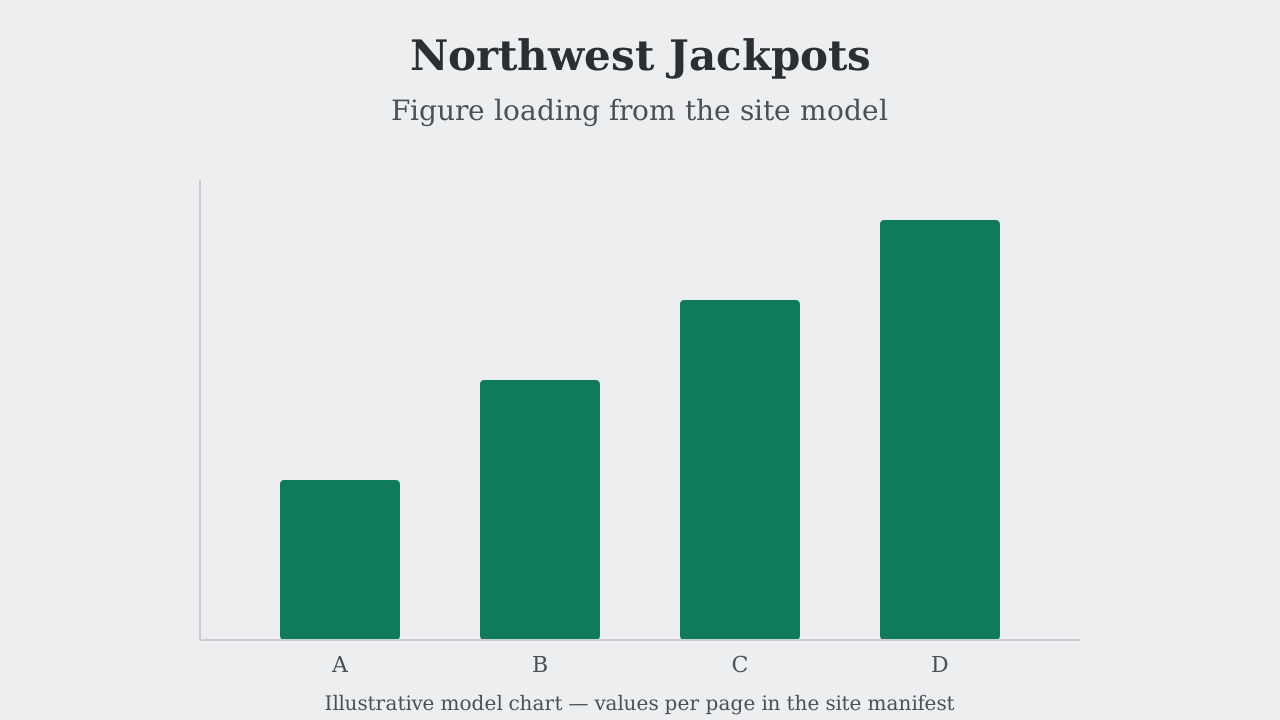
The chart states the model this site assumes for the category. A minimum deposit around the £10 mark is the ordinary entry point for card-backed rails at British-facing operators. A daily ceiling in the region of £500 covers most entertainment budgets comfortably. A monthly figure around £2,000 bounds the method for anyone who was considering it as a high-volume channel, and the honest conclusion there is that Google Pay is not one. Players whose intended scale sits above these bands should expect the underlying debit card to become the working method anyway, since the wallet adds convenience at small stakes and adds friction at large ones.
Two interactions between these limits and the wider account deserve attention. The first is the operator’s deposit limit tool, available at licensed British sites as a licence condition. A limit set on the account applies to the method, so a £200 daily account limit caps a Google Pay deposit at £200 regardless of what the wallet could technically carry. The wallet limits and the account limits do not merge; the lowest applicable figure wins. Readers who intend to control spend should set the account limit deliberately rather than relying on the wallet’s own ceilings, because the two systems answer different questions.
The second interaction concerns bonuses. A minimum deposit requirement for a welcome offer and a minimum deposit for the method are separate figures, and on wallet rails they occasionally diverge: some operators exclude certain wallet or card-token deposits from bonus eligibility entirely, while others accept them on the same terms as typed cards. The only reliable source is the operator’s own promotion terms, and the only reliable moment to check is before the deposit, because retroactive bonus crediting is a request most support desks decline. This page treats eligibility as an open question for every operator in the comparison table below for exactly that reason.
The withdrawal problem: where the money goes instead
Every deposit method on this hub is costed in two directions, and Google Pay’s second direction is the page’s central practical point. Withdrawals cannot return through the wallet. The operator’s cashier will offer one of two paths. Where the operator supports rail matching on the underlying tokenised card, the withdrawal is routed to the debit card behind the Google Pay token, and the money arrives on the timeline of that card: commonly one to three days in the typical case at this end of the market, with the first withdrawal the slowest because identity checks usually trigger there. Where rail matching to a tokenised card is not supported, the cashier asks for a bank transfer destination, and the payout runs on bank timelines instead.
Neither path is worse in every respect, but both share one property: the player did not choose the rail at withdrawal time. The choice was made at deposit, invisibly, and the reader who understood that has planned for it while the reader who did not discovers it when the withdrawal form presents a card field or a bank detail field the wallet never asked about. This page’s standing advice on payment rails applies with extra force here: decide the withdrawal route before the deposit, not after.
Verification interacts with the two-path structure in ways worth spelling out. Identity documents are commonly requested at the first withdrawal rather than the deposit. A player who deposited through Google Pay and is withdrawing to the underlying card may additionally be asked to evidence that the card is theirs, which the wallet’s tokenisation can obscure, since the casino saw a token rather than a card number. Uploading card evidence early, along with the standard identity documents, converts the first payout from the slowest one into something close to the second. It costs ten minutes and saves days in the cases where it applies.
There is also a bookkeeping habit worth adopting. Because deposits carry the Google Pay descriptor while withdrawals carry the card or bank descriptor, an account statement mixes identifiers across the month. Players who track spending against a gambling budget, which this site encourages, should reconcile on the operator account history rather than on bank statement descriptors, or the two records will disagree in ways that make the budget look broken when it is not. It is a small thing. Small things are what the difference between a tidy gambling budget and a confusing one is made of.
For readers whose priority is withdrawal speed above all else, the honest answer is that Google Pay is the wrong rail to optimise around, and the hub’s sibling pages cost the alternatives that do round-trip. E-wallets that support casino withdrawals, and the card routes with faster processing commitments, both close the loop that Google Pay leaves open. The wallet’s value proposition is the deposit: one tap, tokenised, fast, with the card number never leaving the device. Value it for that and route the exit deliberately, or choose a different deposit method that carries both directions.
The bonus maths, costed on stated assumptions
The calculator below is set to the standard case used across this site: a £100 deposit, a 100% match, a forty-times multiplier on the bonus and a £500 ceiling on convertible winnings. Those are assumptions about what offers of this kind typically ask, not quotes from any named promotion. Change the inputs and the model shows the staking requirement, the expected cost of clearing it and the effective value of the offer once the cap is applied.
Bonus calculator
Bonus £100, staking requirement £4,000.
Model assumptions: the multiplier applies to the bonus amount, a house edge in line with popular titles is charged against the staking, and the cap truncates convertible winnings. Adjust the inputs to price your own case.
Worked at the defaults, the bonus is £100 and the wagering requirement is £4,000 of qualifying staking. At an assumed 4% house edge on the games used to clear it, the expected cost of the journey is £160. The cap sits at £500. On those assumptions the promotion’s paper value of £100 is largely spoken for before variance is considered, and the expected value of the offer is modest at best. That is not a verdict against taking offers; it is the price list that makes one offer comparable with another.
The Google Pay-specific overlay is the deposit rail’s effect on eligibility and friction. A £100 deposit clears the ordinary £10 method minimum without difficulty and clears most welcome-offer minimums too. Where an operator excludes wallet-funded deposits from bonuses, the same deposit arrives with no bonus attached, and the wagering arithmetic collapses to zero because there is nothing to clear. Where the operator accepts the rail on standard terms, the numbers above apply unchanged. The difference between those two cases is printed in the operator’s terms and nowhere else, which is why the eligibility check precedes every deposit this page would endorse.
| Input | Value | Effect on the model |
|---|---|---|
| Deposit | £100 | Sets the scale of everything downstream |
| Match | 100% | Bonus amount equals the deposit |
| Wagering multiplier | 40x bonus | £4,000 total staking requirement |
| House edge assumption | 4% | £160 expected cost of clearing |
| Winnings cap | £500 | Ceiling on the convertible balance |
| Requirement at 35x | £3,500 | £500 less staking, £140 expected cost |
| Requirement at 45x | £4,500 | £500 more staking, £180 expected cost |
| Rail excluded from bonus | Zero wagering | Deposit only, no offer attached |
The final row is the one unique to this page. On most rails the bonus question is about terms; on Google Pay it is sometimes about whether the rail participates at all. An excluded rail is not a worse outcome by definition. A player who wanted the play rather than the withdrawal is arguably better served by a clean deposit with no strings, and the model’s zero-wagering row shows what that looks like: the deposit at stake, nothing owed, nothing forfeitable. Know which case you are in before the money moves.
Category comparison: what the ranges look like
The table below compiles category-typical ranges across a spread of operators serving the British market and the offshore market alongside it. Every figure is a range compiled from operator-published terms at the time of writing, not a quote of any single promotion, and no row should be read as the stated offer of the named brand on the day you read this. The UKGC rows are the British baseline shown for comparison. Check live terms before depositing.
| Brand | Licence label | Welcome offer range | Wagering | Minimum deposit | Payout window | Payment rails |
|---|---|---|---|---|---|---|
| bet365 | UKGC | Low-value credit on qualifying deposit | Varies by product | £10 | 1–3 days | Debit card, Google Pay, PayPal, bank transfer |
| Virgin Games | UKGC | Small spins or credit bundle | Often under 10x | £10 | 1–2 days | Debit card, PayPal, bank transfer |
| PlayOJO | UKGC | Spins bundle with no wagering on wins | None on spin wins | £10 | 1–2 days | Debit card, PayPal, bank transfer |
| Coral | UKGC | Low-value credit on qualifying stake | Commonly 10–20x | £10 | 1–3 days | Debit card, Google Pay, PayPal, bank transfer |
| 32Red | UKGC | Matched credit to £150 range | Commonly 30–50x | £10 | 1–3 days | Debit card, PayPal, bank transfer |
| Mr Vegas | UKGC | Matched credit with spins | Commonly 20–40x | £10 | 1–2 days | Debit card, e-wallets, bank transfer |
| Mystake | Offshore | Multi-tier match to £1,000 range | Commonly 30–40x | £20 | 0–2 days | Debit card, e-wallets, crypto, bank transfer |
| Goldenbet | Offshore | Match package with recurring reloads | Commonly 35–45x | £20 | 0–2 days | Debit card, e-wallets, crypto |
| Donbet | Offshore | Match package with free spins | Commonly 35–45x | £20 | 0–2 days | Debit card, e-wallets, crypto |
| Rolletto | Offshore | Multi-tier match package | Commonly 35–45x | £20 | 0–2 days | Debit card, e-wallets, crypto |
| Kinghills | Offshore | Multi-tier match package | Commonly 35–50x | £20 | 0–2 days | Debit card, e-wallets, crypto |
| NineWin | Offshore | Match package with spins | Commonly 35–45x | £20 | 0–2 days | Debit card, e-wallets, crypto |
Read the table as two markets in one frame. The UKGC rows show modest offers, frequently light wagering, £10 entry and payout windows bounded by published processing commitments. The offshore rows show larger headline matches, heavier wagering, £20 entry and faster rails with thinner recourse. Neither half is uniformly better; the trade is protection against headline size, and the weighing belongs to the reader. The rail column carries this page’s particular question: card-backed rails, the family Google Pay belongs to, appear across both halves, while wallet round-trips and crypto concentrate in the offshore column.
What a licence buys and what a wallet does not
A payment wallet sits outside all of that, which is the section’s actual point. Tokenisation protects a card number; it does not protect a balance. A wallet’s dispute process, where one exists, addresses unauthorised transactions, not disagreements over bonus terms or payout holds. Readers sometimes arrive at payment-method pages hoping that the right rail substitutes for the right licence, and the honest answer is that it does not. The licence governs the relationship between you and the operator. The rail governs the movement of money within it. Both matter, and they matter on separate axes.
What the rail choice does change is practical control at the edges. A card-backed deposit through a wallet means the card issuer’s own gambling controls, where the issuer offers them, apply to the underlying transactions, and that an extra authentication step stands between impulse and deposit. Those are genuine frictions in the useful sense. They do not bound losses once a balance exists, they do not enforce a time-out, and they do not reach an offshore operator’s terms. Layer them on top of the operator’s account-level tools rather than instead of them.
On the licensed side, the tools exist and the licence conditions require them: deposit limits, reality checks, self-exclusion through GamStop, and a documented complaints route escalating to independent adjudication. A reader using Google Pay at a licensed British site gets the full set, with the wallet contributing convenience and token security on top. A reader using the same wallet at an offshore site gets the wallet and nothing behind it. The same one-tap deposit produces two very different protection profiles, and the cashier page does not display the difference. This section exists to display it.
For anyone worried about their own gambling, the National Gambling Helpline on 0808 8020 133 is free, confidential and open around the clock, and GamStop self-exclusion covers operators licensed by the Gambling Commission. Neither tool depends on the payment method, and both work better applied before a deposit than after. That is a sentence this site repeats on every payment page, because the payment pages are where a reader is closest to the moment it matters.
How to choose a Google Pay casino
Four questions separate a sensible choice from an accidental one, and the page has already priced the raw material for each. The first question is whether Google Pay is the right rail at all. If one-tap deposits on Android are the priority and withdrawals can wait on a card timeline, the wallet fits. If same-hour withdrawals are the priority, the hub’s e-wallet pages cost rails that round-trip, and the honest recommendation is to start there instead. Choosing the rail is choosing the whole journey.
The second question is bonus eligibility. Check the operator’s terms for the rail before the deposit, because wallet-funded deposits are excluded from promotions at some operators and accepted at others, and the exclusion is discoverable only in writing. If the bonus matters, confirm the rail qualifies. If the bonus does not matter, the exclusion is irrelevant and possibly a convenience, since an unstrung deposit carries no wagering and nothing to forfeit.
The third question is which half of the comparison table you are shopping in. Read the licence aside again if the answer is unsettled. A British licence costs a reader nothing and buys GamStop coverage, fund protection standards, documented dispute resolution and enforced safer-gambling tools. An offshore licence costs a headline the licensed market cannot match. The wagering arithmetic in the calculator prices offers in both halves on identical assumptions, so the comparison can be run in numbers as well as in adjectives, and the numbers are the part worth trusting.
The fourth question is what the withdrawal will look like, planned in advance. Know whether the operator routes payouts to the underlying card or requires a separate bank destination, upload identity documents before the first request, and expect the first payout to be the slowest regardless. A reader who answers those four questions has done more diligence than most of the market does, and the deposit, when it happens, will be one tap with no surprises behind it.
Frequently asked questions
Can I withdraw casino winnings through Google Pay?
No, not at the operators serving this market. Google Pay functions as a deposit rail only for gambling transactions, so withdrawals are routed to the debit card behind the wallet token or to a bank transfer destination you supply. Plan the withdrawal route before making the deposit, because the deposit chooses it for you.
Is a Google Pay deposit the same as a card deposit?
Underneath, yes. The wallet passes a tokenised version of your debit or credit card through the card networks, so the deposit behaves like a card payment with an extra authentication layer. That is why credit card gambling rules apply to wallet deposits exactly as they apply to typed card details.
Why was my Google Pay deposit declined?
The most common causes stack from the bottom: the underlying card issuer declined the gambling transaction, the amount exceeded an applicable limit, or the wallet held a card type the operator cannot accept. Removing the wallet from the equation and checking with the card issuer usually identifies which layer produced the decline.
Do Google Pay deposits qualify for welcome bonuses?
It depends entirely on the operator’s terms. Some accept card-backed wallet deposits on the same basis as typed cards and others exclude them from promotions. The exclusion is printed in the promotion terms and nowhere else, so check before the deposit rather than asking support to credit a bonus afterwards.
What are the typical deposit limits through Google Pay?
On this site’s model assumptions, a minimum around £10, a daily ceiling near £500 and a monthly figure near £2,000 are category-typical. The operator’s cashier policy and your own account deposit limit can both sit lower, and the lowest applicable figure always wins.
Is Google Pay safe to use at online casinos?
For the card details, yes: tokenisation means the casino never holds your raw card number, which narrows the exposure if the merchant suffers a data incident. Safety of the card details is not the same as safety of the balance, which depends on the operator’s licence and terms, and no payment method substitutes for that.
How long do withdrawals take after depositing with Google Pay?
Because the payout returns by card or bank transfer rather than the wallet, expect the timelines of those rails: commonly one to three days on card in the typical case, longer on some bank routes. The first withdrawal is usually the slowest because identity checks tend to trigger there. Uploading documents early shortens it.
Can I use Google Pay on my desktop browser?
The one-tap wallet flow is tied to Android devices and Google accounts, so desktop deposits generally fall back to ordinary card entry. If most of your play happens on desktop, consider whether the wallet’s convenience reaches the device you actually use.
Does GamStop cover sites I deposit to with Google Pay?
GamStop covers operators licensed by the Gambling Commission regardless of deposit method, so a Google Pay deposit at a licensed site is within the scheme. Deposits at offshore operators fall outside it, because the scheme reaches operators by licence, not by rail. Understand that boundary before it matters.
What happens if I withdraw before finishing the wagering?
On most offers the bonus and any winnings generated from it are forfeited when a withdrawal is requested before the requirement completes. Read the withdrawal trigger clause before the moment arrives. The rail you deposited with does not change this; the terms govern it either way.