MuchBetter Casinos
MuchBetter arrived in the British market promising what the big e-wallets had quietly walked away from: a gambling-friendly wallet with dynamic security codes, low fees and payouts that clear in under an hour. This page costs that promise against the alternative rails, prices the welcome offers usually funded through it, and sets out what a British licence still buys that no wallet app ever will.
Welcome offers funded through e-wallets in the British-facing market usually carry wagering of around forty times the bonus amount, and a few operators exclude some wallet deposits from bonus eligibility entirely. Every figure on this page is stated as a category-typical assumption rather than a quote from any named promotion. Check the live terms on the operator’s own cashier page before depositing, because wallet rules change often and without notice.
Terms change often. Verify the current terms on the operator’s own page before depositing. Scores are editorial.
8.2/10See offer terms
8.0/10See offer terms
7.8/10See offer terms
7.5/10See offer terms
- What MuchBetter is and how the wallet works
- Fees, limits and the real cost of the rail
- Bonus eligibility and the wagering attached
- Payout speeds compared with the other wallets
- Category comparison: what the ranges look like
- The licence question and what a wallet cannot fix
- How to choose between the rails
What MuchBetter is and how the wallet works
Most payment guides open with a screenshot and a paragraph about download speeds. That ordering wastes the reader’s time. The figure that should decide whether you fund a casino account through MuchBetter is the total cost of the journey, deposit to withdrawal, plus the eligibility question: does the wallet qualify you for the welcome offer you actually want. Everything else, the app design, the device pairing flow, the points programme, is presentation until those two numbers are on the table.
So here is the plain description. MuchBetter is an app-based e-wallet, available on iOS and Android, that holds a balance and moves it to and from merchants. It differs from the older wallets in three respects that matter at the casino cashier. First, it issued dynamic security codes: rather than a static CVV on a card attached to the account, the app generates rotating credentials, which reduces the value of any stolen account detail. Second, it built its merchant network deliberately around gambling and gaming, which is why British casinos list it where other wallets pulled out. Third, its fee schedule is light on deposits, which is the direction most players care about.
The account layers matter too. A basic wallet holds a modest balance and supports standard transactions; an upgraded account, verified with identity documents, raises limits and unlocks the prepaid device linked to the wallet. For most casino purposes the basic layer is sufficient, since deposit minimums at this end of the market sit between £10 and £20 as an assumption, and single deposits rarely strain even an entry-level cap. The verification step matters at the withdrawal end instead, where the operator’s own checks, not the wallet’s, usually set the pace.
One structural point shapes everything that follows. MuchBetter sits in the middle of the transaction rather than at either end of it. Your funding source, whether a bank debit or a top-up, feeds the wallet; the wallet feeds the casino; and on the way back, the casino pays the wallet and the wallet pays you. Each hop is fast. The whole chain is only as good as its slowest hop, and the slowest hop is almost always the operator’s pending queue rather than anything the wallet controls. A reader who understands that can read any payout promise correctly: the wallet’s speed is the floor, and the operator’s process decides how far above the floor you land.
There is also a behavioural point worth naming. A wallet app with a stored balance is easier to spend from than a bank app behind two authentication steps. That convenience is the product, and it cuts both ways. Players who want a friction buffer between themselves and the cashier often prefer it; players managing spend carefully sometimes find that a wallet one tap away from the deposit button removes a pause they relied on. The honest advice is to choose the rail partly on that behavioural fit, not only on fees and speed.
Fees, limits and the real cost of the rail
The chart below sets out the model used across this page: a deposit through MuchBetter at this end of the market is assumed to carry no charge to the player, a withdrawal out of the wallet is assumed to cost in the region of a pound, and a currency conversion is assumed to cost around two pounds on a typical casino-sized transaction. Those are assumptions, not quotes. Wallets revise fee schedules, and the operator’s cashier may add its own layer on top, so the model exists to give shape rather than to price any single account.
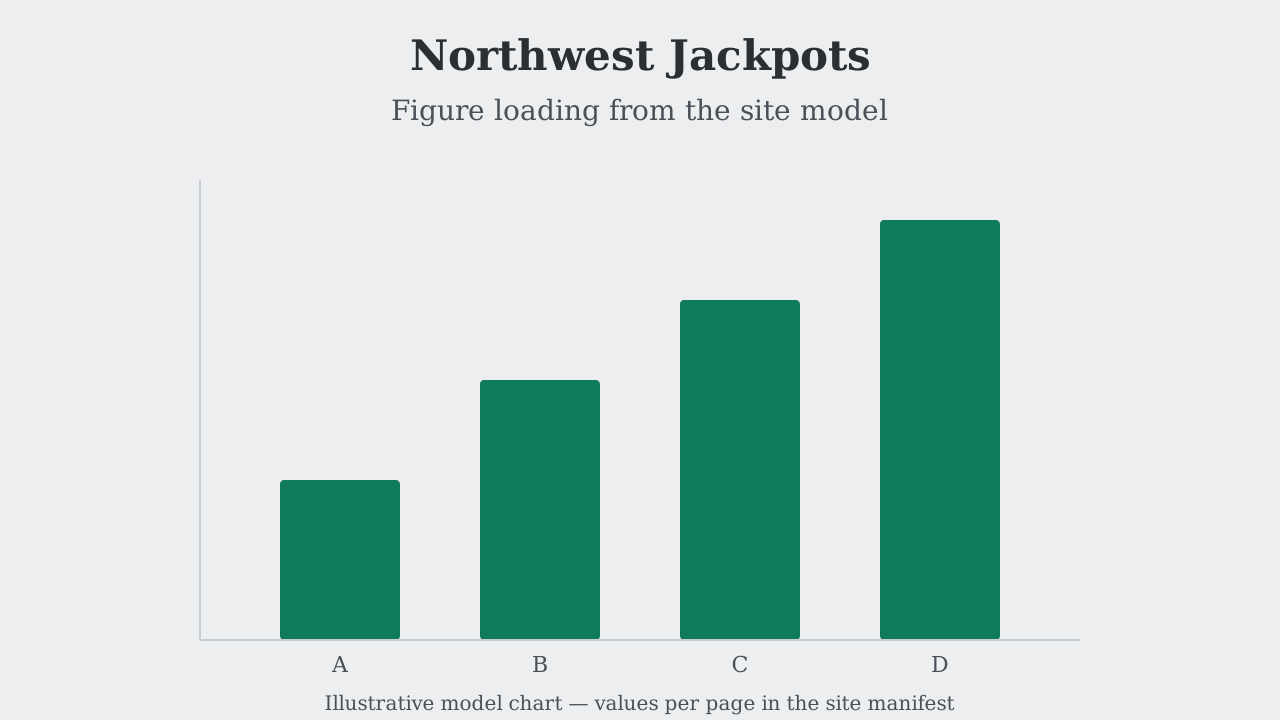
Worked as a journey, the model says the round trip is cheap. A player who deposits £100, plays, and withdraws £150 pays, on these assumptions, nothing at deposit and roughly a pound at withdrawal, with a conversion charge only if the account is denominated in a different currency from the casino’s. Compare that with a debit card rail, where the deposit is typically free and the card scheme takes its own clearing time, or with a voucher product, where the withdrawal leg often does not exist at all and the return journey must run through a bank transfer or a different wallet. On cost alone, a two-way wallet with a sub-two-pound round trip is one of the cheaper structures in the market.
Limits deserve their own paragraph, because the headline minimum is not the constraint that surprises people. Deposit minimums at casinos accepting MuchBetter typically mirror the site’s general floor, commonly £10 as an assumption, occasionally £20 at offshore-facing operators. The upper limits are where accounts differ: an unverified wallet carries a lower ceiling on balance and transactions, and a player planning a four-figure deposit may hit it. Verification resolves it, but verification takes a day or two, and a player who discovers the ceiling mid-deposit has already made a choice about timing they did not intend to make. Check the limit tier before the first deposit rather than during it.
Currency handling is the third cost variable. Most British-facing casinos, licensed and offshore alike, settle in sterling, so a sterling wallet sees no conversion charge at all in the model. The charge appears when a player holds a euro or dollar wallet, or plays at a site settling in another currency, and the two-pound modelled figure is the ordinary size of that friction. It is small enough to ignore once and large enough to notice when repeated across a dozen transactions, which is exactly the profile of a cost worth planning around rather than enduring.
Set against all of this is the one cost the fee schedule cannot capture: eligibility. A rail that costs nothing but disqualifies you from a welcome offer has priced you out of a larger number. The next section takes that up, because at this end of the market the wallet-bonus interaction is the single most common way a cheap rail becomes an expensive one.
Bonus eligibility and the wagering attached
The rule of thumb across the British market is that e-wallet deposits qualify for bonuses more often than they used to, but not uniformly, and MuchBetter sits in the middle of that picture. Some operators welcome it without restriction. Others exclude specific wallets from welcome offers while accepting them for ordinary play. The pattern is operator-specific, changes without notice, and is almost always printed in clause two of the promotion terms rather than on the cashier screen, which is why the cashier screen is the wrong place to learn it.
Where an offer does accept the wallet, the wagering attached looks like the rest of the market. Offers of this kind usually carry a wagering requirement in the region of forty times the bonus amount, and the calculator below is set to the standard case: a £100 deposit, a 100% match, a forty-times multiplier and a £500 ceiling on convertible winnings. Change any input and the model recalculates.
Bonus calculator
Bonus £100, staking requirement £4,000.
Model assumptions: the multiplier applies to the bonus amount, a house edge in line with popular titles is charged against the staking, and the cap truncates convertible winnings. Adjust the inputs to price your own case.
Worked at those defaults, the bonus is £100, the staking requirement is £4,000, and at an assumed 4% house edge on the slots used to clear it, the expected cost of the journey is £160. The cap sits at £500. On those assumptions the promotion’s expected value is negative, which is not a reason to decline it and is not a forecast of any single session. It is the long-run price of the ticket, and it is the figure that lets one offer be compared honestly with another. A player who knows the price can decide whether the play itself is worth it; a player who does not is choosing blind.
The wallet interacts with the wagering in one further way worth a sentence. Because withdrawals generally return by the depositing rail, a player who funds with MuchBetter and then requests a payout before wagering completes usually forfeits the bonus under the standard trigger clause. The wallet’s speed, its main selling point, only becomes available once the terms allow a withdrawal at all. Speed at the rail does not speed the terms, and readers who choose MuchBetter primarily for fast payouts should understand that the fast payout arrives after the terms have been satisfied, not instead of them.
For readers whose priority is a clean cashout rather than a large match, the market offers lighter products. Low-wagering welcome deals, cashback structures and no-wagering spin bundles all exist in this family of pages, each costed on the same assumptions. The wallet question applies to them too, and it applies in the reader’s favour more often than at the heavy-wagering end, because operators competing on fair terms tend to compete on payment fairness as well.
Payout speeds compared with the other wallets
MuchBetter’s pitch is speed, so the speeds deserve scrutiny rather than repetition. On the model used across this site, e-wallet withdrawals at the fast end of the market clear in under an hour once the operator has released the request. MuchBetter sits in that band: the rail itself executes in seconds, so the observed window reflects the operator’s pending queue, any manual review on the account, and the time of day the request lands. A request submitted at three in the morning during a quiet shift usually moves faster than one submitted during a Saturday evening peak, which is a fact about operators rather than wallets.
Against the alternatives, the picture is clearer. PayPal, where a casino offers it, runs at a similar pace with a similar structure, and its buyer-protection reputation carries weight with cautious players. Skrill runs in the same band with a fee schedule that has grown heavier over the years, and a historically awkward reputation at bonus desks. Debit cards clear in one to three days because card scheme clearing sits underneath, and no operator promise changes that. Voucher products, paysafecard among them, deposit brilliantly and cannot receive withdrawals at all, which forces the return journey through a separate rail and adds a verification step precisely when the player is least patient.
Read that comparison as a matrix of two properties rather than a ranking. The first property is two-way: can the rail receive as well as send. MuchBetter, PayPal and Skrill all pass; vouchers fail. The second property is speed after release: how long the money takes once the operator lets go. E-wallets pass at the top of the scale; cards pass slowly; bank transfer passes slowly. A rail that passes both properties is the right choice for a player who values the whole journey, and MuchBetter passes both, which is the substance behind the marketing.
Two practical notes sharpen the model into something usable. First, identity verification at the operator usually triggers at the first withdrawal rather than the deposit, so the first cashout is the slowest one at nearly every site. Uploading documents before requesting anything turns the slowest payout into an ordinary one. Second, some offshore-facing operators route wallet withdrawals differently from card withdrawals, and a few list a wallet in the cashier for deposits only. The honest check takes a minute: open the withdrawal screen, confirm the wallet appears there too, and only then fund the account.
Category comparison: what the ranges look like
The table below compiles category-typical ranges across a spread of sites serving the British market and the offshore market alongside it. Every figure is a range compiled from operator-published terms at the time of writing, not a quote of any single promotion, and no row should be read as the stated offer of the named brand on the day you read this. The UKGC rows are the British baseline shown for comparison; the offshore rows are shown to make the trade-offs visible.
| Brand | Licence label | Welcome offer range | Wagering | Minimum deposit | Payout window | Payment rails |
|---|---|---|---|---|---|---|
| Grosvenor Casinos | UKGC | Deposit match to £50 | Commonly 5–20x | £10 | 1–3 days | Debit card, PayPal, bank transfer |
| Virgin Games | UKGC | Low-value spins bundle on first deposit | Often under 15x | £10 | 1–2 days | Debit card, PayPal, bank transfer |
| MrQ | UKGC | Wager-free spin offer | No wagering on spins | £10 | 1–2 days | Debit card, PayPal, bank transfer |
| PlayOJO | UKGC | Spins bundle with no wagering | None on spin wins | £10 | 1–2 days | Debit card, MuchBetter, PayPal, bank transfer |
| 888 Casino | UKGC | Deposit match to £100 | Commonly 30–40x | £10 | 1–3 days | Debit card, PayPal, MuchBetter, bank transfer |
| All British Casino | UKGC | Matched deposit with cashback rider | Commonly 20–35x | £10 | 1–3 days | Debit card, Trustly, bank transfer |
| Mystake | Offshore | Multi-tier match to £1,000 range | Commonly 30–40x | £20 | 0–2 days | Debit card, e-wallets, crypto, bank transfer |
| Donbet | Offshore | Match package with free spins | Commonly 35–45x | £20 | 0–2 days | Debit card, e-wallets, crypto |
| Rolletto | Offshore | Multi-tier match package | Commonly 35–45x | £20 | 0–2 days | Debit card, e-wallets, crypto |
| Kinghills | Offshore | Tiered match with reload structure | Commonly 35–45x | £20 | 0–2 days | Debit card, e-wallets, crypto, bank transfer |
| NineWin | Offshore | Match package with spins across deposits | Commonly 35–45x | £20 | 0–2 days | Debit card, e-wallets, crypto |
Two stories sit in the table at once, and the wallet column cuts across both. The UKGC rows show modest offers, light wagering at the fair end, £10 floors and payout windows bounded by published commitments. The offshore rows show larger headline matches, heavier wagering, £20 floors and fast rails with thinner recourse. On the payment column specifically, the licensed sites list MuchBetter selectively, because the British regulatory environment has made some established wallets cautious, while the offshore rows list e-wallets broadly, since those operators need them to reach British customers at all. A wallet-friendly cashier is therefore itself a small signal about which half of the table you are looking at.
Note where the ranges overlap, because that is where the interesting comparisons live. On payout windows the difference between the halves is mostly a rail difference, so the wallet you choose matters more than the licence you play under, at least for speed. On minimum deposit the £10 versus £20 split is the most visible day-one distinction. On wagering the middle of both distributions sits close enough together that the multiplier alone rarely decides anything. The genuinely differentiating figures are the ones printed in the terms, not the ones printed in the promotion headline.
The licence question and what a wallet cannot fix
With that stated, the wallet itself can be assessed on the merits, and the assessment is favourable within its scope. MuchBetter’s security model, rotating credentials and app-gated transactions, reduces the practical damage of a stolen detail. Its fee schedule is light. Its two-way structure means the withdrawal returns to where the deposit came from, which simplifies the record-keeping that a careful player wants. Within the scope of moving money, it does the job as well as any rail in this family of pages.
But the wallet’s scope stops at the movement of funds, and that is the boundary worth internalising. A fast wallet does not speed a pending queue the operator controls. A low-fee wallet does not soften a forfeiture clause triggered by an early withdrawal request. A secure wallet does not recover funds from an operator that has decided, under whatever rules govern it, not to pay. Every protection that actually matters when something goes wrong attaches to the licence, not the rail. A player who buys speed with one hand should not quietly sell the recourse that the other hand was holding.
The practical synthesis is a sequence. Choose the licence position first, because that decision cannot be revisited once a dispute exists. Choose the rail second, on fees, speed and bonus eligibility, all of which are checkable in five minutes on the cashier and promotion pages. Choose the offer last, priced with the calculator above. Most players run the sequence backwards, choosing the headline offer first and discovering the licence position last, and the market’s confusion is largely that ordering, repeated at scale.
How to choose between the rails
The closing section is a checklist, because the family of payment pages on this site works best when each one hands over a tool rather than a verdict. Four questions decide the rail.
Question one: do you need two-way banking? If the answer is yes, and for most players it is, the voucher products fall away and the field narrows to wallets, cards and bank transfer. If the answer is genuinely no, because the deposit is the whole plan and any withdrawal would run through a different rail anyway, a voucher can serve, and its simplicity has real value for spend control.
Question two: what does the withdrawal screen actually list? The cashier page is advertising; the withdrawal page is the contract. Open it before funding. If MuchBetter appears on both sides, the rail passes. If it appears on the deposit side alone, the fast-payout pitch does not apply to you, and a different rail or a different site is the honest answer.
Question three: does the wallet qualify for the offer you want? Clause two of the promotion terms answers it. Where it does qualify, price the wagering with the calculator above before accepting, because a £100 bonus at forty times is a £4,000 staking journey with an expected cost attached, and the rail’s low fees are a rounding error beside that figure. Where it does not qualify, either play without the bonus, which at many licensed sites is the cheapest product on the menu, or switch the deposit rail and accept the slower withdrawal that comes with it.
Question four: what is your licence position? Read the aside again if the answer is unsettled. A reader with no self-exclusion in force, no dispute history and a settled view on offshore play may weight the trade lightly. A reader for whom any of those applies should weight it heavily, and no payout speed tips that scale. The rails are interchangeable; the recourse is not.
Run the four questions in order and the choice makes itself, which is the practical definition of a good decision tool. The wallet market moves quickly, fee schedules drift, and the eligibility rules revise without announcement, so treat everything here as a model to be checked against live terms at the moment of deposit. That check is the one habit this whole family of pages exists to build.
Frequently asked questions
Is MuchBetter accepted at UK-licensed casinos?
Some licensed operators list it and some do not, because wallet availability at UKGC sites has thinned as several established providers grew cautious about the British market. The cashier page of any specific site answers the question for that site. Where it is listed, it generally works for both deposits and withdrawals, which is not true of every rail.
Do MuchBetter deposits always qualify for welcome bonuses?
Not always. Some operators accept wallet deposits for full bonus eligibility while others exclude particular e-wallets from welcome offers. The rule is printed in the promotion’s terms rather than on the cashier screen. Check clause two of the offer terms before depositing, because the exclusion applies at the moment of deposit and cannot be fixed afterwards.
How fast is a MuchBetter withdrawal in practice?
On the model used across this site, e-wallet withdrawals clear in under an hour once the operator releases the request, and MuchBetter sits in that band. The observed window is mostly the operator’s pending queue plus any identity checks, which usually trigger at the first withdrawal. Uploading verification documents before requesting a payout removes the most common delay.
What fees does MuchBetter charge at casinos?
On this page’s assumptions, deposits are free to the player, withdrawals cost in the region of a pound and currency conversion costs around two pounds on a typical transaction. These are model figures and wallets revise schedules without notice. The bigger cost to watch is eligibility: a wallet deposit that disqualifies a bonus is more expensive than any fee.
Is MuchBetter safer than using a debit card?
It reduces a different risk. The wallet issues dynamic credentials rather than a static card code, so a stolen detail has short value, and transactions are gated by the app. A debit card keeps your bank in the middle of the transaction, which some players prefer. Neither rail protects you from an operator that refuses to pay; that protection attaches to the licence, not the wallet.
Can I withdraw casino winnings if I deposited with MuchBetter?
At operators that list the wallet on both sides of the cashier, yes, and withdrawals generally return by the depositing rail. Confirm the wallet appears on the withdrawal screen before funding an account, since a few sites list it for deposits only. Taking a withdrawal before bonus wagering completes usually forfeits the bonus regardless of rail.
What limits apply to a MuchBetter account?
An unverified wallet carries lower balance and transaction ceilings, which is rarely a problem at £10 to £20 casino deposit minimums but can bind on four-figure deposits. Completing the wallet’s identity verification raises the tiers. Operator-side limits are separate and usually wider, so the wallet is the constraint most players meet first.
How does MuchBetter compare with PayPal for casino banking?
Both are two-way e-wallets clearing in under an hour after release on the site’s model. PayPal carries stronger mainstream recognition and buyer-protection expectations but is listed at fewer gambling merchants. MuchBetter was built for the sector, so its cashier coverage is broader at this end of the market, while its fee schedule on withdrawals and conversions is generally lighter than Skrill’s.
Does using an e-wallet affect GamStop or self-exclusion?
GamStop covers operators licensed by the Gambling Commission, regardless of the payment rail used to deposit. It does not reach offshore operators, so a wallet that funds an offshore site is funding play outside the scheme’s coverage. Anyone relying on self-exclusion should understand that boundary before considering any operator outside the licensed market.
Should I choose the rail before or after the bonus?
Choose the licence position first, the rail second and the offer last. Withdrawals return by the depositing rail, so the rail choice constrains the site choice and the payout experience more than the reverse. Pricing the bonus with the calculator above after the rail is settled keeps the wallet’s low fees in proportion to the wagering cost, which they usually are.