Visa Casinos
A Visa debit card remains the default rail at British online casinos, and the card in your pocket behaves differently at a licensed site than at an offshore one. Deposits are instant at both. Withdrawals are where the two markets part company: three days is a fair planning figure at standard card processing, while Visa Direct can shorten that to hours where an operator supports it. This page costs both routes, sets out what the card cannot do since the credit ban, and shows the ranges worth checking before you fund an account.
Card figures on this page are assumptions about category-typical behaviour, not quotes from any single operator’s cashier. Withdrawal windows depend on the operator’s pending period as much as on the card scheme, and terms change often enough that a second read of the live cashier page is worth the minute it takes.
Terms change often. Verify the current terms on the operator’s own page before depositing. Scores are editorial.
8.2/10See offer terms
8.0/10See offer terms
7.8/10See offer terms
7.5/10See offer terms
Why Visa still leads British casino banking
Every British casino player over a certain age remembers when the card was the only option. The market has widened since, with e-wallets, vouchers, phone charges and crypto all taking their slice, yet the Visa debit card keeps its place at the front of most cashier pages. The reasons are unglamorous and durable. Nearly every adult in Britain carries one. The card works with the operator’s existing acquiring setup, so no third-party account is needed. Deposits clear in seconds. And the card is the rail players understand, which matters more than any feature list when real money is involved.
There is a regulatory story underneath the convenience. Since April 2020, credit cards may not be used for gambling in Great Britain, so the card that sits at the top of a licensed cashier is a debit card by law rather than by operator preference. That ban reshaped the market: the funding instrument became savings-linked instead of credit-linked, which is precisely what the regulator intended. A player who wants to stake money they do not yet have must now find a harder route, and most do not bother. The ban is one of the quiet successes of British gambling regulation and it shapes everything else on this page.
Visa’s dominance in the casino cashier also reflects card scheme mechanics rather than marketing. Visa runs the largest acceptance network in the consumer space, and its push payments product, Visa Direct, lets an operator push funds back to a card in hours rather than days. Mastercard offers a comparable service, and the sibling page on Mastercard casinos covers that comparison in detail. The practical point for this page is that a Visa debit card is the only plastic rail at most sites where both directions, deposit and withdrawal, work without a third-party account, and that alone explains the card’s persistence at the head of the cashier.
What the card does not offer is a buffer. An e-wallet holds a balance and sits between the casino and your bank, which gives a dispute a second layer to work through. A voucher is anonymous and disposable. A debit card is a direct line to your current account, so every deposit lands immediately against real money and every withdrawal must find its way back to the same account. That directness is a feature for players who want a clear audit trail and a cost for players who would prefer friction between impulse and stake. Knowing which kind of player you are is worth more than any comparison table.
Depositing with a Visa debit card
The deposit flow at a Visa casino is uniform enough to describe once and apply everywhere. You enter the card number, the expiry and the security code, the operator runs a verification check with your bank, and the balance updates within seconds. Strong Customer Authentication, the European and British standard for payment verification, usually adds a step: a message from your banking app asking you to approve the transaction. That approval takes seconds and it is a protection, not an obstacle, because it means nobody can fund a casino account with your card details alone.
Minimum deposits on the card rail at licensed British sites commonly sit at £10, with £5 as the lower entry point at a minority of operators and £20 as the tier that usually unlocks a full welcome offer. Offshore-facing operators more often print a £20 floor on card deposits. Those figures are assumptions about the category rather than quotes, and they matter for a specific reason: bonus eligibility is frequently tied to the deposit tier, so a player funding £10 at a site whose full match starts at £20 receives the deposit but not the headline promotion. Check the tier before the first deposit, because the difference is invisible until it is too late to matter.
Deposit fees on the card rail are rare at licensed sites, where the operator absorbs the acquiring cost as a price of doing business. Some offshore operators pass a small percentage charge to the player, and a few add a currency conversion margin if the account is denominated outside sterling. On a British-licensed site the deposit should cost you exactly what you typed. If a cashier shows a fee on a Visa deposit at a site holding a Gambling Commission licence, that is unusual enough to deserve a question to support before you proceed.
One deposit-stage decision deserves more weight than it usually gets. Withdrawals generally return by the rail used to deposit, so the card you fund with today is the card that receives the payout in three days’ time. A player who intends to withdraw quickly should not fund by card at a site whose card processing is slow, or should accept the wait knowingly. The rail choice is made at deposit whether you make it consciously or not, which is why this page spends a whole section on what happens after the deposit rather than treating the withdrawal as an afterthought.
Withdrawal windows and Visa Direct
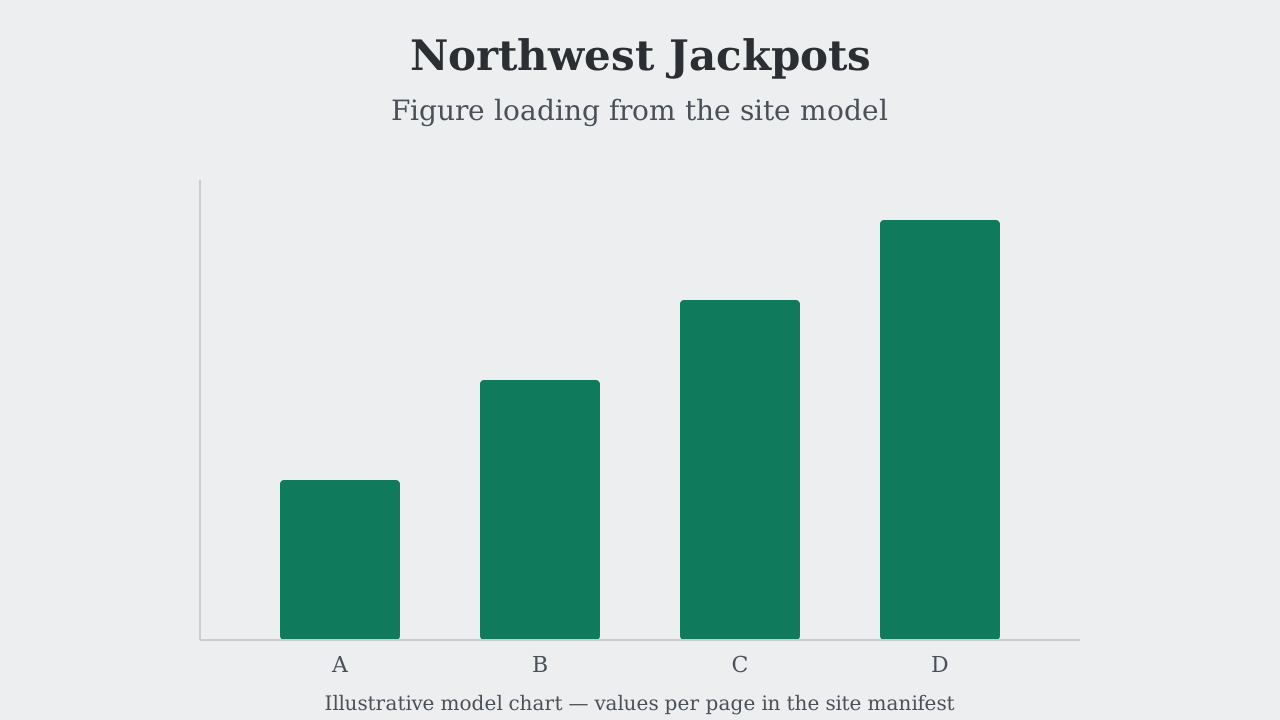
The chart states the two routes a Visa withdrawal can take. Standard card processing runs on the card scheme’s clearing cycle, and a fair planning figure is around three days from request to money in the account, of which the operator’s pending period is usually the larger share. Visa Direct compresses that to hours where the operator has enabled it, because the payout is pushed to the card rather than pulled through the clearing cycle. The difference on the model is roughly seventy hours, which is the difference between withdrawing on a Tuesday and having funds for the weekend or not.
Why does the standard route take so long when the deposit took seconds? The asymmetry is structural. A deposit is an authorisation request your bank approves instantly. A withdrawal is a credit to a card account, and card credit transfers clear in batches through the scheme, with the operator’s own review queue stacked in front. Licensed operators must handle withdrawals without unreasonable delay under their licence conditions, which bounds the wait but does not eliminate it. The pending period is where the days accumulate, and the pending period is the operator’s choice, not the card scheme’s.
Visa Direct changes the shape of that journey but not its start point. The operator still runs its own checks before releasing the request, and identity verification is most commonly triggered at the first withdrawal rather than the deposit. Upload documents early, before any request, and the first payout behaves like the second. A player who waits until the withdrawal to verify has added days to a journey that could have taken hours, and the operator’s support queue is not sympathetic at that moment because everyone else is in it too.
Read the chart as planning numbers rather than promises. An individual site can hold a request for manual review, a bank can add its own delay on receipt, and a weekend can add a day at either end. What the model gives you is the ability to ask one sharp question before depositing: does this operator support Visa Direct on withdrawals, and what is its published processing time after approval? Sites that answer both plainly in the cashier tend to be sites whose whole payment operation is run to a similar standard. Sites that answer vaguely tend to be vague in other ways that matter more.
Category comparison: what the ranges look like
The table below compiles category-typical ranges across a spread of sites serving the British market and the offshore market alongside it. Every figure is a range, not a quote: these are terms operators of each kind commonly publish, compiled from operator-published terms, and no row should be read as the stated promotion of the named site on the day you read this. Check the live terms before depositing; the ranges exist to show the shape of the market, and the UKGC rows are the British baseline shown for comparison.
| Brand | Licence label | Welcome offer range | Wagering | Minimum deposit | Payout window | Payment rails |
|---|---|---|---|---|---|---|
| Betway | UKGC | Matched stake credit to £50 | Commonly 10–20x | £10 | 1–3 days | Visa debit, PayPal, bank transfer |
| Unibet | UKGC | Low-value casino credit package | Commonly 10–30x | £10 | 1–3 days | Visa debit, e-wallets, bank transfer |
| Casumo | UKGC | Deposit match with spin bundle | Commonly 30–40x | £10 | 1–2 days | Visa debit, PayPal, e-wallets |
| Mr Vegas | UKGC | Match package to £100 | Commonly 20–35x | £10 | 1–2 days | Visa debit, e-wallets, bank transfer |
| PlayOJO | UKGC | Spin bundle, no-wagering style | Often none on spin wins | £10 | 1–2 days | Visa debit, PayPal, bank transfer |
| LeoVegas | UKGC | Matched credit package to £100 | Commonly 20–40x | £10 | 1–3 days | Visa debit, PayPal, Apple Pay |
| Videoslots | UKGC | Match with spin bundle | Commonly 20–35x | £10 | 1–2 days | Visa debit, e-wallets, bank transfer |
| Dream Vegas | UKGC | Tiered match to £300 range | Commonly 30–40x | £20 | 1–3 days | Visa debit, e-wallets, bank transfer |
| Rolletto | Offshore | Multi-tier match to £2,000 range | Commonly 35–45x | £20 | 0–2 days | Visa, e-wallets, crypto, bank transfer |
| Kinghills | Offshore | Multi-tier match to £1,000+ range | Commonly 35–50x | £20 | 0–2 days | Visa, e-wallets, crypto |
| NineWin | Offshore | Match package with spins and reloads | Commonly 35–45x | £20 | 0–2 days | Visa, e-wallets, crypto |
| JackpotCity | Offshore | Match package to £1,000+ range | Commonly 35–50x | £20 | 0–2 days | Visa, e-wallets, crypto |
Read the table as two halves of one story. The UKGC rows show modest headline offers, wagering that ranges from none on spin wins to around forty times, a £10 card floor at most brands and payout windows bounded by published processing commitments. The offshore rows show larger headline matches, heavier wagering, a £20 floor and payouts that clear faster on the rails but carry thinner recourse if a request stalls. Neither half is uniformly better, and the licence section below sets out precisely what each side gives away.
Note where the card itself sits in each row. Visa debit appears in every UKGC row as the primary rail, and Visa appears in the offshore rows too, though the offshore cashier leans on e-wallets and crypto because some British payment providers decline gambling transactions with unlicensed operators. A card that works everywhere is convenient, but the cashier list is itself a signal: a rail list dominated by crypto and e-wallets tells you the operator sits outside the British framework before you read a word of its licence page.
The licence trade-off when paying by card
The card sharpens the trade in one specific way. A Visa chargeback is a formal dispute mechanism available through your bank, and it is sometimes raised by players against offshore operators when a withdrawal stalls. It is worth understanding what that mechanism can and cannot do before anyone relies on it. A chargeback can reverse a deposit in defined circumstances, such as where goods or services were not supplied, but it is a blunt instrument against a gambling loss, operators contest such disputes, and a player who wins a chargeback against one operator should expect every operator on the same payment network to refuse their card thereafter. It is a last resort, not a plan.
At a licensed site the equivalent protections run through the operator’s complaints process and then to an independent adjudicator, free at the point of use. The card scheme dispute remains available too, but it is rarely needed, because the regulator’s expectations about prompt withdrawal handling give the complaint a framework to sit in. A reader who has never had a payment dispute may reasonably price this difference at zero. A reader who has had one will price it differently, and both positions are rational, provided the reader knows the difference exists before depositing rather than after the request stalls.
One further note belongs here because it is card-specific. Some banks apply their own gambling controls to debit cards, letting customers block gambling transactions at the bank level rather than the operator level. Those controls are free, instant to switch on through most banking apps, and apply across every gambling merchant that accepts the card. A reader who wants friction between themselves and the cashier can build it in the banking app in under a minute, and that control follows the card to every site on this page, licensed and offshore alike.
Limits, declines and the credit card ban
Cards carry limits on both ends. The operator sets a minimum deposit, commonly £10 at licensed sites as the table above shows, and a maximum per transaction or per day that varies widely by brand. Your bank sets its own limits too, and several large British banks let customers set a personal gambling block on the card that overrides everything else. Where the operator’s maximum and your bank’s limits diverge, the lower figure wins, and the cashier error message does not always tell you which limit fired. If a deposit declines unexpectedly, check the bank app before the operator’s support line, because the answer is more often on the bank’s side.
Declines deserve a paragraph because they are the most common friction on the rail. A card can decline for reasons that have nothing to do with funds: the gambling block being on, the bank’s fraud system flagging a new merchant, Strong Customer Authentication timing out, or the operator’s acquiring bank having issues of its own. None of these mean anything is wrong with your account, and none of them are fixed by retrying the same transaction six times, which raises the fraud score further. The useful sequence is: approve the authentication when it arrives, check the banking app for a block, and if both are clear, contact the operator once.
Fees on the card rail at licensed sites are, as noted earlier, rare on deposits and rare on withdrawals, with the operator absorbing scheme costs. The exceptions worth knowing are currency conversion, which should not arise on a sterling account at a British-licensed site, and cash-flow fees some banks apply to certain transaction categories, which do not arise on ordinary debit gambling transactions. At offshore sites, a small processing percentage on card withdrawals is common enough to plan for, and currency conversion margins appear where the operator’s account is denominated in euros or dollars. Read the cashier’s own fee table, because that table is the cheapest two minutes in this whole process.
The credit card ban merits a closing word in its own section because the confusion around it persists. Since April 2020 it has not been lawful for gambling operators licensed in Great Britain to accept credit card funding, and the sibling page on credit card casinos covers the ban’s history and enforcement in full. The ban does not extend to operators licensed outside Britain, which is one reason offshore cashiers list MasterCard and Visa without specifying debit, and it is a distinction worth noticing: at a licensed site the card is a debit card by law, at an offshore site it may not be. A reader who wants the ban’s protection should choose the licensed cashier, because the protection lives in the licence, not in the plastic.
How to choose a Visa casino
Four questions decide a sensible choice, and none of them require more than a few minutes in the cashier and the terms page.
Question one: does the operator support Visa Direct on withdrawals, and what does it publish as its processing time after approval? If the cashier answers in hours, the rail behaves at its best. If it answers in “up to five working days”, that is a legitimate choice but a slower one, and you should know it before funding rather than after. The model difference between the two routes is roughly seventy hours on the chart above, which is the largest single variable on this page.
Question two: which side of the licence line does the site sit on, and does that matter to you? Read the aside above if the answer is unsettled. GamStop coverage, fund segregation, the ADR disputes route and the credit card ban all live on the licensed side of the line. Larger headline offers live on the other side. A reader with a self-exclusion in force should weight that heavily, because the exclusion does not follow them offshore and the card will still work there.
Question three: what do the deposit tiers and the bonus terms say about the card? Some operators exclude certain rails from bonus eligibility, and although Visa debit is almost never excluded at licensed sites, the tier thresholds apply regardless of rail. If the full match starts at £20 and you planned to fund £10, decide which you want before the deposit, because the terms do not renegotiate afterwards. The calculator below prices the standard matched case on the same assumptions used across this site.
Bonus calculator
Bonus £100, staking requirement £4,000.
Model assumptions: the multiplier applies to the bonus amount, a house edge in line with popular titles is charged against the staking, and the cap truncates convertible winnings. Adjust the inputs to price your own case.
Worked at the defaults, a £100 deposit matched at 100% creates a £100 bonus, forty times that is £4,000 of staking, and at a 4% house edge assumption the expected cost of clearing is £160 against a £500 cap on convertible winnings. Those are the assumptions, stated so you can swap in your own. The practical relevance to a card page is that the wagering window, commonly seven to thirty days, should be long enough to complete at your usual stake size, and the withdrawal trigger clause matters if you want to cash out the deposit mid-wagering, which usually forfeits the bonus.
Question four: what do real processing records look like? Not marketing claims on the homepage, but the published cashier terms, the operator’s own complaints statistics where it publishes them, and the behaviour of the pending period on a small first withdrawal. Funding a modest amount, completing the wagering on a small offer and requesting a payout is the cheapest possible field test of a cashier, and it tells you more about the card experience than any review. Run it once with £10 before you run it with anything larger, and the whole question of how a site treats Visa withdrawals becomes an answer rather than a guess.
Frequently asked questions
Can I use a Visa credit card at a UK online casino?
Not at a site licensed by the Gambling Commission. Credit cards have been barred from British gambling since April 2020, so licensed cashiers accept Visa debit only. Some operators outside the British licensing framework still accept credit cards, which is one of the trade-offs the licence section on this page describes rather than recommends.
How long does a Visa withdrawal actually take?
On the model used across this site, standard card processing lands funds in around seventy two hours from request, with the operator’s pending period the largest share. Where an operator supports Visa Direct, the model assumes around four hours after release. First withdrawals are the slowest because identity checks usually trigger at that point.
What is Visa Direct?
Visa Direct is a push payments service that lets an operator send funds directly to a card account within hours rather than waiting for the card scheme’s batch clearing cycle. Not every operator has enabled it, and enabling it does not shorten the operator’s own review queue, so the published processing time after approval is the figure that matters.
Why was my casino deposit declined?
Common causes are a gambling block set in your banking app, the bank’s fraud system flagging a new merchant, Strong Customer Authentication timing out before you approved it, or the operator’s acquiring bank having a problem. Check the banking app before contacting support, and avoid repeated retries on the same transaction, which can raise the fraud score further.
Do Visa casinos charge fees on deposits or withdrawals?
At licensed British sites, fees on the card rail are rare in both directions, with the operator absorbing scheme costs. At offshore-facing operators, small processing percentages on card withdrawals and currency conversion margins are common enough to plan for. The cashier’s own fee table is the authoritative source for any specific site.
What is the minimum deposit with a Visa debit card?
At licensed British operators, £10 is the common floor with £5 at a minority of brands. Offshore-facing operators more often print £20 on card deposits. Bonus eligibility is frequently tied to the deposit tier, so a £10 deposit at a site whose full match starts at £20 may receive no headline promotion at all.
Can I withdraw to a different card than the one I deposited with?
Generally no. Withdrawals return by the depositing rail at most operators, so the card used to fund the account is the card that receives the payout. Some operators permit rail switching on request, but it triggers additional checks. Choose the deposit rail with the withdrawal in mind.
Is Visa safer than an e-wallet for casino payments?
They offer different protections rather than a simple ranking. A debit card gives a direct audit trail with your bank and access to the card scheme dispute process. An e-wallet sits between the casino and your bank, which some players prefer for separation, and clears faster on withdrawal at most operators. Licensed sites bound both rails with the same regulatory expectations.
Can my bank block casino transactions on my Visa card?
Yes. Most large British banks offer a free gambling block that can be switched on through the banking app and applies across every gambling merchant that accepts the card. The block overrides everything else, including operator-level limits, and can be a useful tool for anyone who wants friction between themselves and the cashier.
Do Visa deposits qualify for welcome bonuses?
Visa debit is almost never excluded from bonus eligibility at licensed British sites, unlike some e-wallets at certain operators. Deposit tier thresholds still apply, and the wagering terms attached to the bonus matter more than the funding rail. Check the promotions page terms before the first deposit rather than after.