Mastercard Casinos
Mastercard is the second card brand in most British wallets, and at casino cashiers it behaves almost like Visa with a handful of differences that matter only at specific moments. Deposit minimums match, acceptance runs a touch narrower, and the withdrawal story differs more than the deposit story. This page costs those differences in minutes and pounds, sets the card against the e-wallets and prepaid routes competing for the same slot, and states plainly what a British licence adds that no payment rail can.
Card-backed casino deposits in the British market usually carry minimums between £5 and £10, and withdrawals to the card typically take one to three days at licensed operators, with the card scheme’s own clearing sitting underneath the operator’s pending period. Verify the current cashier terms on the operator’s own banking page before depositing, because rail availability changes without notice at this end of the market.
Terms change often. Verify the current terms on the operator’s own page before depositing. Scores are editorial.
8.2/10See offer terms
8.0/10See offer terms
7.8/10See offer terms
7.5/10See offer terms
- How the card works at a casino cashier
- Deposits in, withdrawals back: the asymmetry
- Speed, limits and the numbers that matter
- Category comparison: what the ranges look like
- The licence trade-off behind every rail
- Mastercard against the other rails
- Bonus eligibility and the card’s role
- How to choose your funding method
How the card works at a casino cashier
Banking at a casino is usually described as a list of logos. That framing hides the only thing worth knowing: a card is not one product but several, and which version you hold decides how the cashier treats you. A Mastercard debit card draws directly on a current account, is accepted at the great majority of British-facing operators, and is the version almost every reader of this page will actually use. A Mastercard credit card, since April 2020, may not be used for gambling in Great Britain at all, so any licensed cashier will decline it and the discussion ends there. Prepaid Mastercard products sit in a middle position: they load like a wallet and spend like a card, but acceptance at gambling cashiers is far less consistent, because the scheme rules and the operator’s own risk policies vary on prepaid instruments.
The mechanics at the checkout are simple enough. You enter the long number, the expiry and the security code, the operator’s payment processor places an authorisation hold on the account, and the balance credits in seconds. Behind that single step sits a chain of parties: the issuing bank, the scheme, the acquirer and the operator’s processor, each taking a small fee or a small slice of risk. The chain is why card deposits are reliable but occasionally declined; any link can refuse an authorisation, and gambling is a merchant category some issuers treat cautiously even where it is lawful.
What the reader should carry away is that the card’s job at a casino is mostly one-directional, or at least it should be planned as if it were. Deposits clear instantly and almost never fail on the player’s side of the glass. The return journey is where the differences live, and the next section takes that journey apart, because the moment of withdrawal is the moment most players discover which rail they have actually chosen.
A note on declined deposits, because it is the most common practical friction. If a card deposit fails, the cause is usually one of four things: the issuing bank’s own gambling policy, insufficient available funds, a security trigger on unusual merchant activity, or the operator’s processor rejecting the bin range. Retrying rarely helps when the cause is the first of these. The honest move is to switch rails rather than to keep hammering the button, and the section comparing rails below exists partly for that reader.
Deposits in, withdrawals back: the asymmetry
The single most useful thing to understand about card banking at casinos is that the two directions are not symmetric. A deposit is an authorisation: instant, cheap, and controlled by the operator’s processor. A withdrawal to a card is a settlement: the operator pushes funds back through the scheme to your issuing bank, and the scheme’s rules, the bank’s processing queue and the operator’s own review period stack on top of each other. The result is that the same brand that credits your balance in three seconds can take two or three days to return it.
There is a second wrinkle specific to the Mastercard side of the market. Historically, pushing payouts back to credit cards was straightforward under the scheme’s rules, while pushing them to debit cards depended on the issuing bank supporting the relevant transaction type. Support has widened considerably across British banks, and on the model used across this site the assumption is that a debit card payout lands in around two days, the same figure used for Visa. Where an operator cannot push to the card at all, the fallback is bank transfer, and that fallback adds a step and sometimes a day.
The practical consequence is a planning rule this site repeats across its payment pages: choose the rail for its withdrawal behaviour, not its deposit convenience. Every rail in the market deposits in seconds. They differ enormously in the return direction. A reader who funds by card because the card was in their hand should not then expect e-wallet speed at cashout, and a reader who needs funds back the same day should fund through a rail whose return journey is measured in minutes. The rail decision is made, whether deliberately or not, at the moment of the first deposit.
Identity checks complete the asymmetry. Verification at licensed operators is most commonly triggered at the first withdrawal rather than the first deposit, which means the slowest cashout of an account’s life is usually the first one. Uploading documents before requesting anything shortens that first journey to something close to the ordinary one, and it costs the player nothing except a few minutes with a camera.
Speed, limits and the numbers that matter
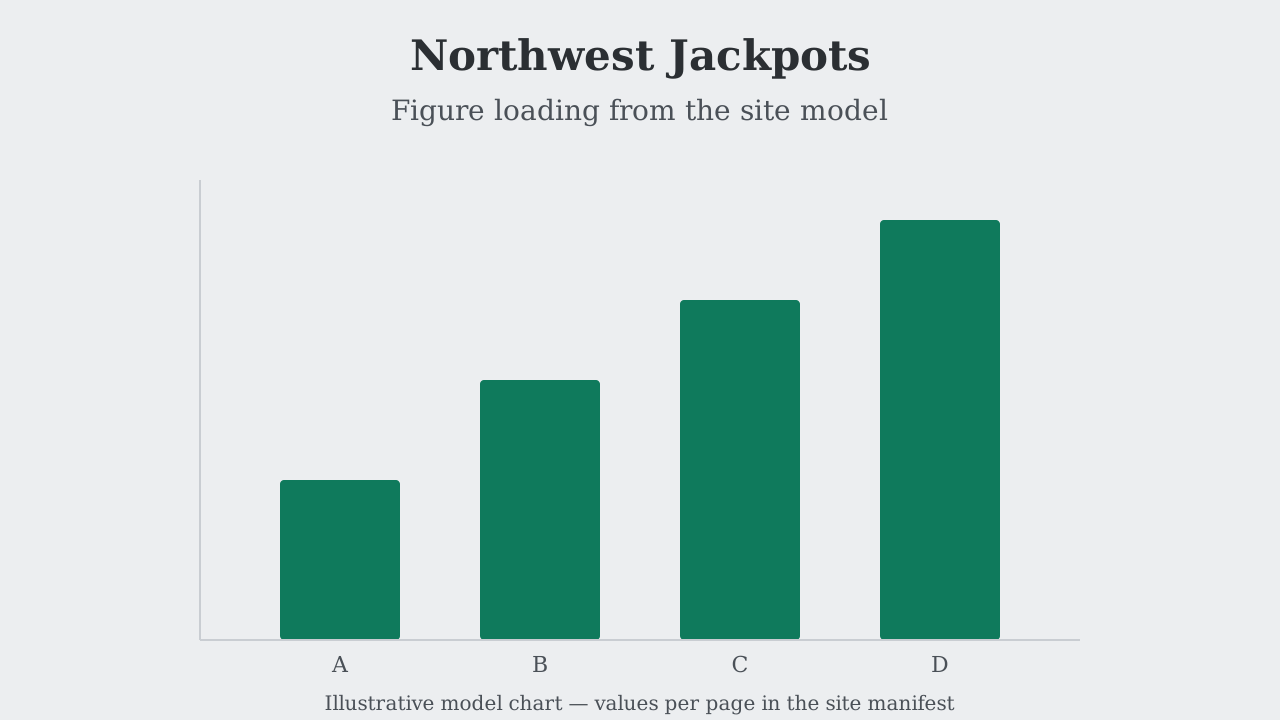
Acceptance is the first number worth quantifying. On the model used across this site, a Mastercard is accepted at around nine in ten British-facing casinos, against a near-universal acceptance for the rival scheme, with prepaid card products accepted far less consistently. The gap rarely decides anything on its own, because any given reader will find plenty of operators that take their card, but it explains why comparison sites report occasional rejection stories: roughly a tenth of cashiers will not process the card at all.
Deposit minimums are the second number. Card deposits typically carry a £5 or £10 floor at licensed operators, with £10 the more common figure at the larger brands. Maximums are set by the operator rather than the scheme, and responsible gambling tools at licensed sites let the player set their own daily or weekly deposit caps underneath whatever ceiling the cashier publishes. Those caps are a licence condition, and they apply identically whichever rail funds the account, which is worth remembering when a payment page elsewhere implies that the method itself imposes discipline.
Withdrawal speed is the third number, and it is the one this page costs most carefully. The assumption across the site is a card payout window of around two days, built from an operator processing period measured in hours plus card settlement measured in further hours to a day. Some operators advertise faster card payouts, and a few support accelerated schemes that shorten the settlement leg, but those are operator features rather than properties of the card brand, and they should be verified against the operator’s own banking page rather than taken from a headline.
Fees are the fourth number, and the honest answer is that they are usually zero on the player’s side. Licensed British operators do not typically charge for card deposits or withdrawals, and the schemes do not charge cardholders for the transaction either. Currency conversion is the exception: where an operator settles in a currency other than sterling, the card’s own foreign transaction fee applies, and it is worth checking your card’s terms before depositing with any site that prices in euros or dollars.
Category comparison: what the ranges look like
The table below compiles category-typical ranges across a spread of sites serving the British market and the offshore market alongside it. Every figure is a range, not a quote: these are the terms operators of each kind commonly publish, compiled from operator-published terms, and no row should be read as the stated promotion of the named site on the day you read this. Check the live terms before depositing; the ranges exist to show the shape of the market, and the UKGC rows are the British baseline shown for comparison.
| Brand | Licence label | Welcome offer range | Wagering | Minimum deposit | Payout window | Payment rails |
|---|---|---|---|---|---|---|
| Unibet | UKGC | Matched stake credit to £40 range | Commonly 10–20x | £10 | 1–3 days | Debit card, PayPal, bank transfer |
| Mr Vegas | UKGC | Match package with spins | Commonly 20–35x | £10 | 1–2 days | Debit card, e-wallets, bank transfer |
| PlayOJO | UKGC | Spins bundle with no wagering | None on spin wins | £10 | 1–2 days | Debit card, PayPal, bank transfer |
| BetMGM | UKGC | Matched credit to £200 range | Commonly 15–35x | £10 | 1–3 days | Debit card, e-wallets, bank transfer |
| LeoVegas | UKGC | Match package with spins | Commonly 20–40x | £10 | 1–3 days | Debit card, PayPal, Apple Pay, bank transfer |
| Pink Casino | UKGC | Matched credit to £100 range | Commonly 20–40x | £10 | 1–3 days | Debit card, PayPal, bank transfer |
| Kinghills | Offshore | Multi-tier match to £1,000+ range | Commonly 35–50x | £20 | 0–2 days | Debit card, e-wallets, crypto |
| NineWin | Offshore | Match package with spins | Commonly 35–45x | £20 | 0–2 days | Debit card, e-wallets, crypto |
| JackpotCity | Offshore | Multi-tier match to £1,000 range | Commonly 35–50x | £10–£20 | 0–2 days | Debit card, e-wallets, bank transfer |
| Roobet | Offshore | Crypto-led match package | Commonly 40x range | £20 equivalent | 0–2 days | Crypto, e-wallets |
| Casumo | UKGC | Matched credit with wagering on wins | Commonly 30–40x | £10 | 1–3 days | Debit card, e-wallets, bank transfer |
| Videoslots | UKGC | Matched credit with spins | Commonly 20–35x | £10 | 1–2 days | Debit card, e-wallets, bank transfer |
Read the table as two stories told at once. The UKGC rows show a market where card deposits start at £10, payouts are bounded by published commitments and measured in days, and welcome offers are modest with wagering frequently lighter than the offshore norm. The offshore rows show a market where headline matches are larger, wagering is heavier, minimum deposits sit higher and card acceptance is joined by crypto and e-wallet rails that do the heavy lifting. Neither story is uniformly better. The British baseline buys regulatory protection and gives away headline size. The offshore alternative buys headline size and gives away the protection. What matters is that the reader makes that trade consciously.
Note the rail column specifically, because on a payment page it carries the real signal. Card coverage is close to universal across both halves of the table, which is exactly why the card alone rarely differentiates one operator from another. The differentiating rails are the ones added alongside it: an e-wallet for speed, a voucher for privacy, crypto where the operator supports it. How an operator treats the secondary rails says a good deal about how it treats banking generally.
The licence trade-off behind every rail
With the aside stated, the payment question can be run on its own merits. Under a British licence, the operator must process withdrawals without unreasonable delay, must keep customer funds protected to a stated standard, and must offer deposit limits and reality checks that work identically across every rail. Those commitments attach to the operator, not the payment method, which is why no rail choice at a licensed site can buy you out of the protections or into a faster class of treatment. The card, the wallet and the voucher differ in speed and convenience; they do not differ in the regulatory floor beneath them.
Offshore, the floor is the operator’s own policy. Payout windows there are commonly faster on crypto and e-wallet rails, and the comparison table reflects that, but the recourse if a payout stalls is thinner and the disputes route depends entirely on the issuing jurisdiction. A reader who has never had a dispute may reasonably price this at zero. A reader who has had one will price it far higher. Both pricing decisions are rational; both require knowing the difference before the deposit rather than after the withdrawal request stalls.
One payment-specific note belongs here. Since April 2020, credit cards may not be used for gambling in Great Britain, and that ban bites at licensed operators by construction. Offshore operators outside the British framework are not bound by it in the same way, which means the reader who wants to fund play with borrowed money will find the door open precisely where the protections are absent. That alignment is not a coincidence and it is not a neutral fact; it is one of the clearest illustrations of what the licence is for.
Mastercard against the other rails
The card competes with a crowded field, and each competitor wins on at least one dimension. PayPal deposits and withdrawals run faster end to end, with the wallet leg of the journey measured in minutes once the operator releases the request, and the buyer-protection instincts of the wallet sit behind the transaction. Skrill and MuchBetter offer similar speed with different fee structures and, at some operators, different bonus eligibility. Apple Pay and Google Pay wrap a card in a tokenised one-tap flow that is quicker at the checkout but inherits the card’s slow return journey, since payouts route back to the underlying instrument or to bank transfer. Paysafecard vouchers offer privacy on deposits but no withdrawal path at all, which makes them a one-way rail by design.
Against that field, the card’s case is universality and simplicity. It works nearly everywhere, needs no separate account, no app and no top-up step, and every adult British reader already holds one. The cost of that simplicity is the two-day return journey and the exposure of card details to one more merchant, which tokenised wallets reduce. For a reader who deposits occasionally, withdraws rarely and values a single instrument, the card is the rational default. For a reader who cycles funds frequently, an e-wallet is the better tool, and the honest comparison pages on this site say so on their own terms rather than grading every rail against card-shaped expectations.
Where the two card brands differ, the differences are small enough to summarise honestly. Acceptance runs a little wider for the rival scheme. Withdrawal support to debit is comparable across British banks on both brands. Prepaid products exist under both schemes with patchy gambling acceptance. Choosing between the two cards on payment grounds is rarely worth the effort; the choice of rail matters more than the choice of logo, and the choice of licence matters more than both.
The chart below sets out the acceptance picture on the model used across this site, with the prepaid position shown separately because it is the one genuinely different card product.
Bonus eligibility and the card’s role
Bonuses and payment rails interact more than most readers expect, and the card sits in the middle of that interaction. At licensed British operators, card deposits almost always qualify for welcome offers and ongoing promotions, because the exclusion lists that do exist usually target e-wallets rather than cards. The historical pattern, where certain wallets were excluded from matched offers at some operators, has softened in recent years, but the card remains the rail least likely to be on an exclusion list anywhere in the market.
Offshore, the pattern differs. Cashier pages there sometimes attach richer packages to particular rails, with crypto deposits carrying larger matches than card deposits at a meaningful number of operators. Where that is the case, the card is still accepted for the base offer, and the rail-specific uplift is a genuine part of the comparison rather than a trick of presentation. The comparison table above lists rail bundles per brand precisely so a reader can see where the uplift sits before choosing how to fund.
The card’s other role in bonus terms is the deposit history it creates. Because card statements itemise gambling transactions separately under a recognised merchant category, a player reviewing their own spending across a wagering period has a clean record to work from, independent of the operator’s account history. That sounds trivial until a dispute or a self-assessment moment arrives, at which point the ability to reconstruct a deposit sequence from a bank statement rather than from screenshots is worth more than any promotional percentage.
One caution belongs in this section. Taking a withdrawal before a wagering requirement completes usually forfeits the bonus and any winnings attached to it, and this trigger is independent of the rail used. A reader mid-wagering who suddenly needs funds should check the promotion’s terms before requesting anything, because the request itself is what fires the clause. The card’s speed, or lack of it, has no bearing on the outcome; the forfeit happens at request, not at settlement.
How to choose your funding method
The comparison this page has been building resolves into four questions, and answering them takes less time than reading another comparison site.
Question one: how often will you move money? Occasional deposits and rare withdrawals suit the card, because its only real weakness, the slow return journey, costs a rare player little. Frequent cycling suits an e-wallet, where both directions are measured in minutes and the account doubles as a gambling-only buffer between your bank and the operator.
Question two: how much does the deposit-and-withdrawal asymmetry bother you? Some readers find a two-day card payout perfectly ordinary, because it matches every other card refund they have ever waited for. Others find it intolerable next to an hour-long wallet payout for the same money. Neither reaction is wrong; both should drive the rail choice before the site choice.
Question three: which licence do you want behind the account? The aside above states the trade plainly, and no payment section can settle it. What the payment lens adds is this: rail breadth is itself a signal. A cashier offering a wide, clearly documented set of rails with published windows and fees is behaving like an operator that expects scrutiny, and that behaviour is more common among licensed operators, though not exclusive to them.
Question four: what does the operator’s own banking page say that the promotion page does not? Two minutes with the published cashier terms answers the minimum deposit, the withdrawal window, any fees and any rail exclusions for bonuses. If those figures are absent or vague, treat the vagueness as information. An operator that makes its banking hard to price before the deposit will not make it easier afterwards.
Run the four questions and the decision makes itself, which is the honest test of a good decision process. The rail narrows the field. The licence frames the trade. The cashier page prices the remainder. The reader closes the loop.
Frequently asked questions
Can I use a Mastercard credit card at UK casinos?
No. Since April 2020, credit cards may not be used for gambling in Great Britain, and operators licensed by the Gambling Commission decline them at the cashier. The ban applies to credit products generally at licensed sites. Prepaid and debit cards remain lawful, and offshore operators outside the British framework are not bound by the same rule, which is one of the trade-offs set out on this page.
How long does a Mastercard withdrawal take?
On the model used across this site, a card payout lands in around two days, built from the operator’s processing period plus card settlement. Individual operators publish their own windows, and some support accelerated payout routes that shorten the settlement leg. First withdrawals are usually the slowest because identity checks tend to trigger at that point.
Why was my card deposit declined?
Common causes are the issuing bank’s own gambling policy, insufficient available funds, a security trigger on unusual merchant activity, or the operator’s processor rejecting the card range. Retrying rarely resolves a policy-based decline. Switching to another rail, or contacting the bank to confirm the cause, is the practical next step.
Do Mastercard deposits qualify for casino bonuses?
At licensed British operators, card deposits almost always qualify, because bonus exclusion lists have historically targeted some e-wallets rather than cards. Offshore operators sometimes attach larger packages to crypto deposits specifically, with the card accepted for the base offer. Check the promotion’s payment terms before depositing either way.
Is Mastercard better than Visa for casino payments?
For practical purposes the two behave the same at British-facing casinos. Acceptance runs slightly wider for Visa on the model used here, withdrawal support to debit is comparable across banks, and fees are the same. The choice of rail, card versus wallet versus crypto, matters far more than the choice between the two card brands.
Are there fees for card deposits or withdrawals?
Licensed British operators do not typically charge for either direction, and the schemes do not charge cardholders for gambling transactions. Currency conversion is the exception: where an operator settles in a currency other than sterling, your card’s foreign transaction fee applies, so check the card’s terms before depositing at a site that prices in euros or dollars.
What are typical minimum deposits with a card?
Card deposits commonly carry a £5 or £10 floor at licensed operators, with £10 the more frequent figure at larger brands. Offshore operators more often start at the equivalent of £20. Maximums are set by the operator, and deposit limits under your own control apply at licensed sites whichever rail funds the account.
Why would a casino not accept my Mastercard at all?
A minority of cashiers do not process the card brand at all, whether through their processor’s arrangements, scheme rules on their licence jurisdiction, or their own risk policy. Prepaid card products face patchier acceptance still. If your card is refused as a category rather than on a specific transaction, another operator or another rail is the practical answer.
Do offshore casinos accept Mastercard?
Many do, and the card is commonly listed alongside e-wallets and crypto in their cashiers. Availability varies per operator and changes without notice, so the cashier page is the only reliable source. Remember that paying by a familiar rail does not add any British regulatory protection to an unlicensed operator; the licence question stands apart from the payment question.