Megaways Slots
A Megaways reel set can throw anything from a few hundred to 117,649 ways at you on a single spin, and the number changes every time. That variability is the engine’s whole appeal and also the reason it costs more per hour than most players expect. On this page we set out how the mechanic works, what it does to volatility and session maths, and how to decide whether the format fits your bankroll rather than the other way round.
Megaways titles at this end of the market typically carry a house edge in the low single figures, though each game sets its own return to player and the setting can differ between operators for the same title. Verify the current paytable and RTP listing on the operator’s own game information panel before you play, because the engine licence and the game maths are separate things and only one of them is printed on the splash screen.
Terms change often. Verify the current terms on the operator’s own page before depositing. Scores are editorial.
8.2/10See offer terms
8.0/10See offer terms
7.8/10See offer terms
7.5/10See offer terms
- How the engine works, mechanics without the marketing
- Ways to win and what they do to variance
- Session maths: costing a Megaways hour
- Operator comparison: what the ranges look like
- Choosing a title: features, RTP and stake control
- Licences and where you play
- A practical checklist before the first spin
How the engine works, mechanics without the marketing
The Megaways mechanic, originally developed by Big Time Gaming and licensed out to many other studios, replaces fixed paylines with a dynamic reel-height system. On each spin, every reel lands a random number of symbols, commonly between two and seven, and the total ways to win is calculated by multiplying those reel heights together. Six reels of seven symbols each produce 117,649 ways, which is where the number every Megaways splash screen shouts about comes from. Six reels landing two symbols each produce a far smaller figure, and the game counts a win on any matching symbol combination on adjacent reels running left to right, regardless of position within the reel.
What that means in practice is that the game has no fixed geometry. A traditional five reel, twenty line slot presents the same structure on every spin; the only variable is which symbols land. A Megaways title randomises the structure itself. Every spin is a new reel set, a new ways count and a new distribution of possible outcomes. Cascading or tumbling reels are frequently bolted onto the format, so winning symbols disappear and replacements drop in, allowing multiple wins from a single paid spin. Most titles also carry a symbol-removal feature, often dressed up as a mystery symbol or a horizontal reel above the main set, which reshapes the ways count again before the outcome settles.
The engine itself is not a guarantee of anything. It is a way of counting wins, and the return to player of any particular game is set by the paytable, the symbol weighting and the feature frequency, all of which the studio chooses independently of the ways mechanic. Two Megaways titles from the same studio can sit a full percentage point apart in RTP while advertising the same headline ways figure. This is the first and most important distinction a reader should absorb: Megaways describes the shape of the game, not its price. The price lives in the paytable, and the paytable is one tap away on every licensed game.
A second distinction follows from the first. Because ways replace paylines, the stake is spread across every possible combination rather than being divided into line bets. A £2 spin on a 117,649-way reel set is not £2 divided into 117,649 pieces; it is a £2 stake buying a share of a distribution whose most common outcomes are small or zero and whose rarest outcomes are very large. The engine trades frequency for magnitude. That trade is visible in the hit rate, which on most titles in this format lands somewhere below one in three spins producing any win at all, and it is visible in the balance curve, which falls in long shallow steps interrupted by occasional jumps. Readers used to low-variance classics often experience the format as a machine that eats deposits slowly and then repays in bursts, and that experience is an accurate reading of the mathematics rather than a malfunction.
There is also a licensing layer worth a sentence. Big Time Gaming licenses the mechanic to other studios, so games carrying the Megaways name from dozens of brands share a counting system but not a maths model. The mechanic licence and the game certification are separate artefacts, and on a British-licensed site both are covered by the operator’s testing regime, which checks that the advertised return matches the observed behaviour over a large sample. On offshore sites the depth of that testing varies with the licence jurisdiction, and the next sections keep that difference in frame.
Ways to win and what they do to variance
The headline ways figure hides a distribution, and the distribution is where the variance lives. On a typical spin the reel heights land in the middle of their ranges far more often than at the extremes, so the majority of spins produce a few thousand ways rather than the maximum. The chart below sets out the assumed spread this page uses as its model: most spins cluster around the middle thousands, the maximum of 117,649 appears rarely, and the low hundreds appear on the sparsest reel sets.
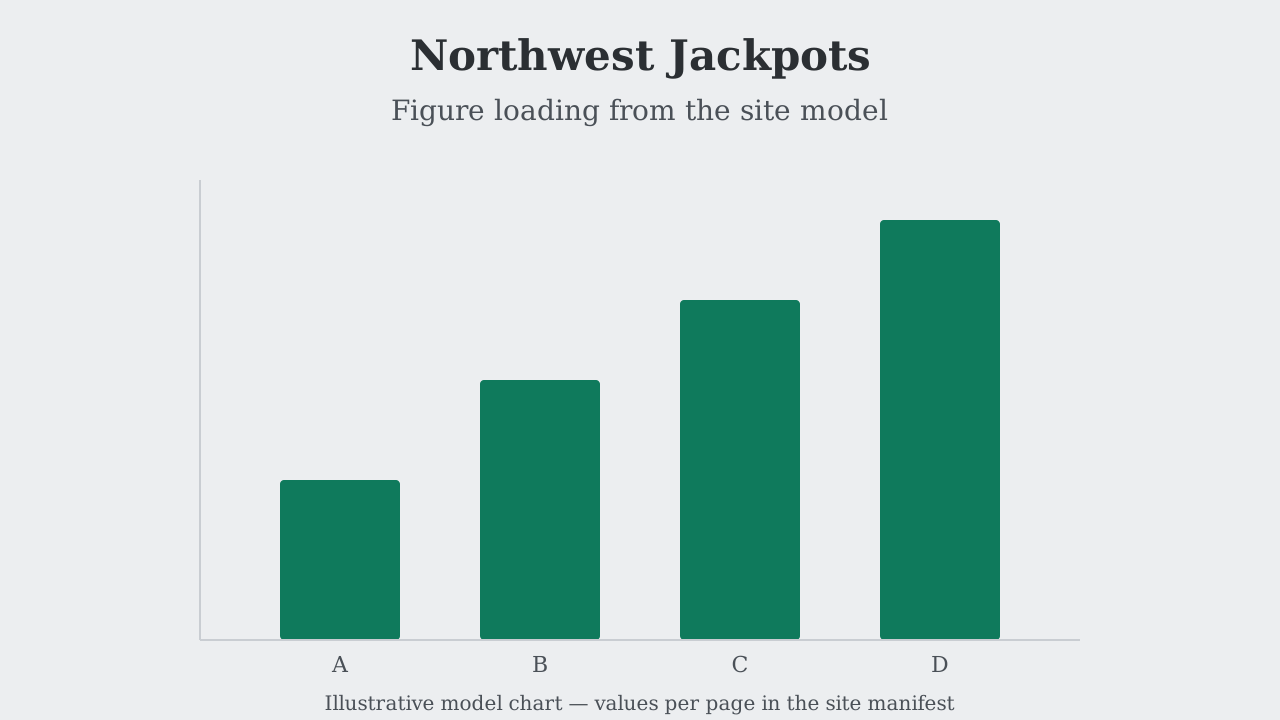
Variance in this format comes from three stacked sources. The first is the reel-height randomisation itself, which means your stake can buy a big structure or a small one with no input from you. The second is the symbol distribution, which concentrates most of the return in the free spins or bonus round; on many Megaways titles the feature carries the majority of the long-run return, so base game play is largely a slow accumulation of small results punctuated by the occasional trigger. The third is the multiplier or progressive escalation that most features apply, where each cascade or retrigger increases a multiplier, producing the enormous tail outcomes the format is famous for. Stack the three together and the distribution of a single spin becomes extremely wide, wider than almost any fixed-line format.
The practical consequence is that session outcomes on Megaways titles diverge further from expectation than on flatter games. Over ten sessions of the same length and stake, a classic video slot might produce a range of results within a narrow band either side of its expected return, while a high-variance Megaways title can produce one session at three times the stake recovered and another at nearly nothing, drawn from the same maths. Neither session tells you anything about the game’s fairness. Both are ordinary draws from a wide distribution, and the reader who judges a game by a single session has measured the variance, not the return.
Bet sizing interacts with variance in a way worth spelling out. Because the tail outcomes are so large relative to the stake, the temptation is to stake high and chase the feature. The expected cost of that approach is identical to staking small, since the house edge applies proportionally, but the shape of the ride differs enormously. A £2 stake on a £200 bankroll gives roughly a hundred spins before the balance is exhausted at the expected rate, which on most titles is enough to see the feature once or twice on the modelled frequencies. A £5 stake buys forty spins, which frequently is not enough to reach the feature at all, meaning the session ends before the part of the distribution carrying most of the return has had its chance. Neither plan is wrong. But a reader who wants to experience the game’s full mathematics needs the spin count to reach the feature, and the stake level is the only dial that controls that.
One further point about the ways count deserves mention, because it misleads even experienced players. A high ways count on a given spin does not mean a high chance of a win, and a low count does not mean a poor spin. The probability of a winning combination scales with the number of matching symbols on adjacent reels, and the paytable is constructed so that the expected value of a spin is the same regardless of the reel heights that happen to land. The 117,649 headline is a marketing ceiling, not a threshold, and treating it as one leads readers to over-value rare reel sets and under-value the ordinary spins that actually make up the session.
Session maths: costing a Megaways hour
Below sits a calculator set to a standard case: a £200 bankroll, £2 stakes, an assumed 4% house edge and ten sessions. Those defaults reflect the ordinary way people actually play the format, in repeated sessions rather than one long grind, and they let you see how the expected cost accumulates across a week or a month rather than a single sitting.
Bonus calculator
Expected cost across 10 sessions: £32.
Model assumptions: the multiplier applies to the bonus amount, a house edge in line with popular titles is charged against the staking, and the cap truncates convertible winnings. Adjust the inputs to price your own case.
The model runs three steps. First it divides the bankroll by the stake to find the total spins the balance affords at the expected rate of exhaustion. Second it applies the house edge to the total staked amount to find the expected cost across the whole run. Third it multiplies across the session count, because the interesting figure for most readers is not what one evening costs but what a habit costs.
Worked at the defaults: a £200 bankroll at £2 stakes is a hundred spins of expected play. Staking two pounds on each of those hundred spins turns over £200, and at a 4% house edge the expected cost of that turnover is £8 per session. Across ten sessions the expected cost is £80 against £2,000 turned over. Those are not forecasts of any single session. They are the long-run price of the ticket, and on a high-variance format the individual sessions will scatter widely around them. Some will finish ahead, some will lose the full bankroll, and the average across many sessions will tend toward the modelled figure as the count grows.
Two adjustments make the model more useful. The first is the edge itself. A 4% assumption sits in the middle of the ordinary range for popular titles; a game at 3% cuts the expected cost to £6 per session, and a game at 5% lifts it to £10. Because RTP settings for the same title can differ between operators, checking the information panel on the site you actually play is worth more than any general figure quoted anywhere, including here. The second is the stake. Halving the stake to £1 doubles the spin count and leaves the expected cost unchanged at £8, because the edge applies to turnover. But it changes what the session feels like: more spins, smaller outcomes, more chances for the feature to trigger. For readers whose purpose is entertainment per pound, the lower stake usually buys more of it.
| Input | Value | Effect on the model |
|---|---|---|
| Bankroll | £200 | Sets the scale of the session |
| Stake per spin | £2 | A hundred spins of expected play |
| House edge assumption | 4% | £8 expected cost per session |
| Sessions | 10 | £80 expected cost across the run |
| Turnover per session | £200 | The base on which the edge charges |
| Expected cost at 3% edge | £6 | £2 cheaper per session |
| Expected cost at 5% edge | £10 | £2 dearer per session |
| Spins at £1 stake | 200 | Same expected cost, twice the play |
| Spins at £4 stake | 50 | Same expected cost, half the play |
The sensitivity rows carry the useful lesson. The edge moves the cost; the stake moves the experience. Swinging the edge by a point moves the session price by £2 in either direction on the standard case. Changing the stake does nothing to the expected cost at all, because a smaller stake spread over more spins turns over the same money at the same rate per pound. That asymmetry is the single most practical piece of arithmetic on this page: if your goal is to play for longer at the same price, lower the stake. If your goal is bigger swings, raise it, and know that the price per pound staked is unchanged.
A final word on feature cost. Many readers price a Megaways session by how long it takes to reach the bonus round, and the format makes that pricing harder than usual because the feature can appear early or take several hundred spins. On the modelled frequencies, a bankroll sized for a single feature trigger should plan for the possibility that it does not arrive inside the session. The honest way to hold that risk is to treat every spin as the product and the feature as a bonus, rather than the reverse. Sessions planned that way end without disappointment whether the reel set delivers or not.
Operator comparison: what the ranges look like
The table below compiles category-typical ranges across a spread of sites serving the British market and the offshore market alongside it. Every figure is a range, not a quote: these are terms operators of each kind commonly publish, compiled from operator-published terms, and no row should be read as the stated offer of the named site on the day you read this. Check live terms before depositing. The UKGC rows are the British baseline shown for comparison.
| Brand | Licence label | Welcome offer range | Wagering | Minimum deposit | Payout window | Payment rails |
|---|---|---|---|---|---|---|
| Betway | UKGC | Matched deposit to £50 | Commonly 10–30x | £10 | 1–3 days | Debit card, PayPal, bank transfer |
| Casumo | UKGC | Match package with spins | Commonly 30–40x | £10 | 1–2 days | Debit card, PayPal, Trustly |
| MrQ | UKGC | Low-wagering spin bundle | Often minimal | £10 | 1–2 days | Debit card, PayPal, bank transfer |
| Unibet | UKGC | Casino credit to £100 range | Commonly 20–40x | £10 | 1–3 days | Debit card, PayPal, Apple Pay |
| LeoVegas | UKGC | Match package with spins | Commonly 30–40x | £10 | 1–2 days | Debit card, PayPal, bank transfer |
| Bet365 | UKGC | Spin bundle on qualifying deposit | Varies by product | £10 | 1–3 days | Debit card, PayPal, Apple Pay, bank transfer |
| Kinghills | Offshore | Multi-tier match to £1,000+ range | Commonly 35–50x | £20 | 0–2 days | Debit card, e-wallets, crypto |
| NineWin | Offshore | Match package with spins | Commonly 35–45x | £20 | 0–2 days | Debit card, e-wallets, crypto |
| Rolletto | Offshore | Multi-tier match to £2,000 range | Commonly 40–45x | £20 | 0–2 days | Debit card, e-wallets, crypto, bank transfer |
| JackpotCity | Offshore | Multi-tier match to £1,000+ range | Commonly 35–50x | £20 | 0–2 days | Debit card, e-wallets, crypto |
| Gamdom | Offshore | Rakeback and match structures | Varies by product | £10–£20 | 0–2 days | Crypto, e-wallets |
| Slots Temple | Offshore | Social play and bonus credit | Varies by product | £10–£20 | 0–2 days | Debit card, e-wallets, crypto |
Read the table as two pictures of the same market. The UKGC rows show modest headline offers, lighter or clearly published wagering, a £10 minimum deposit floor and payout windows bounded by published commitments. The offshore rows show larger headline matches, heavier wagering, a higher entry floor and faster rails with thinner recourse. Neither picture is uniformly better; the British baseline buys protections and gives away headline size, and the offshore rows buy headline size and give away the protections. What matters is that the reader makes that trade with both halves of the price visible.
For a page about slots specifically, one column matters more than the others. Game certification and RTP settings are the two figures that decide what a Megaways session actually costs, and both are stronger on the licensed side of the table because the operator’s testing obligations are enforceable. An offshore site may carry the identical title at a lower RTP setting, and there is no independent complaints route to escalate the difference to. The rail speeds are visible in a cashier. The RTP setting is visible only if you know to look, so this page says: look.
Choosing a title: features, RTP and stake control
With that on the record, the business of choosing an individual Megaways title is mostly a matter of three figures printed in the game’s own information panel, plus one that is not printed anywhere. The first figure is the RTP, which on licensed sites is stated per title and can be verified against the studio’s published maths. The second is the volatility rating, usually shown as a scale from low to very high, and on Megaways titles the honest answer is almost always high or very high. The third is the maximum win, expressed as a multiple of stake, which tells you how far the tail of the distribution extends. A 10,000x ceiling and a 50,000x ceiling describe materially different games even at identical RTP, because the bigger tail must be paid for by thinner outcomes everywhere else.
The figure that is not printed is the feature frequency, the average number of spins between bonus rounds. Studios publish it in some markets’ technical documentation and omit it from player-facing panels, so most readers have to estimate it from experience. A rough working method: if a session of a hundred to two hundred spins at your chosen stake has never reached the feature, the frequency at that title is longer than your session, and either the stake drops or the title changes. This is not a claim about fairness. It is matching the product to the time you have available for it, which is the same reasoning as choosing a film length.
Stake control is the fourth consideration and the one most within your power. Megaways titles usually offer a wide stake range, from pennies to well over £10 per spin, and the engine’s volatility means the per-spin stake drives the width of the balance swings directly. A useful habit is to size the stake so the bankroll affords at least two hundred spins of expected play, because that count gives the format room to deliver its distribution rather than truncating it. On a £200 bankroll that points to a £1 stake rather than the £2 the calculator defaults to, and the expected cost is identical. The section above showed why; the practice here is simply applying it.
Finally, a note on new releases. The Megaways licence has been applied to hundreds of titles across dozens of studios, and the quality of the maths model varies as much as the quality of the artwork. Newer is not better priced; some of the fairest RTP settings in the format sit on older titles, and some of the tightest sit on the newest releases riding a launch cycle. The hub’s release tracker covers new arrivals separately. The point for this page is that the Megaways badge tells you nothing about price, so every title is assessed on its own panel figures, in the same way this page assesses every operator on its own published terms.
Licences and where you play
British online gambling operates under the Gambling Act 2005 with the Gambling Commission as the regulator, and the practical consequences reach slot play directly. Licensed operators must verify age and identity, must offer GamStop self-exclusion, must protect customer funds to a stated standard and must make game information, including RTP, available to players. Games on licensed sites are tested against their advertised return. Disputes follow a documented route through the operator to an independent adjudication body, which is a route that exists nowhere in the offshore market however well an individual operator behaves.
The offshore market operates outside that framework. Offshore operators hold licences from jurisdictions whose standards differ, sometimes in detail and sometimes in kind, and the depth of game testing on such sites depends on the operator’s own arrangements. The reader’s protection on RTP accuracy, on withdrawal processing and on dispute resolution depends on policies rather than enforceable conditions. This page treats that as a disclosed fact rather than a verdict, and the aside above sets out plainly what is given up; the comparison table shows what is gained in headline terms, and the weighing belongs to the reader.
Two regulatory notes have direct consequences for slot players. The first is that credit cards may not be used for gambling in Great Britain, so the funding rails at licensed sites are debit cards, e-wallets and bank transfers, and any site accepting credit from a British player is signalling its licence position in its own cashier. The second is that GamStop covers licensed operators only, so a reader who has self-excluded and then deposits offshore has stepped outside the exclusion they set. That is a fact about the tool’s boundary, and every reader should understand it before it matters rather than after.
Bankroll tools also differ across the divide. Licensed operators must offer deposit limits, reality checks and time-outs, and for a high-variance format like Megaways those tools are worth more than they might look. A game whose session can end at three times the stake or at nothing is precisely the kind of product where a pre-set deposit limit does its job, because it caps the downside of a bad run of reel sets before the run starts. Readers who find such checks intrusive should understand that their absence offshore is one of the trade-offs the aside describes, working in both directions at once.
A practical checklist before the first spin
This closing section condenses the page into a checklist that takes about five minutes per title and costs nothing. Run it on any Megaways game, at any operator, and the format stops being a mystery and becomes a priced product.
First, open the information panel and read the RTP. Note it, because it is the single figure that prices the session, and compare it against the range this page models. If the panel shows a range rather than a single figure, the operator has a choice of settings and the lower end is the one to plan around unless you can confirm otherwise. Second, note the volatility rating and the maximum win multiple. Together they describe the shape of the distribution you are buying, and a very high maximum with very high volatility is a lottery-shaped product rather than a session-shaped one.
Third, size the stake against the bankroll using the two-hundred-spin rule from the section above. Fourth, check the operator’s position on the licence question before funding the account, not after; the table and the aside on this page exist so that check takes a minute rather than a research project. Fifth, set the deposit limit before the first deposit, while the decision is calm, rather than after a bad run, when it will not be. Sixth, verify the current promotion terms on the operator’s own page if a bonus is involved, because slot-specific game weighting and maximum bet clauses apply during wagering and can void winnings when breached.
Answer those six and the format makes its own case. Megaways titles are the most volatile common format in the online slot market, and that is neither a recommendation nor a warning; it is a specification. Readers who want long, flat sessions have cheaper products, and the hub’s pages on high RTP titles and classic formats cover them. Readers who want wide distributions and occasional large outcomes, bought at a known expected cost per pound staked, will find the engine delivers exactly that. The arithmetic on this page prices the ticket either way, and the choice between the two rides is the reader’s, made with the numbers in the open where they belong.
Frequently asked questions
What does 117,649 ways to win actually mean?
It is the product of six reels landing seven symbols each, the maximum configuration of a standard six-reel Megaways set. The count changes every spin because reel heights are randomised, and the maximum appears far less often than the middle thousands. It is a ceiling on the structure, not a probability of winning.
Are Megaways slots higher RTP than normal slots?
No. The mechanic describes how wins are counted, not how much the game returns. Megaways titles sit across the same RTP range as any other format, and the setting is chosen by the studio per title. Read the information panel on the game you are actually playing rather than assuming anything from the badge.
Why do my balances swing so much on these games?
The format stacks three sources of variance: randomised reel heights, a return distribution concentrated in the bonus feature and the escalating multipliers most features carry. The result is a very wide spread of session outcomes around the expected value, which is the design rather than a fault. Smaller stakes narrow the swings without changing the expected cost per pound.
What stake should I use on a Megaways slot?
A practical rule is to size the stake so your bankroll affords at least two hundred spins of expected play, which gives the game room to deliver its distribution including the feature. The expected cost of the session depends on turnover, not stake size, so a lower stake buys the same price for a longer ride.
Does a high ways count mean a spin is more likely to win?
Not in the way most readers assume. The paytable is constructed so the expected value of a spin is broadly the same whatever the reel heights land as. A large reel set offers more combinations but does not on its own signal a better spin, and treating 117,649 as a threshold misreads the mathematics.
Why is the bonus round so hard to reach?
On most Megaways titles the feature carries the majority of the long-run return, so the base game is priced thin and the trigger is deliberately uncommon. If a session of two hundred spins at your stake has not reached the feature, either the stake is too high for the session length or the title’s trigger frequency does not match your available time.
Can the same Megaways game have different RTP at different sites?
Yes. Studios often supply multiple RTP settings and operators choose among them, so the identical title can return more at one site than another. Licensed sites must publish the setting in the game panel, which is why checking it where you actually play beats quoting any general figure.
Are Megaways slots available at UK-licensed sites?
Yes, extensively. The mechanic is licensed to many studios and their titles appear across the licensed British market, tested against their advertised return under the operator’s obligations. The format is not offshore-specific, and there is no need to leave the licensed market to play it.
What is cascading reels and how does it change the game?
Winning symbols are removed after a win and replacements drop into their places, allowing further wins from the same paid spin. It increases the number of outcomes per stake and interacts with the multipliers most Megaways features apply, which is one reason the format’s variance runs high.
Is there any way to tell when the feature is due?
No. Each spin is an independent event and the reel set has no memory of previous spins. Timings between features vary enormously by design, and any pattern a session appears to show is variance rather than a signal. Sizing stakes for the long run is the only reliable response to that randomness.
Do offshore sites run the same Megaways titles?
Many offshore-facing operators carry Megaways-branded games, since the licence is broadly available, but the depth of testing behind the games and the RTP settings chosen are matters of the operator’s own arrangements. The same title can sit at a different setting than at a licensed site, and the recourse available if a dispute arises differs accordingly.