New Bingo Sites
A fresh bingo brand usually arrives on a network you already know, wearing new colours and carrying a launch package built from free tickets, spin bundles or a matched ticket pack. The software underneath is often identical to a dozen older rooms, which means the real questions are about the operator behind the logo, the terms attached to the welcome tickets and how withdrawals behave in the first months of a site’s life. This page works through those questions in order and prices the launch offers on stated assumptions.
Launch offers of this kind in the British-facing market usually take the shape of free ticket bundles, low-wagering spin packages or matched ticket packs, with terms that vary by network and operator. Verify the current terms on the site’s own promotions page before depositing, because launch promotions are amended frequently and the published summary rarely carries every condition.
Terms change often. Verify the current terms on the operator’s own page before depositing. Scores are editorial.
8.2/10See offer terms
8.0/10See offer terms
7.8/10See offer terms
7.5/10See offer terms
- How new bingo sites launch: networks first, brands second
- Reading a launch offer: tickets, spins and the small print
- The session maths behind a bingo bankroll
- Operator comparison: what the ranges look like
- Trust and track record: judging a site with no history
- Payments and the first withdrawal
- How to choose among the newcomers
How new bingo sites launch: networks first, brands second
The first thing to understand about a new bingo site is that the brand on the homepage is rarely the entity that runs the games. Most British-facing bingo sites sit on one of a small number of networks, where the software, the rooms, the ticket pricing and often the shared jackpots are supplied by a platform operator. What the new brand adds is a skin: its own colours, its own promotions desk, its own chat hosts and its own welcome package. When you join two sites on the same network, you are often playing in the same rooms against the same players, with the same odds on every ticket you buy.
This matters for two reasons. The first is practical: room quality, game fairness and prize structures are largely network decisions, so a newcomer on an established network inherits years of platform behaviour from day one. A brand that launched last month on a mature network can be a smoother operation than a two-year-old standalone site with its own infrastructure. The second reason is financial: the operator of record, the company named in the footer and holding the licence, may be different from the network, and it is that operator’s terms that govern your account, your withdrawals and any dispute you might have.
So the checklist for a new site begins before the welcome offer. Find the operator name and the licence in the footer. Note the network, because it tells you what the rooms will be like. Look at whether the brand publishes real contact details, a registered company number and a complaints route. None of these checks takes more than a few minutes, and together they separate the genuine entrants from the thin skins thrown up to catch search traffic and vanish a season later. The market produces both kinds every month, and they look identical in a banner advertisement.
There is also a community dimension that older casino verticals lack. Bingo rooms are social spaces, and a site’s chat culture is part of the product. On a shared network, the chat hosts and the regulars often predate the new brand entirely, so the room feels lived-in immediately. On a standalone launch, the rooms can be quiet for weeks, which changes the character of the game: fewer players means smaller prize pools on linked games and a thinner atmosphere, though it can also mean better odds in guaranteed jackpot rooms where the operator is subsidising attendance during the launch period.
The launch period itself deserves a note. New sites commonly run enhanced promotions for their first weeks or months: bigger ticket bundles, prize draws, cashback on early losses or free-room access. These are acquisition spends, and they taper. A player who understands that structure can enjoy the enhanced period for what it is and then reassess whether the site at its steady-state terms still earns a place in the rotation. Nothing on this page treats that taper as a trick; it is how the category prices customer acquisition, and it is visible in the promotions page if you look for the end dates.
Reading a launch offer: tickets, spins and the small print
Launch packages at new bingo sites tend to fall into three shapes, and each shape carries its own reading task. The first shape is the free or bonus ticket bundle: a set of tickets for named rooms or a credit balance usable in tickets. The second is the spin bundle, where a bingo brand borrows the casino’s currency and grants spins on selected slots. The third is the matched ticket pack, where a deposit buys a multiple of its value in tickets for a launch period.
The ticket bundle looks like the purest gift and needs the closest reading. Ask which rooms the tickets are valid in, because penny rooms and premium rooms produce very different play from the same count of tickets. Ask whether winnings from bonus tickets convert to cash or to bonus balance, because that single clause decides whether the offer is worth money or only time. Ask about wagering on any winnings: a bundle whose winnings carry a forty-times multiplier behaves very differently from one whose winnings are paid as cash, and both are sold with the word “free” in the banner.
The spin bundle imports the casino’s arithmetic into a bingo context. A spin has a face value, commonly ten pence at this end of the market, and its expected return before wagering is the face value multiplied by the game’s return-to-player setting. The wagering attached to spin winnings is the number that matters, and the cap on convertible winnings is the second. On the modelled assumptions used across this site, a bundle of fifty spins at ten pence with forty-times wagering on winnings and a hundred-pound cap retains only a fraction of its headline value once the requirement has been cleared. The figure page for this site’s bingo coverage prices that journey in full.
The matched ticket pack is the most transparent of the three, because tickets are the native currency of the product. A deposit matched into tickets at, say, three or five times its value gives you a known quantity of play in known rooms. The questions are the room list, the ticket face values the bonus applies to, any expiry on the pack and whether the deposited cash itself stays withdrawable. Where the deposit remains cash and the tickets are simply granted, the offer is cheap to evaluate: the downside is bounded by the deposit, and the tickets are upside with expiry as the only real cost.
One habit covers all three shapes. Before depositing, open the promotions terms and find four things: the wagering multiplier and its base, the maximum conversion or cap, the expiry window, and the list of eligible rooms or games. If any of the four is missing from the summary, find it in the full terms or treat the offer as unread. Five minutes of reading prices the difference between a launch offer worth claiming and one that merely looks large, and it is the same five minutes whether the site is a week old or a decade old.
The session maths behind a bingo bankroll
Below sits a calculator set to a standard bingo session: a £200 bankroll, a £2 stake per round of tickets, a 4% house edge assumption and ten sessions. Those defaults describe a cautious player sampling a new site across a couple of weeks, and the model shows what the bankroll does under stated assumptions. Change any input and the projection recalculates expected loss, remaining bankroll and the cost of the play period.
Bonus calculator
Expected cost across 10 sessions: £32.
Model assumptions: the multiplier applies to the bonus amount, a house edge in line with popular titles is charged against the staking, and the cap truncates convertible winnings. Adjust the inputs to price your own case.
The mechanics run in four steps. First, the stake per session is multiplied by the number of rounds to find total staking. Second, the house edge assumption is applied to that staking to find the expected cost of the period. Third, the expected cost is charged against the bankroll to show what should remain, on average, when the sessions are done. Fourth, the model displays the result as a planning figure rather than a forecast, because variance in bingo is wide and single sessions regularly land far from expectation in either direction.
Worked at the defaults, the picture is plain. A £2 stake across ten sessions at a 4% edge costs, in expectation, a modest slice of the £200 bankroll, and the remainder is the realistic planning figure for what the fortnight of play costs. Variance can and does produce better and worse outcomes than that figure. A player who wins a full house early sits above the line for the whole period; a player who funds ten sessions of near-misses sits below it. The point of the model is not to predict any single run of rooms but to attach an honest price to the entertainment, so that a launch offer’s tickets and a newcomer’s promotions are judged against a known baseline.
Bingo’s edge deserves a short explanation, because it differs from the casino verticals. Prizes in most rooms are funded from ticket sales, with a share of the pot returned as prizes and the remainder as the operator’s margin. That return share varies by room, by network and by whether a game is linked across the network, and operators publish it unevenly. The 4% used here is a planning assumption rather than a measured universal, and a player who cares about the figure can often infer a room’s return share from the prize schedule: a room selling £100 of tickets and paying £96 in prizes is running a return at the generous end, and one paying £70 is not.
Two levers dominate a bingo bankroll, and both sit with the player. The first is ticket pricing: the same session in a penny room costs a twentieth of the same session at a pound a ticket, and the entertainment per pound stretches accordingly. The second is the number of tickets per game, which changes the shape of variance without changing its expectation; more tickets smooth the ride within a game, while fewer tickets concentrate the swings. Neither lever changes the house share, but both change how long a bankroll lasts and how the session feels, which for most bingo players is the actual objective.
| Input | Value | Effect on the model |
|---|---|---|
| Bankroll | £200 | Sets the ceiling on total exposure |
| Stake per round | £2 | Scales every session’s cost |
| House edge assumption | 4% | Prices the expected cost of staking |
| Sessions | 10 | Defines the play period modelled |
| Stake at £1 per round | Half the staking | Expected cost halves at the same edge |
| Edge at 2% | Half the margin | Expected cost halves at the same stake |
| Edge at 6% | Half again dearer | Expected cost rises by half |
| Sessions at 20 | Double the period | Expected cost doubles at flat stake |
The sensitivity rows are where the practical lessons live. Halve the stake and the expected cost halves, without any change in the number of games played. Move the assumed edge by two points and the cost of the same play moves by half again. A player who keeps stakes low and chooses rooms with visible, generous prize schedules gets more entertainment per pound than the headline promotions can manufacture, and that holds whether the site is a newcomer or an institution.
Operator comparison: what the ranges look like
The table below compiles category-typical ranges across a spread of bingo-facing operators serving the British market and the offshore market alongside it. Every figure is a range, not a quote: these are the terms operators of each kind commonly publish, compiled from operator-published terms at the time of writing, and no row should be read as the stated promotion of the named site on the day you read this. The UKGC rows are the British baseline shown for comparison; the offshore rows are included so the two halves of the market can be weighed side by side.
| Brand | Licence label | Welcome offer range | Wagering | Minimum deposit | Payout window | Payment rails |
|---|---|---|---|---|---|---|
| Gala Bingo | UKGC | Low-value ticket or spin bundle | Often light on bingo play | £10 | 1–3 days | Debit card, PayPal, bank transfer |
| Foxy Bingo | UKGC | Ticket bundle on qualifying deposit | Varies by product | £10 | 1–3 days | Debit card, PayPal, bank transfer |
| Sun Bingo | UKGC | Matched ticket pack | Commonly light to mid | £10 | 1–3 days | Debit card, PayPal, bank transfer |
| Heart Bingo | UKGC | Ticket or spin starter package | Varies by product | £10 | 1–3 days | Debit card, PayPal, bank transfer |
| JackpotJoy | UKGC | Ticket bundle for new members | Often light on bingo play | £10 | 1–3 days | Debit card, PayPal, bank transfer |
| Lucky Pants | UKGC | Ticket bundle with slots element | Commonly mid | £10 | 1–3 days | Debit card, PayPal, bank transfer |
| Mystake | Offshore | Multi-tier match to £1,000 range | Commonly 30–40x | £20 | 0–2 days | Debit card, e-wallets, crypto, bank transfer |
| Goldenbet | Offshore | Match package with recurring reloads | Commonly 35–45x | £20 | 0–2 days | Debit card, e-wallets, crypto |
| Donbet | Offshore | Match package with free spins | Commonly 35–45x | £20 | 0–2 days | Debit card, e-wallets, crypto |
| Kinghills | Offshore | Multi-tier match package | Commonly 35–45x | £20 | 0–2 days | Debit card, e-wallets, crypto |
| NineWin | Offshore | Match package with spins bundle | Commonly 35–45x | £20 | 0–2 days | Debit card, e-wallets, crypto |
| Rolletto | Offshore | Multi-tier match to £2,000 range | Commonly 40–45x | £20 | 0–2 days | Debit card, e-wallets, crypto, bank transfer |
Read as two pictures, the table tells a familiar story with a bingo accent. The licensed British rows show modest welcome packages, light wagering on bingo play, a £10 entry floor and payouts bounded by published processing commitments. The offshore rows show much larger headline matches, heavier wagering, a £20 floor and faster rails with thinner recourse. Bingo-specific bingo rooms are thin or absent at most of the offshore names, which are casino-first operators; a player seeking the room experience should notice that column of the comparison even though it is not printed as a column.
The overlap zones matter too. On wagering attached to slot elements, the two halves of the table converge in the middle, which is why the multiplier alone rarely settles a comparison. On the minimum deposit, the £10 to £20 split is the most visible day-one difference. On payout windows, the rail choice does most of the work, so a site’s cashier list deserves more attention than its processing promise. All of it should be checked against the operator’s live terms before any money moves.
Trust and track record: judging a site with no history
With the licence position stated, the practical question for a new site is how to judge an operator with no track record. The first evidence is structural: the operating company, its registered number, its licence status and the network it sits on. A newcomer on an established, heavily used network inherits the platform’s fairness and payment infrastructure, and that inheritance is worth more than any launch banner. A standalone newcomer has to be judged on its own paperwork alone, which raises the bar for everything else it does.
The second evidence is behavioural, and it accumulates in the site’s first months. Do withdrawals process inside the stated window, including the first one, when verification checks are most likely? Does the promotions page honour its own end dates, or do offers quietly extend and reword? Are the chat hosts present and the rooms staffed at the hours the schedule promises? None of these is a licensed guarantee, but together they form a picture of whether the operator treats its small print as binding. A new site’s early behaviour is the best available proxy for its later behaviour.
The third evidence is external. Where a new brand sits on a network, the network’s older skins serve as a partial record: the same platform, the same payment rails and often the same backend team, judged over years rather than weeks. Player communities, review forums and complaint threads add texture, though they need reading with a sceptical eye in both directions, because launch periods attract both paid praise and aggrieved outliers. The realistic goal is not certainty but a reasonable balance of evidence before the first deposit, and the deposit itself can be sized to the uncertainty: a £10 trial at a new site is a sensible instrument, whatever the launch offer suggests.
One further practical check belongs on every newcomer list: what happens to your balance if the site closes. Networks consolidate brands constantly, and a site that shuts usually migrates balances to a sibling on the same platform, but the mechanics vary. Reading the closing-and-migration language in the terms before you have a balance at stake is the kind of unglamorous reading that costs nothing now and matters later.
Payments and the first withdrawal
Payment planning at a new bingo site should start with the withdrawal rather than the deposit, because the rail used to fund the account generally constrains the rail available for the payout. On the model used across this site, e-wallets clear in around an hour after release, debit cards in around two days and bank transfer in around a day. Those are category-typical assumptions rather than promises, and any first withdrawal can run slower while identity checks complete.
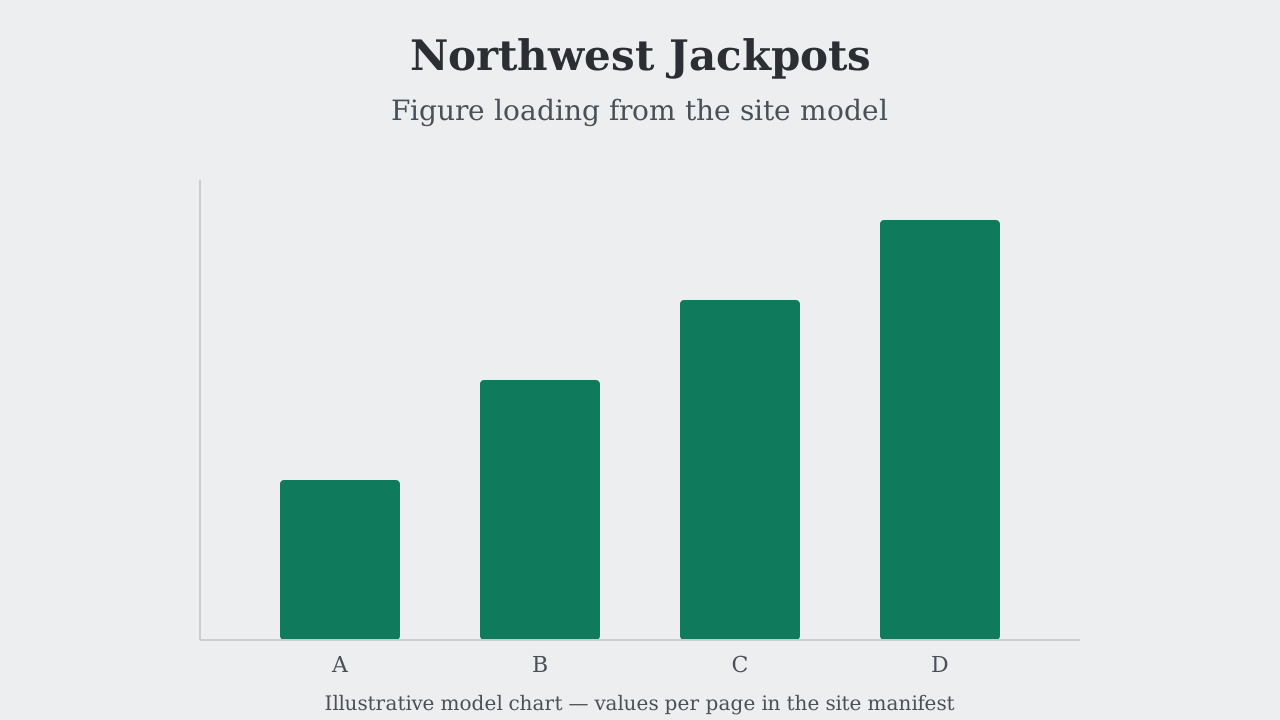
The chart above prices the three common launch package shapes at their assumed face values. Free tickets sit at the small end, spin bundles in the middle and matched ticket packs at the top, which reflects the deposit commitment each shape asks for. The face values are planning figures, not quotes: the real value of any package is set by the wagering attached to winnings, the cap on conversion and the expiry window, and two packages with identical face values can differ several-fold in expected worth. The pricing sections above give the method for discounting each shape to its realistic figure.
Verification deserves its own paragraph at a new site, because the first payout is where the relationship gets tested. Licensed operators must verify age and identity, and the checks most often surface at the first withdrawal rather than the deposit. Preparing early is cheap: have proof of identity and proof of address ready, and upload them before requesting the payout. A first withdrawal with documents already on file behaves like a routine one; the same withdrawal with documents requested mid-flight can add days, and the delay lands at exactly the moment a new player is forming their judgement of the brand.
Two payment notes are specific to the British rules. Since April 2020, credit cards may not be used for gambling in Great Britain, so the debit card, the e-wallets and the bank rails carry the load, and any site promoting credit funding is signalling that it sits outside the British framework. And the choice of rail is also a choice about disputes: card and established e-wallet payments carry their own consumer protections, which is a quiet reason the rail list at a brand-new site is worth reading before the welcome offer.
How to choose among the newcomers
The choice between new bingo sites is less romantic than the launch banners suggest, because the underlying rooms are usually shared. What actually differs are the operator, the terms, the rails and the launch-period generosity. Four questions settle those differences.
Question one: who is the operator and what is the licence? Read the footer, note the company and the licence status, and apply the aside above if the licence is not a British one. This single check removes more risk from the decision than any comparison of welcome offers, and it takes under a minute.
Question two: which network are the rooms on? A newcomer on a mature network inherits room quality, linked jackpots and a populated chat culture. A standalone has to earn those things, and the price of finding out whether it does is paid in quiet rooms during its first months. Neither answer is automatically wrong, but they are different products and the launch copy will not tell you which you are buying.
Question three: what is the launch offer worth after its terms are applied? Run the four-clause read from the offer section: wagering base, cap, expiry and eligible rooms. Discount the headline to a realistic figure using the calculator above, then compare that figure against the deposit it requires. A modest package with cash winnings and a long expiry is frequently worth more than a large package with heavy wagering and a short window, and the difference is invisible without the five-minute read.
Question four: what does the first month cost you if you are wrong? Size the first deposit to the uncertainty. A £10 trial buys the information needed to judge the site: whether verification runs smoothly, whether the rooms match the schedule and whether the terms behave as written. If the trial goes well, scaling up costs nothing but a second deposit. If it goes badly, the lesson has cost ten pounds. That asymmetry is the entire argument for starting small at a brand with no record, and it applies equally to the most persuasive launch banner in the market.
Answer the four questions and the field of newcomers sorts itself quickly. The structural checks remove the fragile skins, the terms read prices the offers honestly, and the sized trial converts remaining uncertainty into a bounded experiment. The rest is choosing rooms you enjoy, which is the part of bingo no comparison table was ever going to decide.
Frequently asked questions
Are new bingo sites safe to join?
Safety at a newcomer is judged structurally rather than by feel. Check the operating company and licence in the footer, note the network the rooms sit on, and read the withdrawal and complaint terms before depositing. A new site on an established network with a verifiable licence inherits much of its platform’s track record. A standalone newcomer should be trialled with a small first deposit while its behaviour accumulates.
Why do so many new bingo sites look the same?
Because most of them run on a small number of shared networks. The software, the rooms, the ticket pricing and the linked games are platform-level, so two brands on the same network can be playing the same games against the same players. The brand layer adds the skin, the promotions desk and the welcome package, and those are the parts that genuinely differ.
What is a matched ticket pack?
It is a launch offer where a deposit is rewarded with a multiple of its value in bingo tickets rather than bonus credit. The key clauses are the list of eligible rooms, the ticket values the pack applies to, the expiry window and whether the deposited cash remains withdrawable. Where the deposit stays cash and tickets are simply granted, the downside is bounded by the deposit and the tickets are upside with expiry as the cost.
Do winnings from free tickets carry wagering?
It depends entirely on the operator’s terms, and the answer varies more than players expect. Some launch packages pay winnings from bonus tickets as withdrawable cash, while others convert them to bonus balance carrying a wagering multiplier. The clause sits in the full promotion terms, not the banner, and it is the single biggest value difference between offers that look identical.
How long does a first withdrawal take at a new site?
On the model used across this site, e-wallets clear in around an hour after release, bank transfer in around a day and debit cards in around two days, with the first withdrawal often slower because identity checks usually trigger at that point. Uploading documents before requesting the payout removes most of the avoidable delay.
What is GamStop and does it cover new bingo sites?
GamStop is the free national self-exclusion scheme for Great Britain, covering all operators licensed by the Gambling Commission. A newly licensed British bingo brand is covered from the point of licensing. Offshore operators hold no Commission licence and are not covered, so a registered exclusion is not enforced there, which is a boundary every reader should understand before considering any site outside the scheme.
Are credit cards accepted at new bingo sites?
Not at British-licensed operators. Since April 2020, credit cards may not be used for gambling in Great Britain. Any site promoting credit card funding is therefore operating outside the British framework, which is itself a signal worth reading alongside the licence check.
Do new sites have better odds than established ones?
On shared networks, the odds are the same as the network’s older skins, because the rooms and prize schedules are platform-level. A standalone newcomer can run enhanced guaranteed jackpots or subsidised rooms during launch, which improves the value of those specific games for a period. Check the prize schedule against ticket sales in each room, since the return share is visible there whether the site is new or old.
What happens if a new bingo site closes?
Brands on networks are frequently retired and migrated, and balances usually move to a sibling site on the same platform under the platform’s migration process. The mechanics differ by operator, so the closing-and-migration language in the terms is worth reading while your balance is small. Licensed operators are expected to protect customer funds and honour balances through such transitions, which is one of the practical values of the licence.
How much should a first deposit at a new site be?
Size it to the uncertainty rather than to the launch offer. A £10 trial buys all the information needed: how verification runs, whether payouts land inside the stated window and whether the terms behave as written. If the trial goes well, a second deposit scales the relationship at no extra cost. If it goes badly, the lesson cost ten pounds.