New Online Casinos UK
New sites launch into the British market every month, and each one arrives carrying a launch offer engineered to look bigger than the market norm. Sometimes the generosity is real and paid for by a marketing budget. Sometimes it is a paper figure wrapped in wagering terms that make the promotion expensive to clear. This page sets out a checklist for the first weeks of any new brand: what to verify before registering, how launch offers are usually priced, and where the licence question changes the value of every pound you deposit.
New online casinos in the British-facing market typically open with welcome offers that carry around forty times the bonus amount in wagering, though each operator sets its own terms, and newer brands tend to sit at the heavier end of that range while they recoup launch costs. Figures on this page are assumptions about category-typical terms, not quotes from any named promotion. Check the live terms on the operator’s own site before you deposit, because launch offers change faster than established ones and the published page may already differ from anything described here.
Terms change often. Verify the current terms on the operator’s own page before depositing. Scores are editorial.
8.2/10See offer terms
8.0/10See offer terms
7.8/10See offer terms
7.5/10See offer terms
Why launch offers differ from established ones
A new operator faces a problem an established brand never has: it needs customers now, and it has no reputation to attract them. The cheapest tool available is the welcome offer. A launch promotion is therefore not primarily a gift; it is a customer acquisition expense, and it is priced like one. The marketing budget behind it was set before a single player registered, and the terms attached to it were written to protect that budget from players who would otherwise clear the credit cheaply and withdraw it. Understanding that economic motive explains nearly everything odd about launch offers, from the tall headline percentages to the tight win caps sitting several paragraphs down the terms page.
There is a second structural difference worth naming. An established operator has payout history, published complaint records and years of terms that players have already stress-tested. A brand new site has none of that. The promotion may be generous, and the operator may be perfectly sound, but the reader cannot verify either from track record because no track record exists. Verification has to happen differently: through the licence, through the operator group behind the brand, and through the payment rails the site supports. That is why this page spends more time on those three items than on the promotion itself, inverting the usual review order, because at launch the promotion is the least reliable signal in the room.
The third difference concerns volatility of terms. New operators revise their promotions often. An offer described in week one may be withdrawn, restructured or repriced by week four, sometimes mid-way through a player’s wagering window. Established brands change offers too, but their baseline terms move slowly, and grandfathering of active bonuses is common practice. At a launch site, read the terms on the day you claim and assume they may differ from anything you read in a review, including this one. The checklist at the end of this page exists partly for that reason: it is designed to be re-run in five minutes whenever you encounter a new brand, because the field it examines shifts faster at the new end of the market.
None of this makes new sites a bad category. Some of the better value in the market appears at launch, precisely because a new operator must overpay for attention, and a reader who knows how to cost an offer can occasionally find a promotion whose real terms are better than its reputation suggests. The point is method: price the offer, verify the licence, check the rails, and only then let the headline percentage influence you.
The launch bonus maths, worked on assumptions
The calculator below is set to the standard case used across this site: a £100 deposit, a 100% match, a forty-times wagering multiplier and a £500 cap. Those inputs are assumptions, chosen because offers of this kind in the British-facing market usually sit near them, and because they make every figure on this page comparable with the figures on sibling pages. Change the inputs to match the offer you are actually looking at and the model recalculates everything downstream.
Bonus calculator
Bonus £100, staking requirement £4,000.
Model assumptions: the multiplier applies to the bonus amount, a house edge in line with popular titles is charged against the staking, and the cap truncates convertible winnings. Adjust the inputs to price your own case.
Worked at those defaults, the mechanics run in four steps. The deposit multiplied by the match percentage gives the bonus, £100 here. The bonus multiplied by the wagering multiplier gives the staking requirement, £4,000 here. The staking requirement multiplied by an assumed house edge gives the expected cost of clearing it; at 4%, a figure within the ordinary range for popular slots, that is £160. The cap, £500, bounds what the journey can convert to withdrawable cash. On those assumptions the promotion’s expected value is negative, which is the honest starting point for any offer with wagering attached: it can produce a withdrawal, and on realistic assumptions it usually does not.
Why apply this costing to new sites in particular? Two reasons. First, launch offers frequently push the match percentage higher than 100%, sometimes to 200% or beyond, and the multiplier usually rises with it, often to 45x or 50x at the newer offshore-facing brands. A bigger match with a heavier multiplier is not automatically better value; on a £100 deposit at 200% with 50x wagering, the requirement is £10,000 and the expected cost at a 4% edge is £400 against a bonus of £200. The calculator prices those trades in seconds, and no headline percentage does the same work. Second, win caps at launch sites tend to sit at the restrictive end, because the operator is protecting an acquisition budget that has already been committed. A cap of £250 on a large match truncates the upside sharply, and the cap clause is easy to miss when the promotion page leads with a four-figure headline.
One nuance deserves its own paragraph. Time limits at new sites are frequently shorter than the market norm, sometimes seven days where fourteen is standard elsewhere, because the operator wants the bonus liability off its books quickly. A shorter window is not a trap by itself. It becomes one when combined with a heavy multiplier, because a requirement you cannot complete inside the window converts the whole promotion into extended play with no withdrawal at the end. Run the requirement against your realistic playing pace before claiming. If forty times a large bonus cannot be staked inside seven days at the stakes you actually play, the offer’s practical value is the entertainment, not the credit, and you should claim it with that understanding or not at all.
Payout speed at a new brand: the model
Payout speed is the figure most likely to separate a good launch from a bad one, and it is also the figure hardest to verify before you deposit. A new brand has no published payout history, so this site models it from the structure of the operator group. The chart below states the assumptions: an established multi-brand group is assumed to process withdrawals in around twenty-four hours, a new standalone brand in around forty-eight, and a white-label launch on borrowed infrastructure in around seventy-two. These are planning numbers, not measurements of any named site, and any individual operator can sit outside them in either direction.
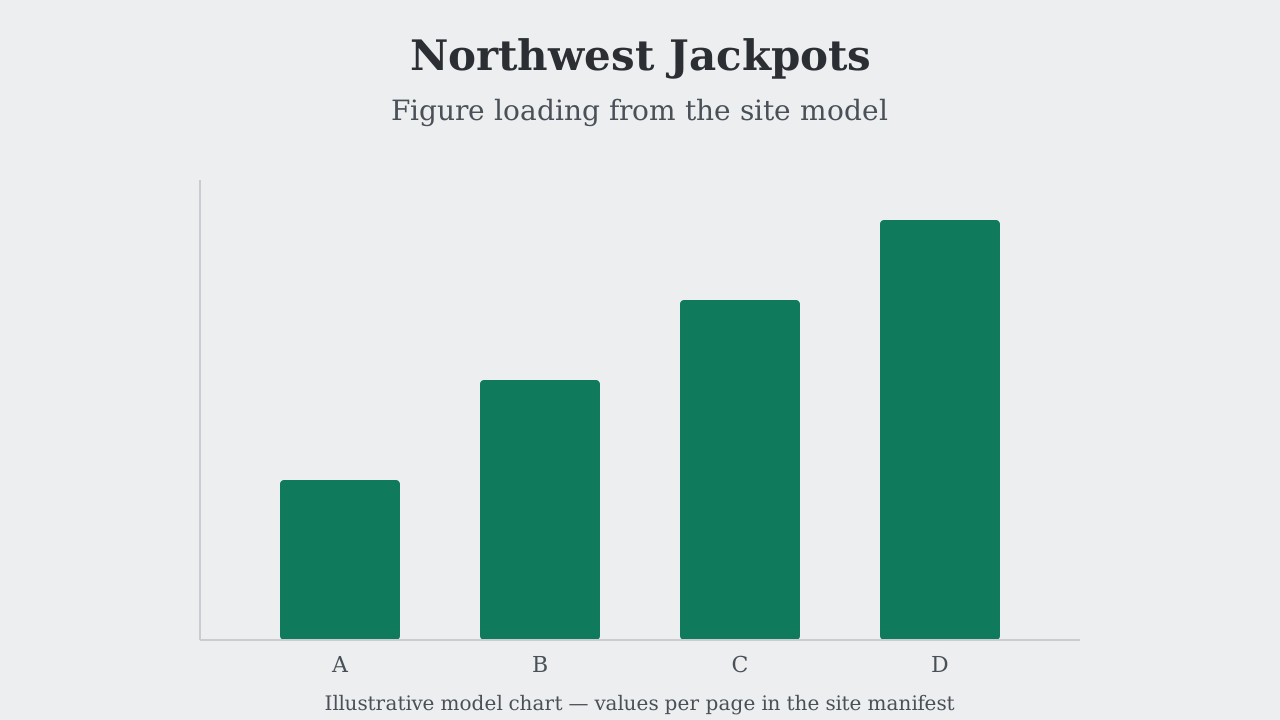
The reasoning behind the bands is structural. An established group has payment processing staff, fraud queues and banking relationships already running; a new brand plugs into them and inherits the efficiency. A standalone launch builds its own processing stack, and the early months usually carry slower queues while volume scales and manual review processes settle. A white-label site rents the whole platform from a supplier, which can be fast or slow depending on the supplier, and the brand itself has no visibility into the queue, which is why the widest uncertainty sits there. None of this says a white-label launch cannot pay quickly; it says the reader has the least basis for prediction in that group and should size early deposits accordingly.
The rail you choose matters as much as the brand’s processing speed, and it is decided at the deposit stage. Withdrawals generally return by the rail used to deposit, so a player funding by debit card should expect card-scheme clearing on the way out, adding a day or two beyond the operator’s own processing. E-wallets execute quickly once released. Crypto clears fastest of all where it is supported. On the model used across this site, crypto sits around fifteen minutes after release, e-wallets around an hour, bank transfer around a day and debit cards around two days, all stated as category-typical assumptions. A first withdrawal is usually the slowest across every rail, because identity checks most commonly trigger there. Upload verification documents early, before requesting anything, and the first payout behaves like a routine one.
Category comparison: new and established brands side by side
The table below compiles category-typical ranges across a spread of operators serving the British and offshore markets alongside each other. Every figure is a range compiled from operator-published terms, not a quote of any single promotion, and no row should be read as the stated offer of the named brand on the day you read this. Ranges shift, launch offers more than most, so verify live terms before depositing. UKGC rows are the British baseline shown for comparison.
| Brand | Licence label | Welcome offer range | Wagering | Minimum deposit | Payout window | Payment rails |
|---|---|---|---|---|---|---|
| Betway | UKGC | Matched stake credit to £50 | Commonly 10–20x | £10 | 1–3 days | Debit card, PayPal, bank transfer |
| Casumo | UKGC | Deposit match with spins | Commonly 30–40x | £10 | 1–2 days | Debit card, PayPal, e-wallets |
| Mr Vegas | UKGC | Match to £100 with spins | Commonly 20–40x | £10 | 0–2 days | Debit card, e-wallets, bank transfer |
| PlayOJO | UKGC | Spin bundle, wagering-free model | None on spins | £10 | 0–2 days | Debit card, PayPal, e-wallets |
| LeoVegas | UKGC | Match to £100 across deposits | Commonly 30–40x | £10 | 1–2 days | Debit card, PayPal, Apple Pay |
| Pub Casino | UKGC | Match to £100 | Commonly 15–30x | £10 | 0–2 days | Debit card, PayPal, bank transfer |
| Kinghills | Offshore | Multi-tier match to £1,000 range | Commonly 35–50x | £20 | 0–2 days | Debit card, e-wallets, crypto |
| NineWin | Offshore | Match package with spins | Commonly 35–50x | £20 | 0–2 days | Debit card, e-wallets, crypto |
| JackpotCity | Offshore | Match to £1,000 range | Commonly 35–50x | £10–£20 | 0–2 days | Debit card, e-wallets, crypto |
| Rolletto | Offshore | Multi-tier match to £2,000 range | Commonly 40–50x | £20 | 0–2 days | Debit card, e-wallets, crypto, bank transfer |
| Donbet | Offshore | Match package with free spins | Commonly 35–45x | £20 | 0–2 days | Debit card, e-wallets, crypto |
| Goldenbet | Offshore | Match package with recurring reloads | Commonly 35–45x | £20 | 0–2 days | Debit card, e-wallets, crypto |
Read the two halves as different products. The UKGC rows describe a market with modest headline matches, frequently lighter wagering, £10 entry points and payout windows bounded by published commitments. The offshore rows describe larger headline matches, heavier wagering, £20 entry points and faster rails with thinner recourse. Neither is uniformly better. The British baseline buys regulation and gives away headline size; the offshore alternative buys size and gives away the protection. The reader’s job is to make that trade deliberately rather than by whichever page a search surfaced first, and this page exists to make the trade visible for the newest, least-documented corner of the market.
Note also that newness cuts across both halves. A brand launched this month may hold a British licence if it belongs to a group with existing GB operations, and in that case every protection of the licensed baseline applies from day one. Alternatively a new brand may serve the UK from an offshore licence, in which case the protections described in the next section simply do not exist. Age and licence are separate variables. Reviews that blur them, treating all new sites as a single category, mislead in both directions.
The licence question at newly launched sites
For newly launched sites the licence question carries extra weight for one practical reason: a new brand has no reputation to fall back on if a dispute arises. An established operator, licensed or not, has years of payout behaviour that players have observed and reported. A launch site has none. On a licensed site, the regulator’s conditions and the ADR route substitute for reputation, because the operator must process withdrawals without unreasonable delay and must resolve complaints through a documented process regardless of its age. On an offshore launch site, the reader’s protection is the operator’s own policy alone, and the operator’s policy is a document the reader has no way to test in advance. The rational response is not to avoid the category but to size it: treat the first deposit at any new offshore-facing brand as money you are prepared to lose to process failure, not just to variance, and scale up only once a withdrawal has completed cleanly.
A second practical point concerns which licence the site claims. Many offshore-facing operators hold licences issued in Curacao or Anjouan, jurisdictions whose standards differ from the Commission’s in kind, not merely in detail. The existence of an offshore licence confirms something, in that the operator has submitted to some regulatory framework, but it confirms nothing about payouts, fund protection or dispute resolution for a British player. Where a new site displays a licence, check which regulator issued it and understand what that regulator will and will not do for you before you rely on it. The comparison table above labels rows accordingly, and the labels are the honest summary of the difference.
The launch-week checklist
Everything above reduces to a sequence that takes perhaps fifteen minutes per new site, and it is worth running every time because the new-site field refreshes constantly. The checklist covers the five things that move money: licence, operator group, terms, rails and support. Work through it in order and the weakest item will surface before your deposit does.
First, the licence. Find the regulator named in the site footer and, for a claimed British licence, check the operator appears on the Commission’s public register. If a new brand claims a British licence that the register does not confirm, close the tab. If it holds no British licence, understand the trade-off described in the section above and decide it consciously. Second, the operator group. Many new brands are launches by groups that already run established sites, and the group’s record on payouts and complaint handling is the best available proxy for the new site’s future behaviour. Search the group’s other brands, read what their players report, and weight that evidence above anything on the new site’s own promotions page.
Third, the terms. Run the six-clause read: the base of the wagering multiplier, because “40x bonus” and “40x deposit plus bonus” differ by a factor of two; the game weightings, because table games usually contribute a fraction or nothing; the maximum bet while wagering, frequently around £5, breaching which can void winnings; the winnings cap, which at launch sites often sits at the restrictive end; the time limit, frequently seven days rather than fourteen at new brands; and the withdrawal trigger, because cashing out before wagering completes usually forfeits the bonus and everything won with it. Fourth, the rails. Confirm the payment methods on both sides, because withdrawals generally return by the depositing rail, and check whether any rail carries a bonus-exclusion clause, since some promotions exclude certain e-wallets from eligibility.
Fifth, support. Ask the live chat a factual question about the welcome offer before depositing. The answer tells you two things at once: whether the stated terms match the published ones, and how quickly a real query gets a real response. At a launch site, support quality is the most visible signal of operational maturity, and a slow or evasive answer to a pre-deposit question predicts the withdrawal experience better than any promotion page. Run all five checks, price the offer in the calculator above, and the decision makes itself. The terms narrow the field, the model prices it, the licence aside frames the trade, and the deposit is yours to place or withhold.
Frequently asked questions
Are new online casinos safe to join?
Safety at a new site depends on its licence and its operator group rather than its age. A launch by a group holding a Gambling Commission licence inherits the regulator’s conditions from day one, including fund protection and dispute routes. A new offshore-facing site offers whatever its own jurisdiction provides, which is materially less for a British player. Size early deposits so that process failure, not just variance, would not hurt.
Why do new sites offer bigger bonuses than established ones?
A launch offer is a customer acquisition expense. A new brand has no reputation to attract players, so it buys attention with a larger headline match. The heavier terms that usually accompany it, higher multipliers and tighter caps, protect the marketing budget from players who would otherwise clear the credit cheaply. The bigger headline is real, but so is the higher price of clearing it.
Is a 200% match better value than a 100% match?
Not necessarily. On the site’s standard assumptions, a 200% match on £100 produces £200 of bonus but often carries a 50x multiplier, giving £10,000 of staking and an expected clearing cost of £400 at a 4% house edge. A 100% match at 40x produces £4,000 of staking and a £160 expected cost. The calculator on this page prices any combination; run it before assuming size equals value.
How fast do new casinos actually pay out?
On the model used here, an established multi-brand group is assumed to process payouts in around twenty-four hours, a new standalone brand around forty-eight and a white-label launch around seventy-two, before the rail’s own clearing time. These are planning assumptions, not measurements. First withdrawals are the slowest everywhere, because identity checks usually trigger at that point.
Do new sites honour their terms?
There is no general answer, which is precisely the problem. A new brand has no track record, so terms cannot be verified by reputation. On a licensed site the regulator’s conditions and the ADR route back the terms up. On an offshore site the terms are backed by the operator’s own policy alone. Read them before depositing and assume the published page on the day you claim is the one that applies.
Can I use GamStop protection at a new casino?
GamStop covers operators licensed by the Gambling Commission only. A new site holding a British licence participates from launch. An offshore-facing site does not, so a registered exclusion will not be enforced there. Anyone relying on self-exclusion should understand that boundary before considering any operator outside the scheme.
What should I check before my first withdrawal?
Verify your account before requesting anything, because identity checks most commonly trigger at the first cashout and the documents can take a day or two to clear. Confirm the withdrawal rail matches your deposit rail, since returns generally go back by the same method. And know the withdrawal trigger clause, because requesting a payout before wagering completes usually forfeits the bonus and its winnings.
Are older casinos always better than new ones?
No. Established brands carry payout history and slower-moving terms, which makes them easier to assess, but new sites sometimes offer better value precisely because they must overpay for attention. The difference is verification difficulty, not quality. A new licensed site can be assessed through its licence and group; a new offshore site must be assessed with caution and small early deposits.